Eating Cháo Lòng in Hanoi: How to Order and Enjoy
During a trip to Hanoi, cháo lòng can be a warm meal option if you enjoy pork offal dishes. However, ordering “a full bowl” sometimes yields a different portion than expected: some places put the offal directly into the porridge, others serve it on a separate plate, and side dishes might incur extra charges. Understanding how ordering works will help you choose the right portion and avoid over-ordering.
This article focuses on how to recognize the dish and order your meal, without ranking or advertising specific eateries. The photos are illustrative materials of cháo lòng and side dishes in Vietnam and do not represent a specific dining experience at any particular Hanoi restaurant.
What is typically included in a bowl of cháo lòng?
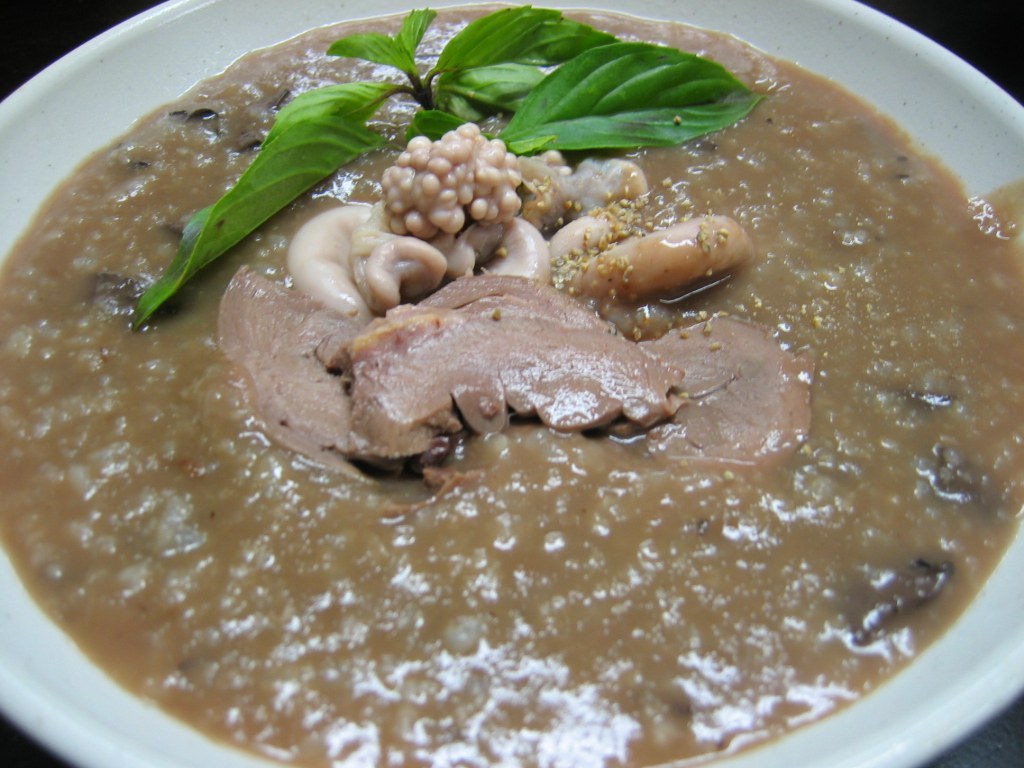
The base is rice porridge combined with various prepared pork offal. Depending on the cooking style and portion, you might encounter liver, heart, stomach, intestines, or blood sausage. The thickness of the porridge, the size of the offal pieces, and the amount of herbs vary from place to place. You should not consider any single photo or porridge color as the universal standard for the dish.
If you are not used to eating offal, ask in advance what ingredients are included in a full portion. You can request to omit items you dislike if the vendor allows customization. Stating your preferences clearly when ordering is much easier than picking out unwanted pieces after they have been mixed into your bowl.
Distinguishing a bowl of porridge from a separate plate of offal
A bowl of porridge containing offal and a bowl of porridge served with a separate plate of offal do not necessarily cost the same or contain the same amount of food. When dining in a group, it is wise to ask about plate portions before ordering multiple items at once. Lighter eaters can start with a modest bowl, while those who want to try various types of offal can consider a separate shareable portion, depending on the menu.
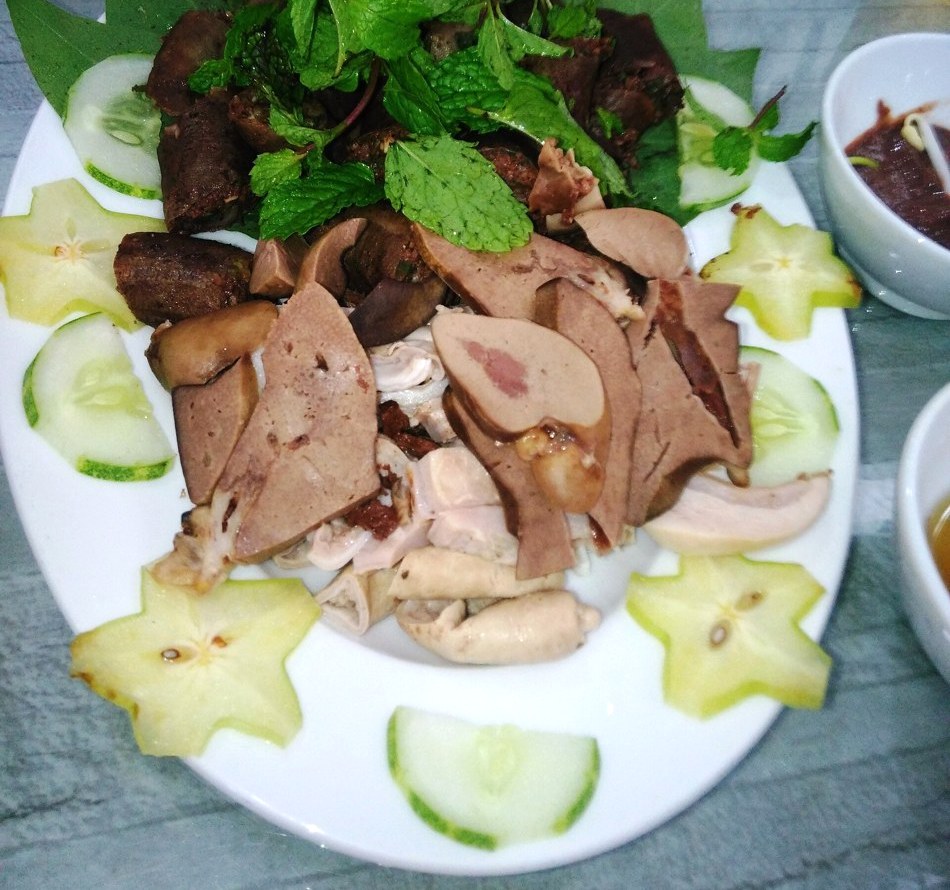
The photo above illustrates how a plate of offal and sausage is presented, photographed in Dong Ha. Actual serving styles in Hanoi may differ, so do not use the photo to assume exactly what a set meal includes. The important thing to confirm is what you are ordering, the number of diners, and any additional charges.
Three questions for clearer ordering
- “What types of offal are in this bowl, and can I change or remove one kind?”
- “Does this price include Chinese crullers (quẩy) or side dishes?”
- “How many portions are on the separate offal plate, and do you charge per plate or by weight?”
Asking ahead is especially useful when the menu features porridge, boiled offal, sausage, and porridge hotpot. These represent different serving styles, and you should not assume a single price found online applies to everything. This article omits fixed prices because portions and menus should always be confirmed at the time of your visit.
Taste the porridge before adding condiments
You can try a small spoonful first to check the seasoning of the porridge, then add pepper, chili, or dipping sauce according to your preference. If you have Chinese crullers, adding them a little at a time helps you control the crispiness versus softness, rather than letting the whole portion get soggy right away. Letting the hot bowl of porridge cool down slightly and eating manageable bites will also make your meal more comfortable.
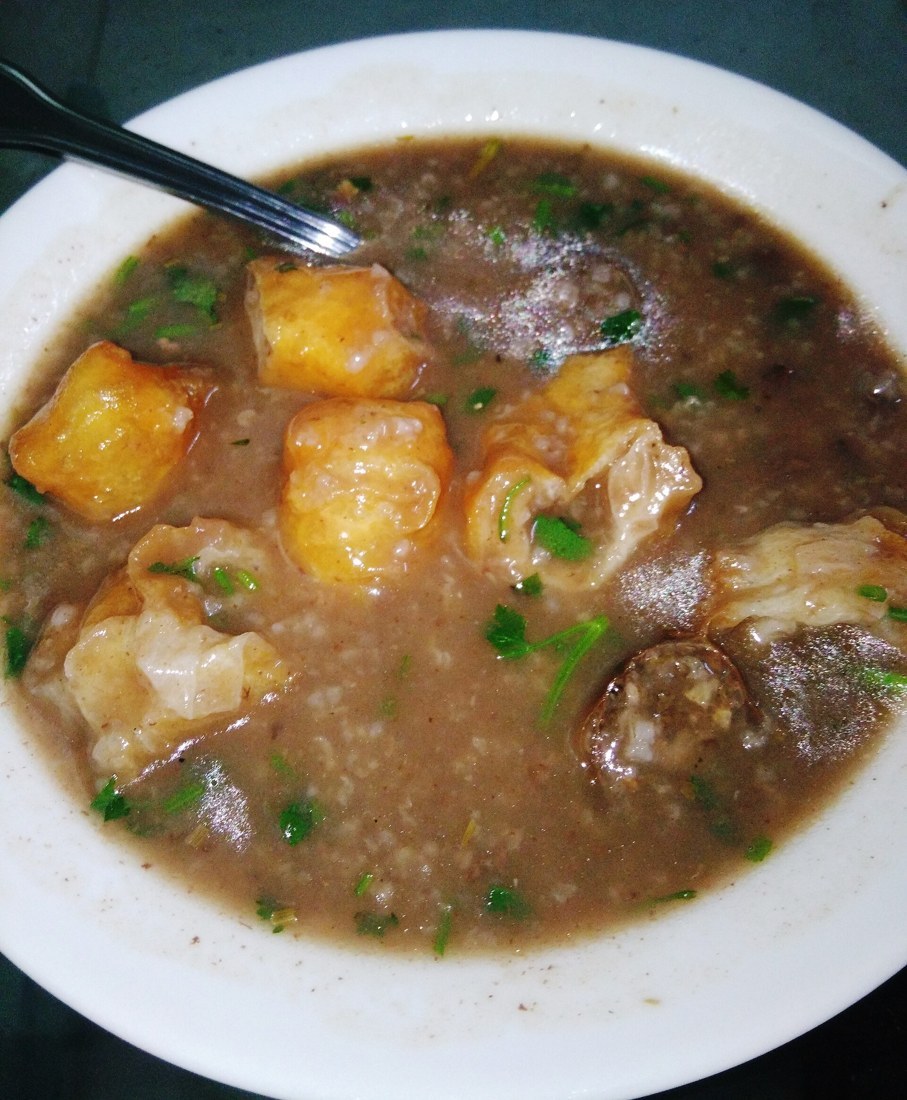
The bowl of porridge in the photo was captured in Binh Long in 2018 to illustrate how porridge, crullers, and herbs are combined. The photo does not represent a specific Hanoi recipe, does not guarantee the current quality of any restaurant, and is not a guarantee of portion sizes.
How to fit this meal into your Hanoi itinerary
Choose your dining time based on your sightseeing route and check whether your intended destination is open that day. Avoid traveling long distances simply because you saw an outdated list of “top eateries.” If you still want to try other dishes, order a smaller portion first; if you are traveling with someone who does not eat offal, agree on a dining spot that offers suitable options for everyone in the group.
A memorable meal of cháo lòng does not need an overwhelming number of dishes on the table. Selecting ingredients you enjoy, clarifying portion sizes, and taking enough time to sit and eat are simple steps to make your culinary experience during the trip much smoother.