Bai Xep Phu Yen: Coastal Scenery and Cinematic Landmarks
Bai Xep offers more than just a stretch of sand for photos. The landscape here changes depending on your viewpoint: from above, you see a curved coastline; closer to the sea, dark rocky reefs emerge; and further out lie coastal shrubs and grass. If you enjoy landscape photography, you can spend a morning simply observing these layers without overpacking your itinerary.
Choosing the Right Bai Xep in Phu Yen
This article introduces Bai Xep in the Phu Yen tourism region, now located within Dak Lak province following administrative mergers. This spot is linked to the Ganh Ong – Bai Xep cluster, distinct from the beach of the same name near Quy Nhon. When checking maps or booking transport, be sure to include “Phu Yen” to avoid confusion.
This landscape cluster gained widespread recognition through the film Yellow Flowers on the Green Grass (Tôi thấy hoa vàng trên cỏ xanh). Cinematic appeal is one reason to visit, but the actual color of the grass, crowd levels, and lighting depend on the season and weather, and may not match every movie frame.
Panoramics Before Heading Down to the Shore
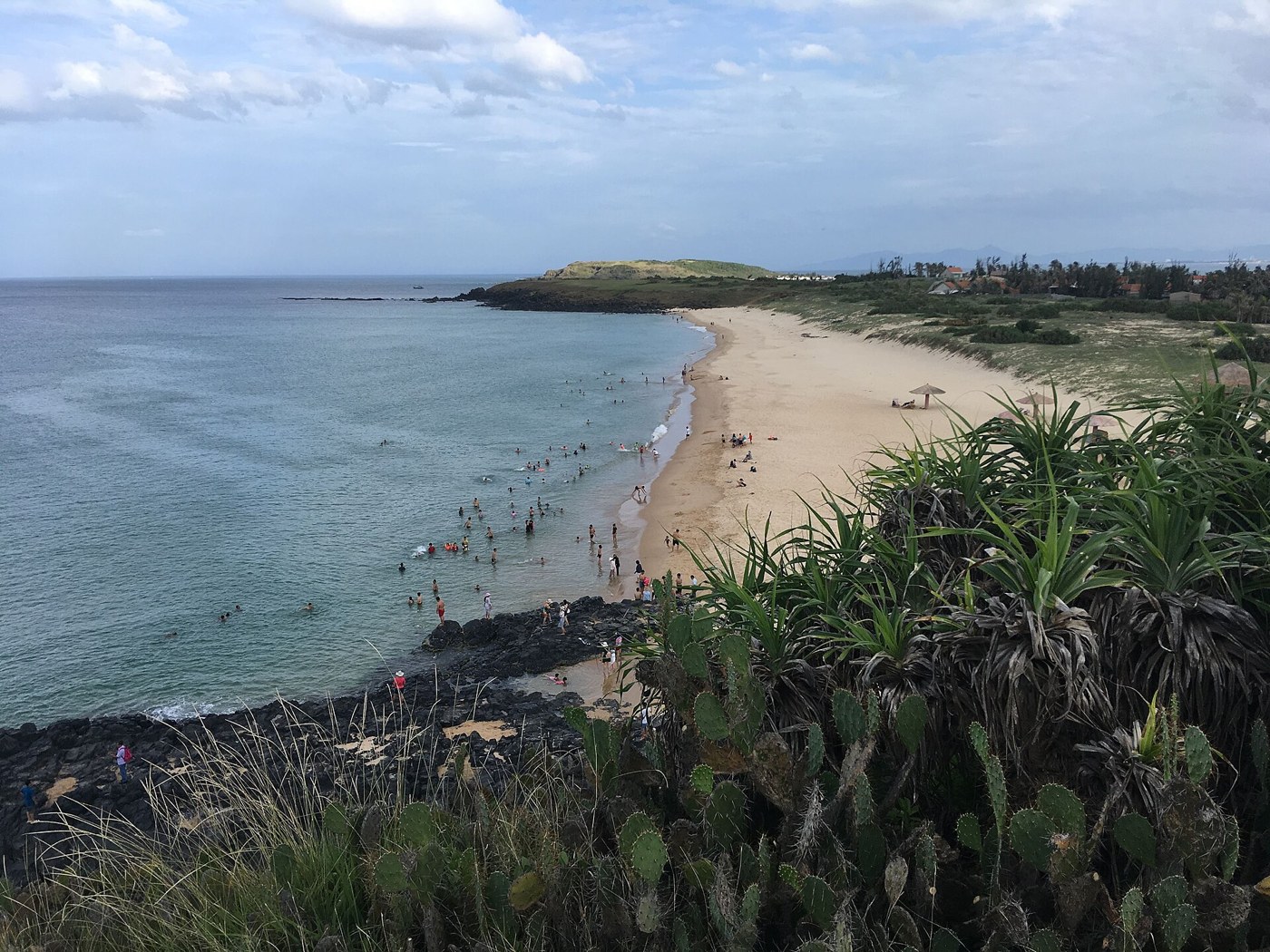
From an accessible elevated spot, follow the curve of the shoreline rather than just pointing your camera straight out to sea. Foreground foliage, rocky reefs, and the sandy strip can all appear in a single frame, highlighting the character of the location better than a blank expanse of water.
Not every rock outcrop or trail is a safe viewpoint. Only stand on firm ground, avoid crossing fences, and do not step into thorny bushes for a photo angle. Groups with small children should choose wide, easily manageable areas away from high drop-offs.
Rocky Reefs: Observe Textures, Avoid the Wave Line
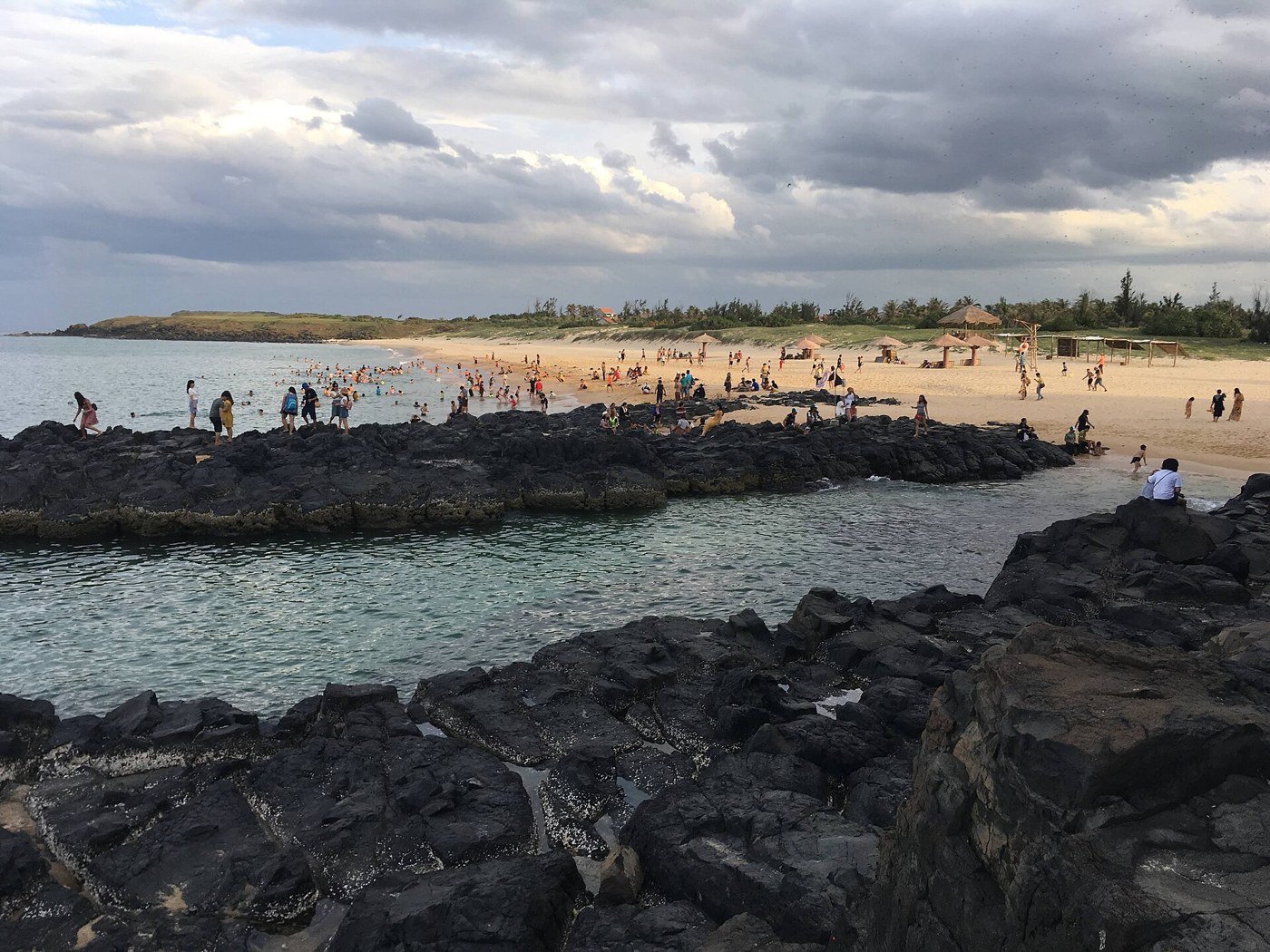
Dark rock formations create a sharp contrast with the bright sand and sea surface. You can observe their shapes, crevices, and the way waves change color near the shore from a safe distance. This is not a place to jump across gaps or follow others to the water’s edge just because they are taking photos.
Footwear with good grip is more practical than slip-on sandals. Wet surfaces, algae, and puddles should be avoided; when waves crash over the rocks or warnings are issued, retreat to a safe area. Archival photos showing people standing on rocks do not imply that those positions are always permissible or safe.
Capturing Scenery While Maintaining Natural Appeal
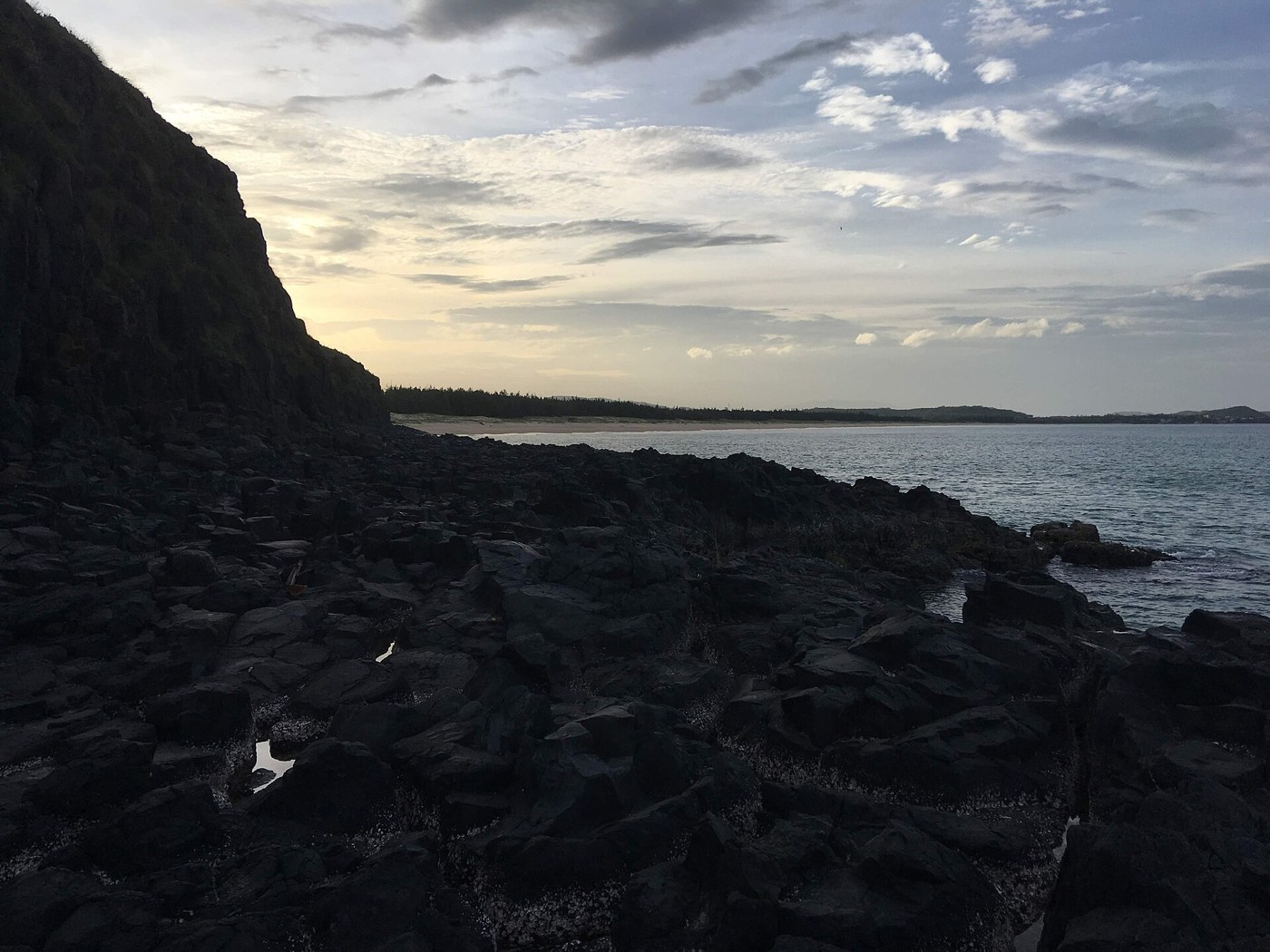
Try three shooting styles: a wide shot capturing the entire beach, a close-up focusing on the rocky reef, and a shot emphasizing the open sky to highlight the lighting. When facing backlit conditions, let the rocks appear as dark silhouettes rather than over-brightening them and losing sky details. There is no need to make the sea unnaturally blue or add props to the vegetation.
When photographing travel companions, agree on standing positions beforehand, keep a distance from the water’s edge, and avoid stepping backward while looking at a camera screen. Ask for permission before taking close-up photos of others; do not block pathways just to wait for a crowd-free frame.
How to Spend a Half-Day Here?
Plan for about one to two hours to sightsee, enjoy a moderate walk, and rest, excluding travel time. This is a suggested framework rather than a fixed schedule. If it is hot or you are traveling with someone who has mobility difficulties, shorten the walk on the sand and prioritize easily accessible areas.
Before arriving, check current access hours, applicable fees, and active entry points. This article does not confirm a specific ticket price or walking route. Only combine another spot in the same direction if you have extra time; avoid rushing across both northern and southern Phu Yen in a single brief morning or afternoon.
- Bring drinking water, a hat, suitable footwear, and a trash bag.
- Check weather forecasts for rain and wind, follow on-site instructions, and do not venture onto the reefs during bad weather.
- Do not break branches, pick cacti, or trample grass beds to create shortcuts.
- Do not assume swimming is permitted just because photos show people in the water; verify authorized swimming zones and daily safety conditions.
The three photos in this article serve as documentation of the Bai Xep landscape and do not guarantee current service conditions, paths, or weather. By arriving with plenty of leisurely time, you will have the chance to appreciate the interplay of sand, stone, and coastal plants — details easily missed if you only rush to find a movie-like angle and leave immediately.