Bai Mon Beach, Phu Yen: Exploring the Shore at Cape Dien
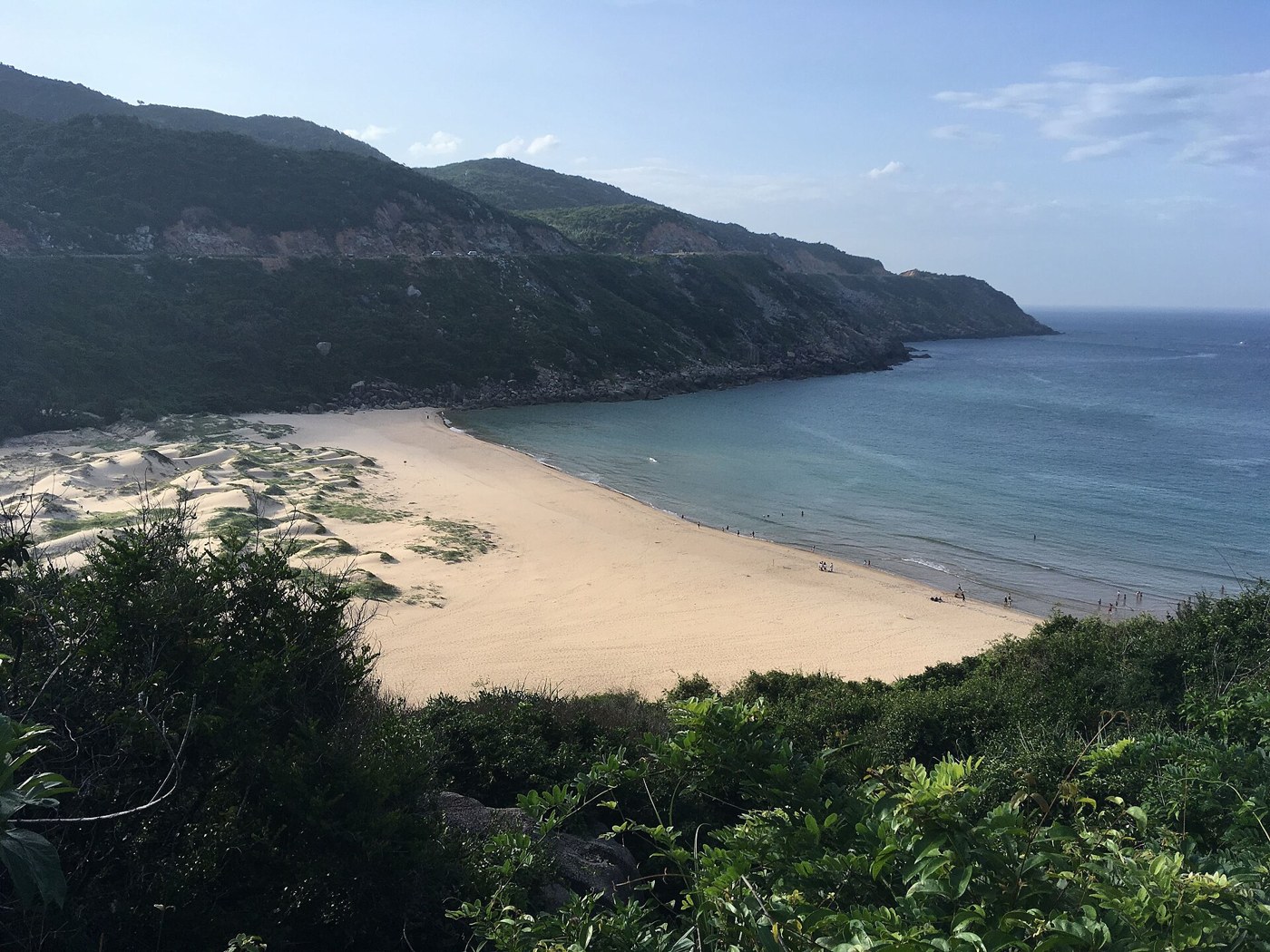
Bai Mon suits those who want to spend time soaking in coastal scenery rather than rushing through multiple photo spots. Viewed from above, the stretch of sand lies between the mountain slope and the water, with low-lying vegetation dotting the inner dunes. A slow-paced visit can begin with taking in the panorama before deciding whether to descend to the beach via permitted pathways.
Are Bai Mon and Cape Dien the Same Place?
Bai Mon sits at the foot of Dai Lanh Cape, also known as Cape Dien. Both belong to the same scenic cluster, yet offer different experiences: one is a coastal sandy beach, while the other is a headland and lighthouse area. This article focuses on the beach and does not assume that visiting Bai Mon automatically includes touring the lighthouse grounds.
This destination is part of the Phu Yen tourism region, now administratively under Dak Lak province following the merger. When mapping your route, enter the full name “Bai Mon – Dai Lanh Cape” to avoid confusion with Dai Lanh beach in Khanh Hoa. References to Dong Hoa, Phu Yen reflect the former administrative system.
Three Details Worth Stopping to Observe
The curve of the beach: From a safe vantage point above, you can clearly see how the strip of sand connects both sides of the mountain base. A wide frame helps maintain the relationship between the beach, the sea, and the surrounding topography. There is no need to walk right to the edge of the slope to get a good view.
The inner sand strips: Beyond the surf line, Bai Mon features layers of sand interspersed with plant cover. Observe them from the walkway, avoiding stepping on plants or creating shortcuts on the sandy slopes. Surface textures and shadows are often more interesting than trying to find artificial props.
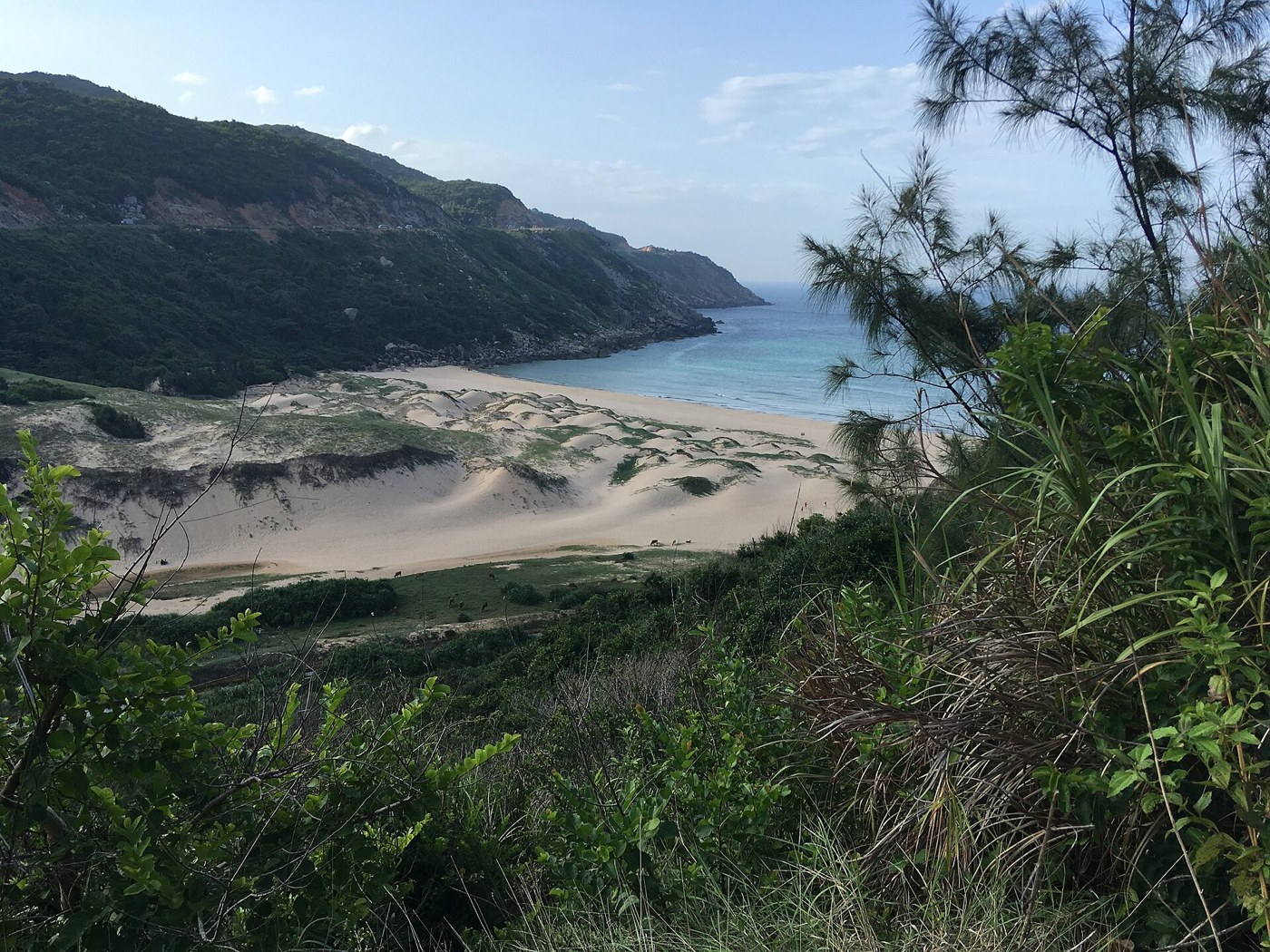
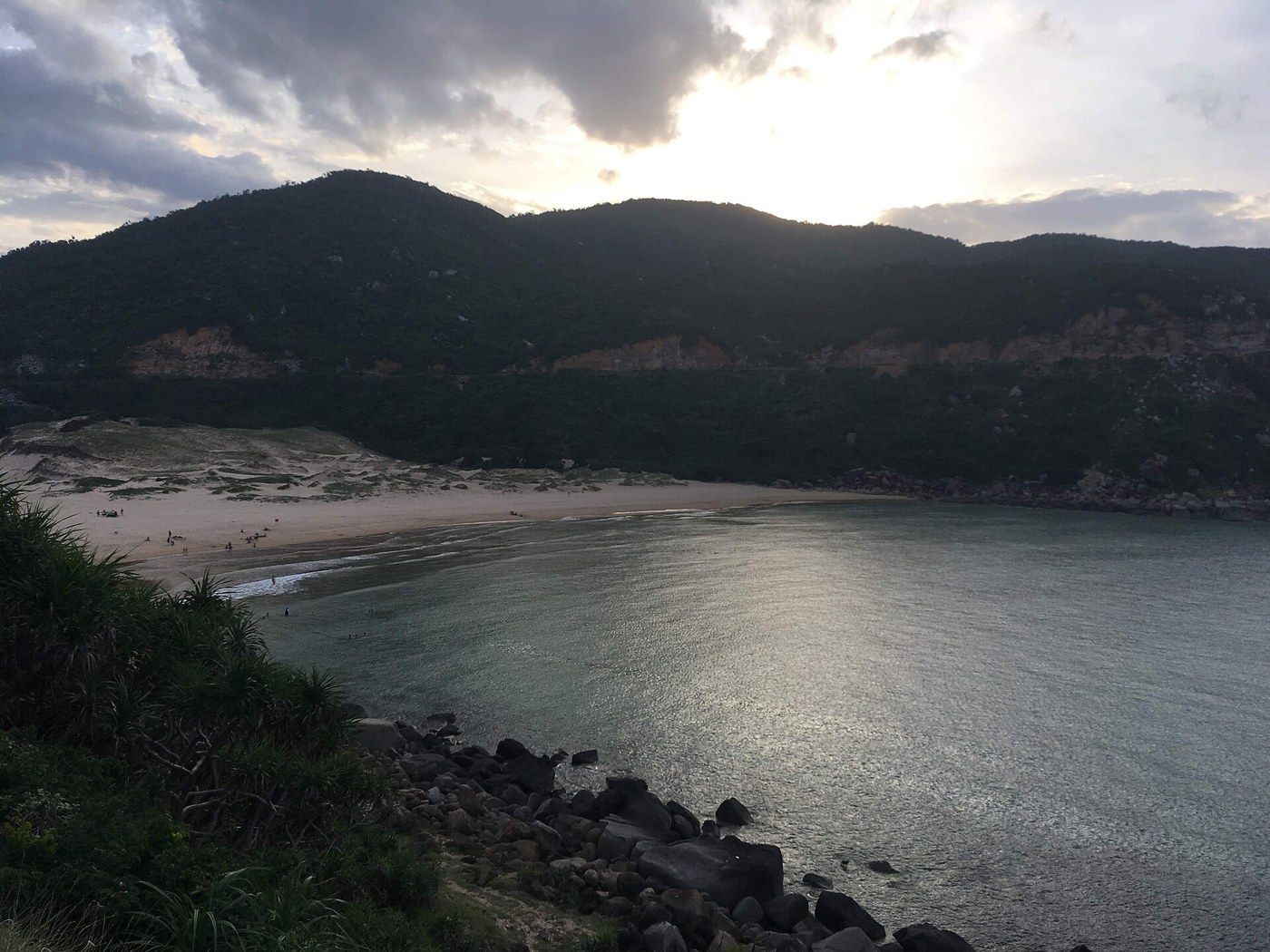
Light on the water: Sunlight, clouds, and viewing angles cause the color of the sea to shift. The archival photos in this article include both bright and backlit scenes; do not expect the water to always be the same shade of blue. When shooting with a phone, tap to focus on the sea area and try moderate exposure levels, avoiding heavy color grading that causes sky details to be lost.
Planning a Manageable Visit
Allow about one to two hours for access, sightseeing, resting, and returning to your transport, then adjust according to your fitness and actual conditions. This is a suggested timeframe for the beach only, excluding a climb up to the lighthouse. If you wish to combine both, check opening hours, permitted paths, and travel times in advance.
For elderly travelers or young children, viewing the beach from an accessible elevated point may be enough. Walking all the way to the water’s edge is not strictly necessary. Soft sand makes walking more tiring than flat roads, especially when carrying gear or walking under the sun.
Preparation Before Heading Down to the Beach
- Check rain and wind forecasts as well as local guidelines. Do not go down to the beach if barriers or high-wave warnings are in place.
- Bring drinking water, a hat, good grip shoes, and sand-resistant bags; carry only truly essential items.
- Determine your return path and vehicle pickup time before walking. Do not wander off onto mountain slopes or skirt cliffs to find shortcuts.
- Keep your footing secure when taking photos; do not step backward while looking at your screen near rocks or drops.
- Pack out your trash, do not pick plants, and do not take sand or marine life as souvenirs.
Should You Swim at Bai Mon?
You cannot conclude whether it is safe simply from photos or by seeing others enter the water. Wave conditions, currents, and the presence of lifeguards must be verified on-site. This article introduces a sightseeing experience and does not confirm that the beach is safe for swimming. If clear safety information is unavailable, stay ashore and keep young children under close supervision.
The photos in this article are archival and do not guarantee the current state of paths, services, or water levels on the day of your visit. Before your trip, verify access hours and current fees with the management authority. A fulfilling trip to Bai Mon does not require excessive activities: taking enough time to enjoy the scenery, following the right paths, and returning comfortably are what matter most.