Dinh Cau Phu Quoc: Maritime Beliefs and Visit Guide
Dinh Cau sits on a rocky outcrop at the mouth of the Duong Dong River in Phu Quoc. This small structure faces the sea, embodies island prayers for safe voyages, and serves as a well-known sunset-viewing spot. When visiting, treat it primarily as an active place of worship before viewing the coastal scenery.
History and Significance
Available records note that the shrine has existed for a long time; the current structure is commonly cited as dating from 1937 with subsequent renovations. For Phu Quoc residents, this site is tied to wishes for favorable weather and safe journeys for seafarers.
The Dinh Cau festival takes place in the tenth lunar month, varying by year. If visiting during this time, follow local announcements and respect the rituals; do not crowd or block the ceremonial path.

Visitor Tips
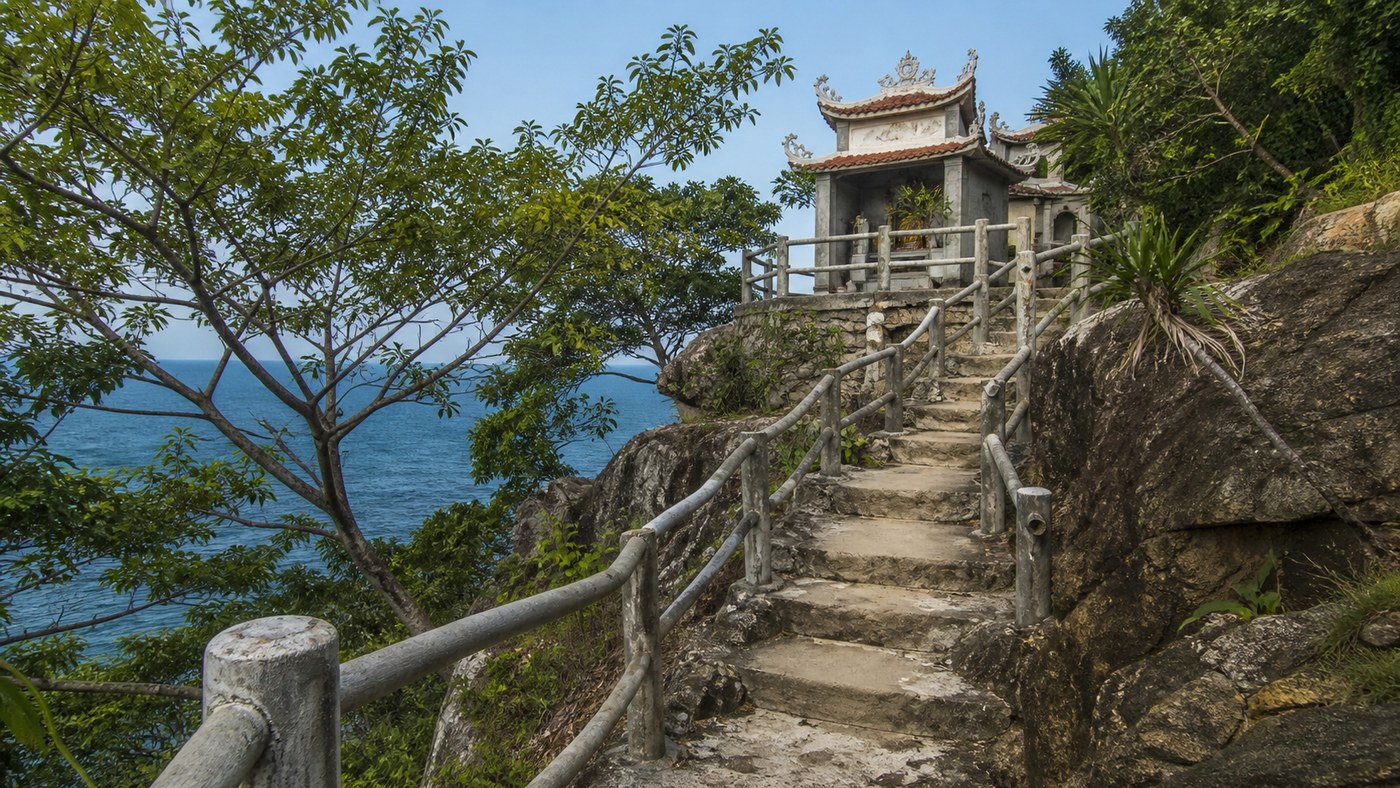
The path upward consists of many stone steps. Elderly visitors and young children need assistance, especially after rain or during crowded times. Wear modest clothing, speak quietly, avoid touching ritual objects, and ask before taking photos inside.
Late afternoon offers the best coastal scenery but brings larger crowds. Arrive early, choose a spot that does not block paths, and avoid stepping out onto slippery rock edges for photo angles. Waves and wind at the river mouth can change quickly.
Things to Keep in Mind
- Do not climb railings, wet rocks, or restricted areas.
- Do not litter, discard votive paper, or drop items into the sea.
- Yield the path to those coming to worship and keep phones on silent.
- Do not fly drones without permission.
- Check the weather if visiting during the rainy season or on windy days.
Short Itinerary Suggestion
Allow about 45 to 60 minutes to climb to the shrine, observe the river mouth, and watch the sunset. You can combine this with a walk around Duong Dong, but there is no need to cram too many stops into the same afternoon.
Dinh Cau shows the connection between local beliefs and island life. A meaningful visit starts with respect, careful movement, and keeping the rocky outcrop clean.
Frequently Asked Questions

Which province does Dinh Cau belong to currently?
Phu Quoc currently belongs to An Giang province; the name Kien Giang still appears in many documents prior to administrative reorganization.
Can you swim right below the shrine?
Entering the water around the rocks and river mouth is not recommended without an on-site safety assessment.