Phuoc Kieu Bronze Casting Village: 400-Year-Old Craft
Phuoc Kieu bronze casting village is a stop for those who want to understand a craft village through sound, fire, and the hands of artisans. Located in the Dien Ban area, along the road between Da Nang and Hoi An, the village has maintained bronze casting for more than four centuries. A visit helps you picture why each bell and gong goes through many precise stages.
A 400-Year-Old Craft Village on the Way to Hoi An
Bronze casting in Phuoc Kieu has been passed down since the early 17th century. According to village memory, Duong Tien Hien from Thanh Hoa brought casting techniques to this land. Initially, workers made farm tools, household items, and weapons; later, products expanded to bells, gongs, statues, incense burners, and worship items. In the late 18th century, the place contributed to making equipment for the Tay Son rebel army. By the Minh Mang era, Phuoc Kieu and Dong Kieu were merged, creating the craft village name remembered today.
The fascination lies in the ability to adjust alloys and sound. For gongs or bells, a fine shape is only the beginning; the artisan must also test-tap, listen to the reverberation, and adjust each metal area so the sound rings clear and deep.
How Does a Bronze Casting Session Happen?
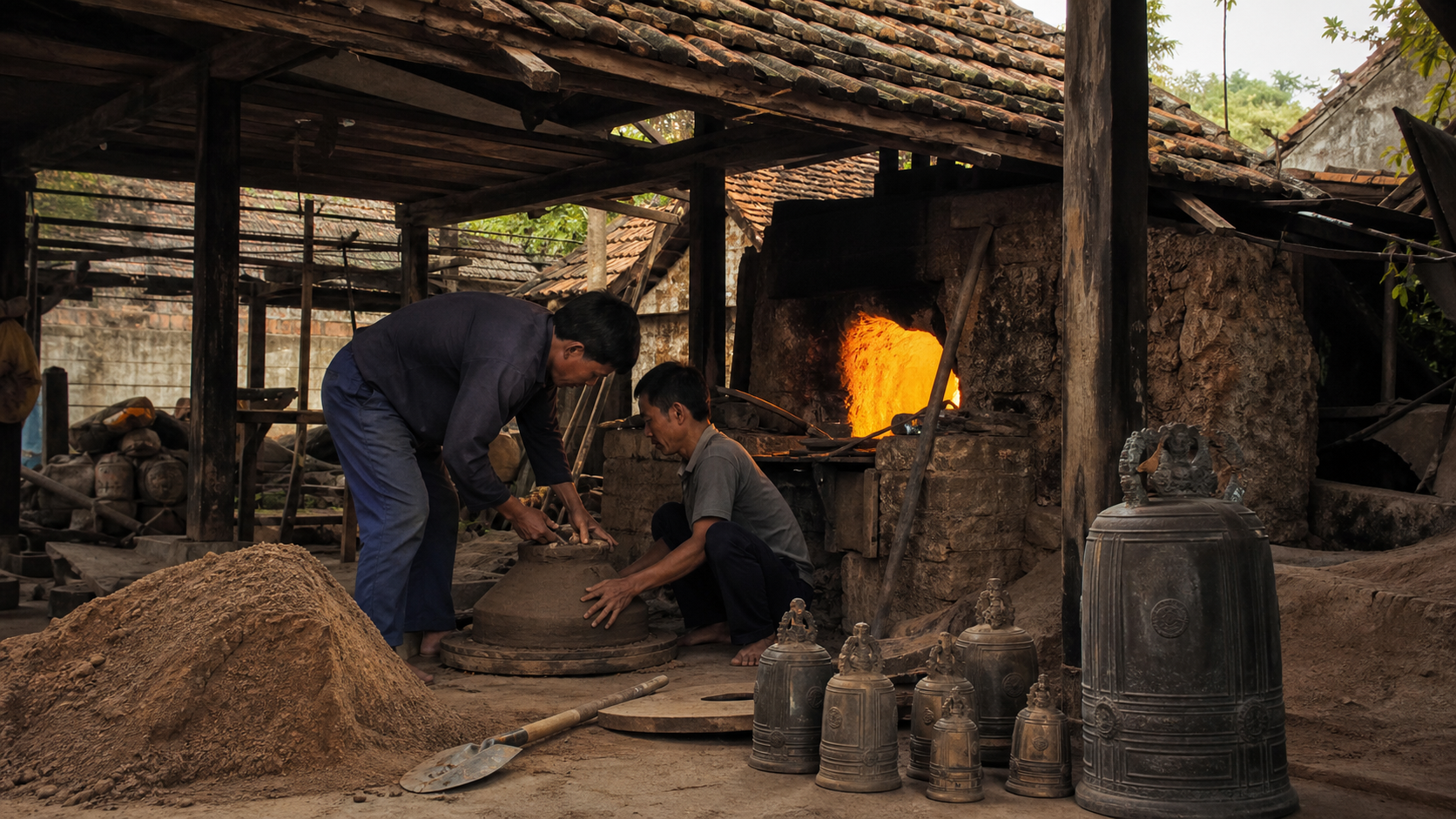
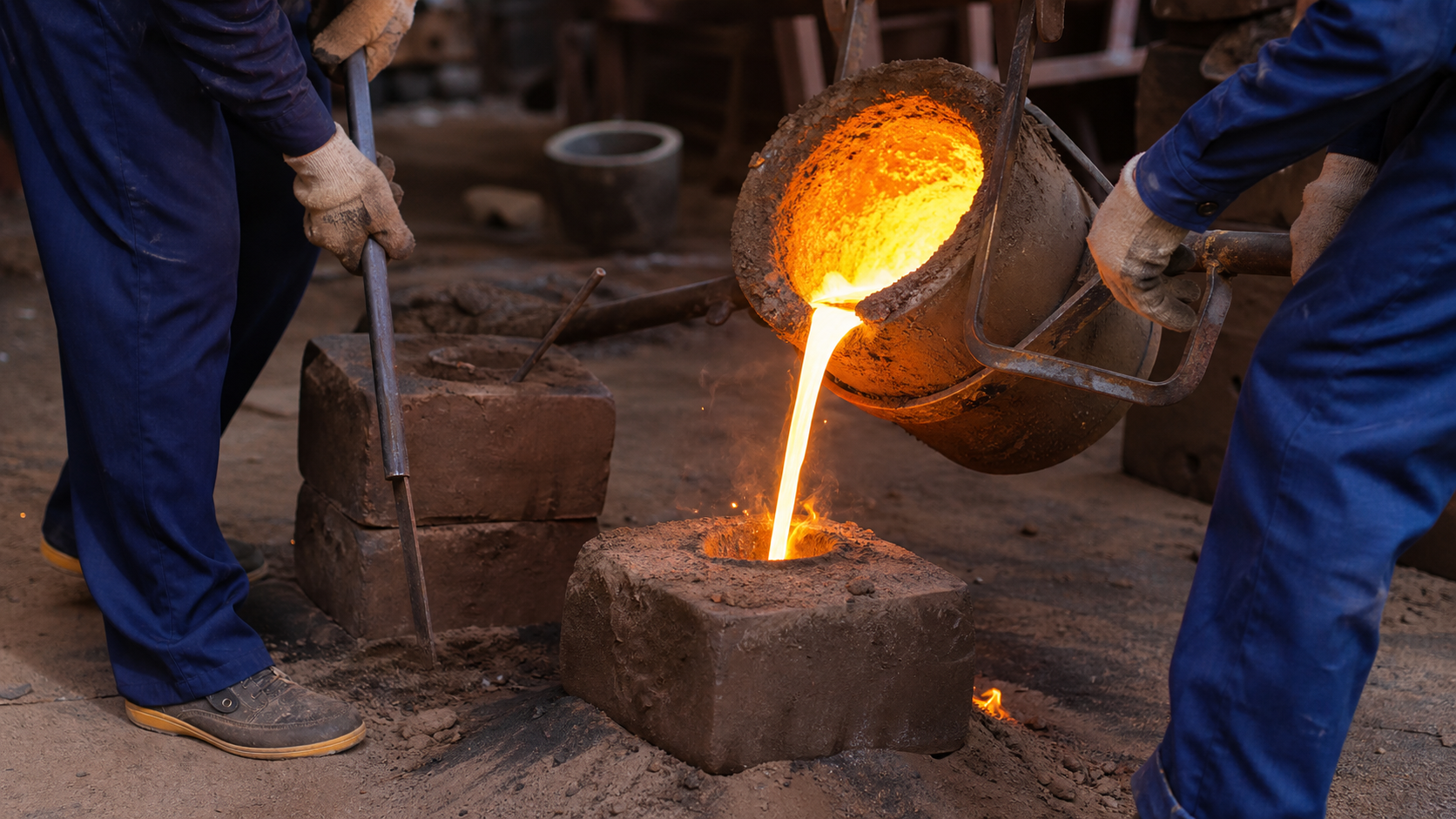
The process usually starts with pattern making and creating earthen molds. Molds must withstand high temperatures, retain precise dimensions, and separate without destroying the product. Bronze and other metals are weighed in appropriate proportions, put into a furnace, and poured into molds. After cooling, the cast object is removed, cleaned, surface-ground, and engraved with patterns if necessary.
Visitors may see a few stages depending on the time, but should not arbitrarily step into the furnace area, touch molds, or block transport paths. Heat and heavy tools make a working workshop quite different from a display space.
How to Get There and Visit Duration
From the Hoi An ancient town, the distance to the village is about 8 km. You can follow Hung Vuong street, connect through the Dien Phuong area, and ask for directions into the Phuoc Kieu workshop cluster. If starting from Da Nang, it is best to combine the craft village with a journey toward Hoi An to avoid detours. Online maps are useful, but on small roads, you should ask locals because individual workshops may lie deep within residential areas.
About 60–90 minutes is enough to observe the workshop, listen to introductions, and view products. Go during the day. Before photographing artisans, molds, or indoor spaces, you should ask for permission. Neat clothing and closed-toe shoes are more convenient near the mold-making area.
Notable Products
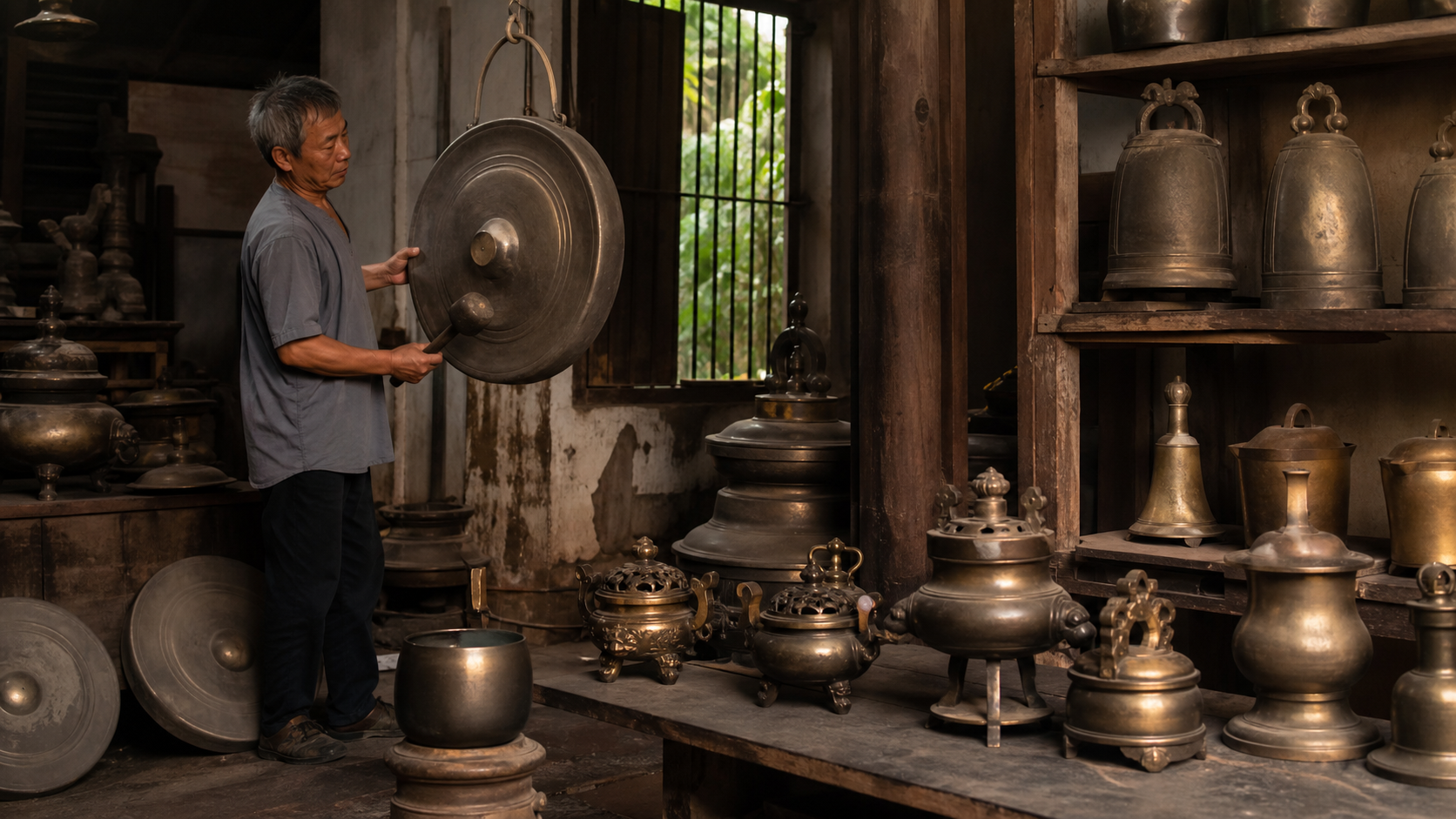
Phuoc Kieu is famous for gongs, bells, and worship items. Besides shaping techniques, each product group has its own requirements for thickness, alloy ratio, and finishing methods. If you want to learn deeply, ask artisans about how gongs are sound-tested, the difference between single-use and reusable molds, or why a small detail can affect reverberation.
Notes for a Meaningful Visit
- Contact or ask in advance if the workshop is working and convenient for welcoming guests.
- Do not touch molds, freshly cast metal, or tools unless instructed.
- Keep walkways clear and limit noise when artisans are tuning sound.
- If buying souvenirs, ask clearly about materials, sizes, care instructions, and completion time.
Phuoc Kieu is worth visiting because it remains a living craft village, not a setting built solely for tourism. Going slowly, observing carefully, and talking at the right time will help you understand more about the value of a Vietnamese handicraft product.