Duong Lam Ancient Village: Laterite Walls and Guide
Duong Lam Ancient Village is located in Son Tay, about 44 km from central Hanoi. This is not a secluded exhibition area, but a living community where residents still reside amidst ancient village gates, communal houses, wells, timber houses, and laterite walls. The finest experience comes from walking slowly and behaving as a guest in a shared community space.
Why is Duong Lam special?
Duong Lam consists of several adjacent villages, among which Mong Phu, Dong Sang, Cam Thinh, Doai Giap, and Cam Lam still clearly preserve the layout of traditional Northern Vietnamese villages. The area is often called the “land of two kings” because it is associated with Phung Hung and Ngo Quyen. In 2006, the ancient village area was classified as a national historical and cultural relic.
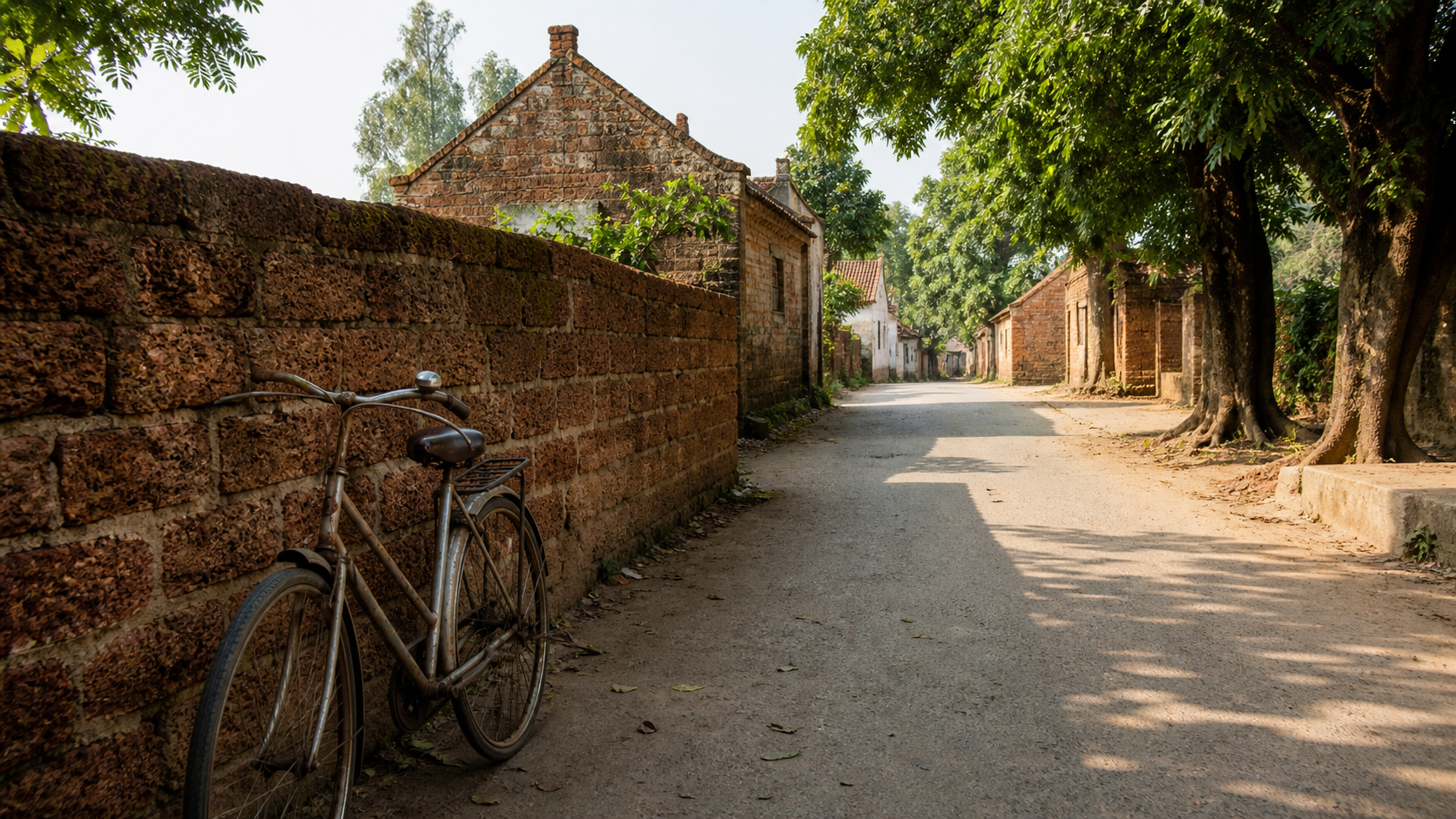
The most recognizable material is reddish-brown laterite, which appears in walls, gates, and foundations. The alley system follows a fishbone pattern, leading from the main axis into individual clusters of houses. The charm of Duong Lam lies not in a single grandiose structure, but in the overall ensemble: low tiled roofs, brick courtyards, rows of trees, water wells, and intertwined rural rhythms of life.
Places to explore on foot
Village gate and Mong Phu communal house
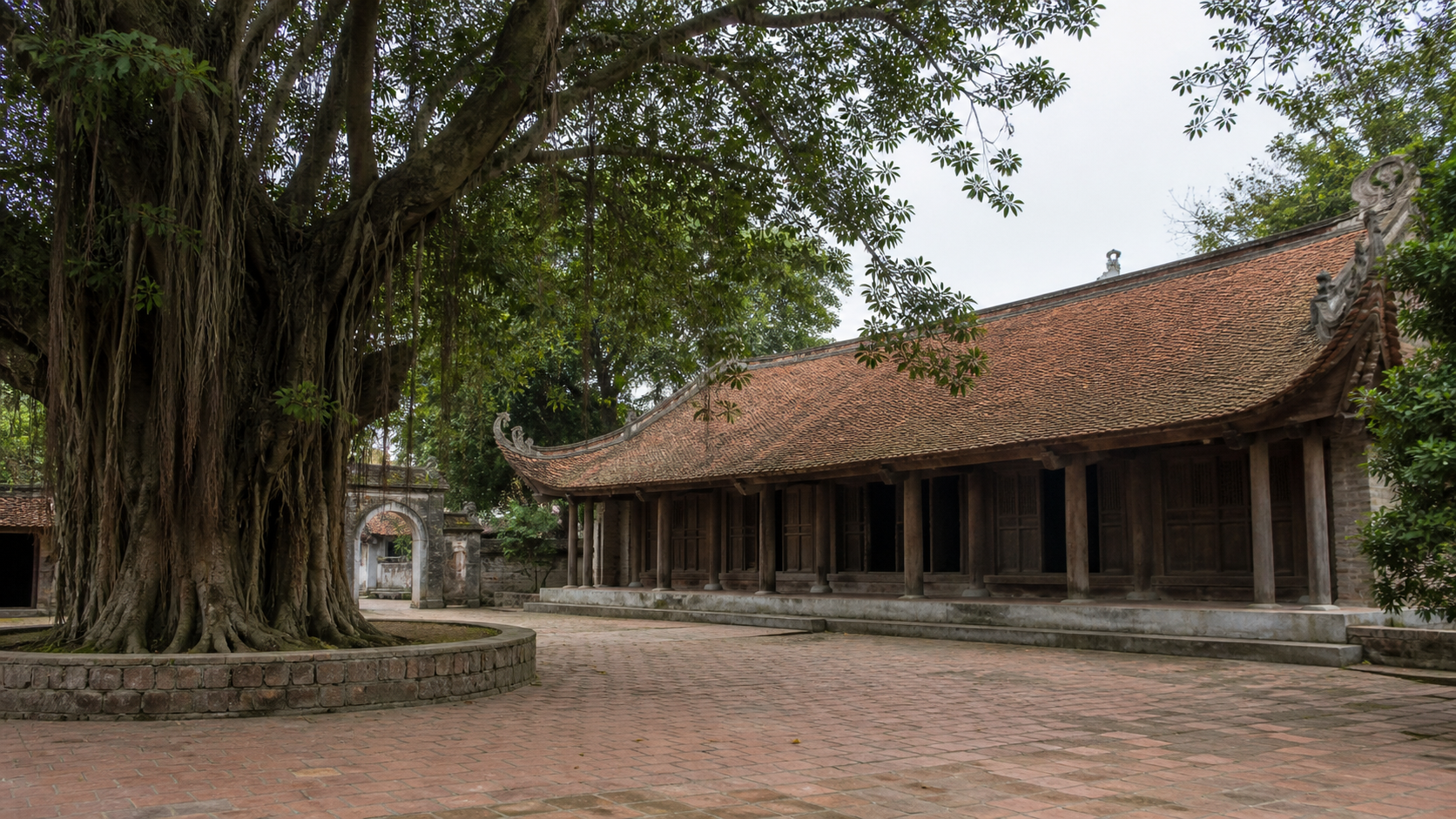
The Mong Phu gate features a simple double-sloped roof style, differing from the typical arched gate with an upper pavilion. From here, you can walk to the Mong Phu communal house, a timber structure built in the 17th century. The courtyard, tiled roof, and ancient trees create a well-balanced space suitable for observing architecture rather than just quick snapshot photography.
Mia Pagoda and historical sites
Mia Pagoda is an important cultural landmark in the region, notable for its antique atmosphere and collection of statues. In Cam Lam, the Ngo Quyen temple and mausoleum, along with the Phung Hung temple, help visitors better understand the “land of two kings” stories. If time permits, you can visit the memorial house of Scholar Giang Van Minh. Each location has its own rules for worship, so dress modestly and follow on-site guidance.
The ancient houses
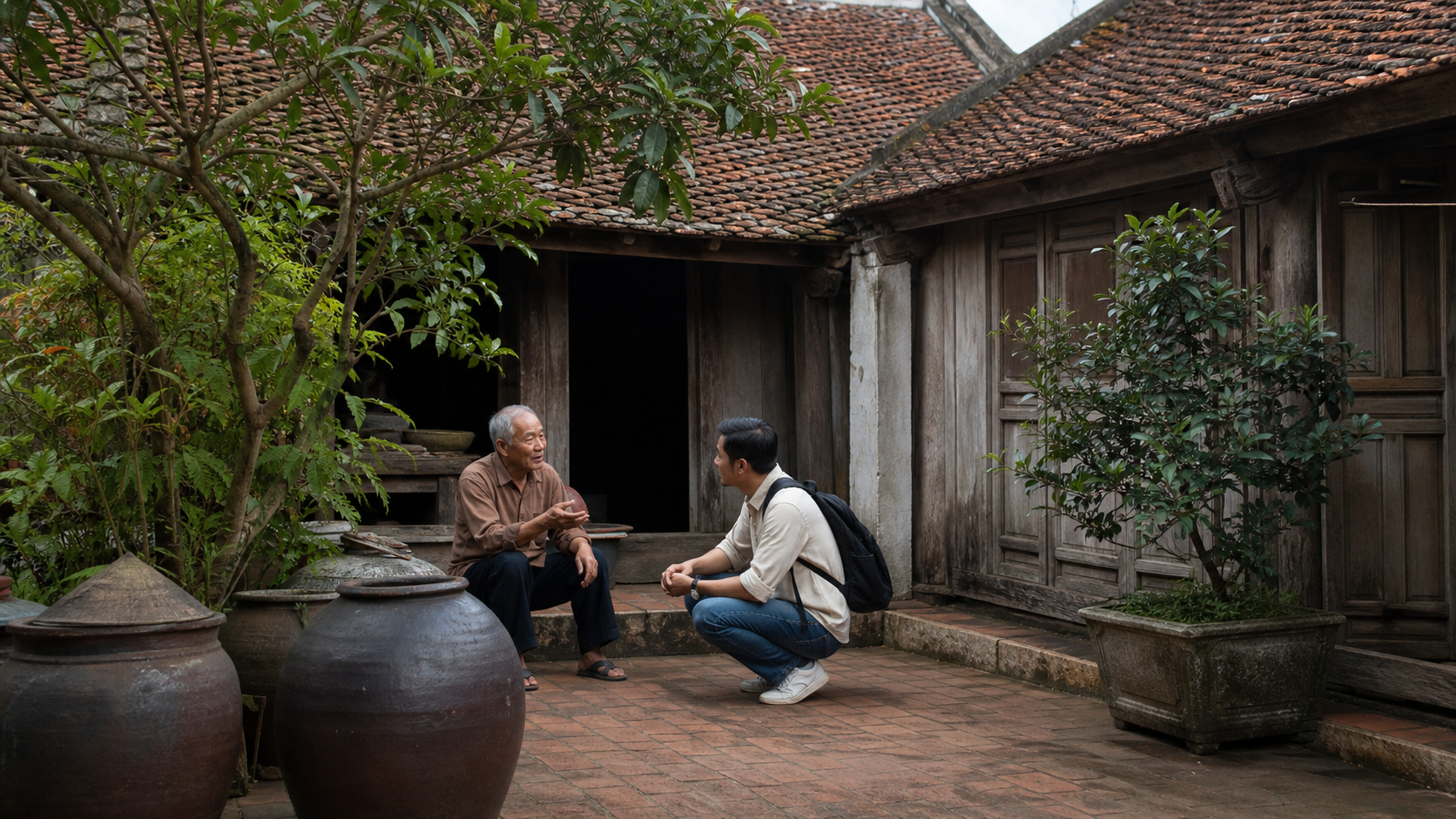
Several families open their doors to welcome visitors into their courtyards, showcasing wooden houses, soybean paste jars, and traditional daily routines. However, these are still private residences. Always ask permission before stepping across the threshold, photographing family members, or touching items. If the homeowner is resting or busy, do not insist; a natural conversation is more valuable than collecting a full set of photos.
How to get there and suggested itinerary
From central Hanoi, you can travel via Thang Long Boulevard and connect toward Son Tay. Buses are suitable if you prefer not to drive, but be sure to check routes and schedules close to your travel date. If using a personal vehicle, park it at designated areas and walk or rent a bicycle; driving a car deep into the alleys makes maneuvering difficult and disrupts residents’ daily lives.
A half-day itinerary can start at the Mong Phu gate, visit the communal house, wander through the laterite alleys, stop by an ancient house, and head to Mia Pagoda. For a full day, the afternoon can continue to Cam Lam to visit the Ngo Quyen and Phung Hung relic clusters. Weekday mornings are usually cooler and less crowded than weekends.
Tips for a smooth trip
- Wear comfortable walking shoes since most of the time is spent walking on brick paths or village roads.
- Prepare small cash for incidental expenses; check visiting information at the local ticket counter.
- Do not lean bikes, sit, or climb on laterite walls and ancient structures.
- Keep your voice moderate, especially near communal houses, pagodas, and inside residents’ courtyards.
- If trying traditional soybean paste (tuong), sticky rice candy (che lam), or local dishes, inquire about ingredients if you have food allergies.
Duong Lam is worth at least half a day. When letting go of the rush to check off sights and taking time to listen to stories from residents, you will find that the village is “ancient” not only in materials, but also in memories, beliefs, and community organization that continue to thrive.