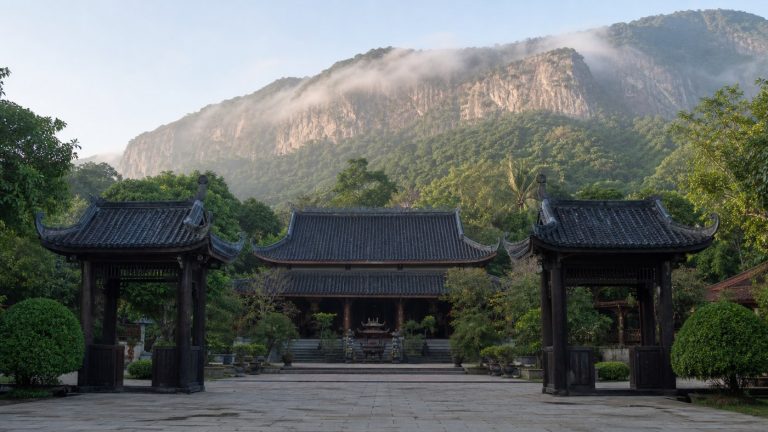
Ba Mu Temple Hoi An: Tam Quan Gate & Visitor Guide
Ba Mu Temple is a familiar name for a long-standing religious landmark within the ancient town of Hoi An. The most prominent feature that still captures attention is the Tam Quan gate with its warm color tones, traditional tiled roof, and the pond in front. This spot is well-suited for a brief stop during a walking tour, but it becomes much more interesting if you understand its historical background and treat it as a sacred heritage site rather than just a photo backdrop.
Location and Walking Route Combinations
The heritage site is located on Hai Ba Trưng Street, close to the core of Hoi An’s ancient town. From the Japanese Covered Bridge area, visitors can walk along central streets to reach it in a short stretch. If traveling by motorcycle, park at designated lots outside the vehicle-restricted zone and continue on foot.
Early morning is ideal for observing the architecture in soft light and avoiding crowds. In the late afternoon, the pond can create lovely reflections, though visitor numbers typically increase. You should spend 30 to 45 minutes here, then connect your route to the Japanese Covered Bridge, assembly halls, and nearby historic houses.
History of a Religious Complex
The structure was originally founded in the 17th century and once comprised two religious spaces commonly known as Cam Ha Palace and Hai Binh Palace. Through various periods of restoration, turbulence, and decay, the gate has remained the most prominent surviving relic. Preservation and landscape landscaping efforts have turned this area into an accessible stop within the old town.
The sacred space is tied to the beliefs of Hoi An’s resident community, including the worship of Thiên Hậu Thánh Mẫu (Mazu), protective deities, and imagery associated with prayers for family and children’s peace. Therefore, even though the area outside the gate is quite open, visitors should maintain a respectful attitude.

Architectural Details to Appreciate
The Tam Quan gate features three entrances, tiered tile roofs, and decorative sections that create a clear rhythm. The pinkish-orange tone of the walls stands out against the green foliage and surrounding Hoi An rooftops. Instead of just standing directly in front, walk slowly around the pond to observe the changing proportions of the gate, tree shadows, and reflections on the water.
The surfaces have undergone restoration, so colors may vary over time and with lighting conditions. When taking photos, avoid leaning against, sitting on, or placing items on the heritage structures. Do not climb on the pond edges, and keep an eye on young children as the water’s edge can be slippery.
Photography and Visiting Tips
- Prioritize early morning or late afternoon for soft lighting while avoiding blocking pedestrian pathways.
- Wear modest clothing as this is a religious heritage site, even if your main purpose is photography.
- Do not use bulky equipment, tripods, or powerful flashes when the area is crowded.
- Observe on-site instruction signs; access hours and regulations may change during maintenance periods.
- Keep a safe distance from the pond edge, do not pick flowers, and avoid stepping onto grass lawns.

Suggested Logical Walking Itinerary
Start from the Japanese Covered Bridge, walk through streets lined with historic houses and assembly halls, stop at the Ba Mu Temple Tam Quan gate, and continue toward the market or riverfront. This route allows you to view Hoi An through multiple layers: its trading port history, community architecture, beliefs, and urban daily life. Allow time for resting between stops rather than trying to rush through too many places in one morning.
Ba Mu Temple is appealing due to its balance of historical remnants and gentle landscaping. When approached with respect, visitors not only capture lovely photos but also gain a deeper understanding of the spiritual life that contributes to Hoi An’s identity.
Frequently Asked Questions

Do I need to buy a separate ticket to view the Tam Quan gate?
The area outside the gate and the pond is generally accessible for free, but visitors should check on-site notices as regulations may change during maintenance periods.
Is this spot suitable for families with young children?
Yes, provided that adults closely supervise children near the pond area and prevent them from climbing on architectural structures.