Checked Luggage: Rules, Packing Tips & Airport Guide
Checked luggage is the baggage handed over to the airline at the check-in desk or self-service bag drop, then transported in the aircraft’s cargo hold. It sounds simple, but this is often where travel troubles happen: overweight suitcases, confiscated items, mixed-up baggage carousels, or delayed arrivals.
Regulations can vary by airline, ticket type, route, and timing. Therefore, this article focuses on safe preparation methods and principles that apply to most flights; before your travel day, you should still check the official website of the airline listed on your ticket.
How is checked luggage different from carry-on luggage?
Carry-on luggage accompanies you into the passenger cabin and must fit neatly in the overhead compartment or under the seat in front of you. Checked luggage is usually larger suitcases that are weighed, tagged, and retrieved from the carousel after landing. Each type has its own limits regarding piece count, weight, dimensions, and permitted items.
Do not assume your allowance based solely on the ticket class name. Some tickets include checked baggage, others only include carry-on, and some flights calculate by pieces rather than total kilograms. Open the “manage booking” section or confirmation email to check the exact allowances for each passenger.
Items you should not put in your checked suitcase
Even though certain electronic devices may be accepted under specific conditions, the safest and easiest way to maintain control is to keep documents, money, essential medication, and valuables in your carry-on luggage. The following items should not go into checked suitcases:
- Passports, ID cards, tickets, cash, and bank cards.
- Phones, cameras, laptops, hard drives, and valuable electronics.
- Jewelry, keys, important documents, and irreplaceable mementos.
- Medication needed during the flight or during the first 24 hours at your destination.
- Fragile items, perishable food, or liquids with a risk of leaking.
Detachable batteries and power banks are not allowed in checked luggage; they must travel in carry-on baggage with terminals protected against short circuits. Capacity limits, quantities, and usage rules on board vary by airline, so read the latest regulations before your trip.
Prohibited or declarable items
Flammable substances, explosives, toxic chemicals, gas cylinders, fireworks, fuel, and many hazardous items cannot be transported as regular baggage. Alcohol, aerosols, medications, medical equipment, sports gear, sharp objects, pungent food, or plant and animal products may be restricted or require special packaging.
For international travel, entry regulations at your destination are even more important than airline rules. Fresh food, seeds, meat, vegetables, and prescription drugs may require declaration or be prohibited altogether. If unsure, do not hide them in your suitcase; check with the airline or customs authorities before heading to the airport.
How to calculate weight and dimensions
Weigh your suitcase at home using a luggage scale or bathroom scale, then leave a safe margin rather than packing right up to the limit. Airport scales may have slight variances, and souvenirs bought along the way will make your bag heavier. If your ticket calculates by pieces, divide your items into the exact allowed number of pieces; do not assume two light suitcases can be combined into a single allowance.
A single overweight piece may require repacking right at the counter even if your total luggage weight is within limits. Bulky suitcases, strollers, sports boards, musical instruments, or specialized equipment need prior registration to understand fee calculations and drop-off points.
Packing checked suitcases securely
- Check the shell, locks, and wheels: Do not use cracked suitcases or ones with failing zippers.
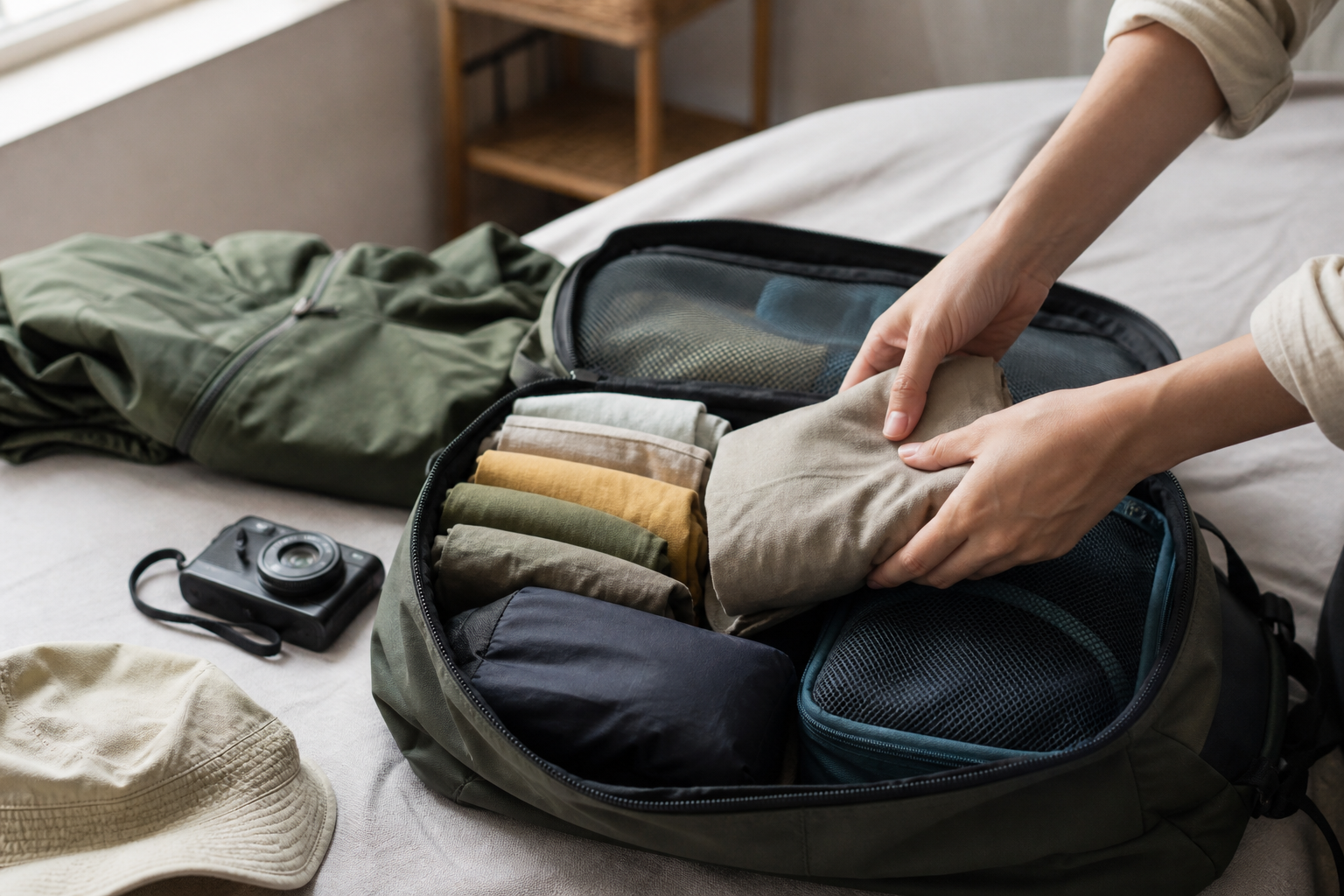
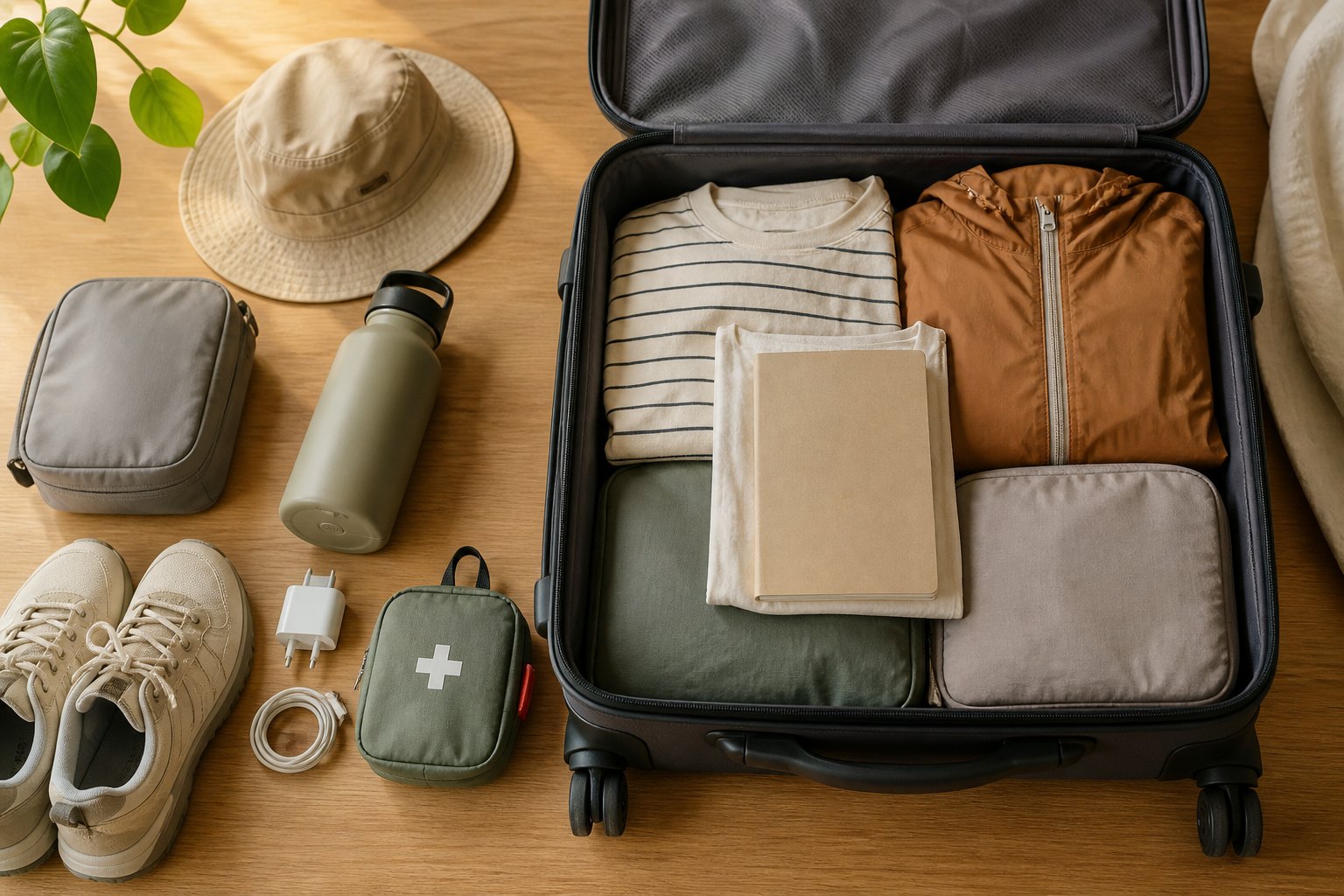
- Place liquids in sealed bags: Tighten caps, wrap each bottle individually, and place them in the middle of your clothing layers.
- Keep heavy items near the wheels: The suitcase will stand more stably and put less pressure on fragile items.
- Do not leave dangling straps: They can get caught in conveyor belts.
- Attach identification tags: Write your name and contact number; full home addresses are not necessary.
- Take photos before sending: Save pictures of the exterior and contents for reference if needed.
Checking in baggage at the airport
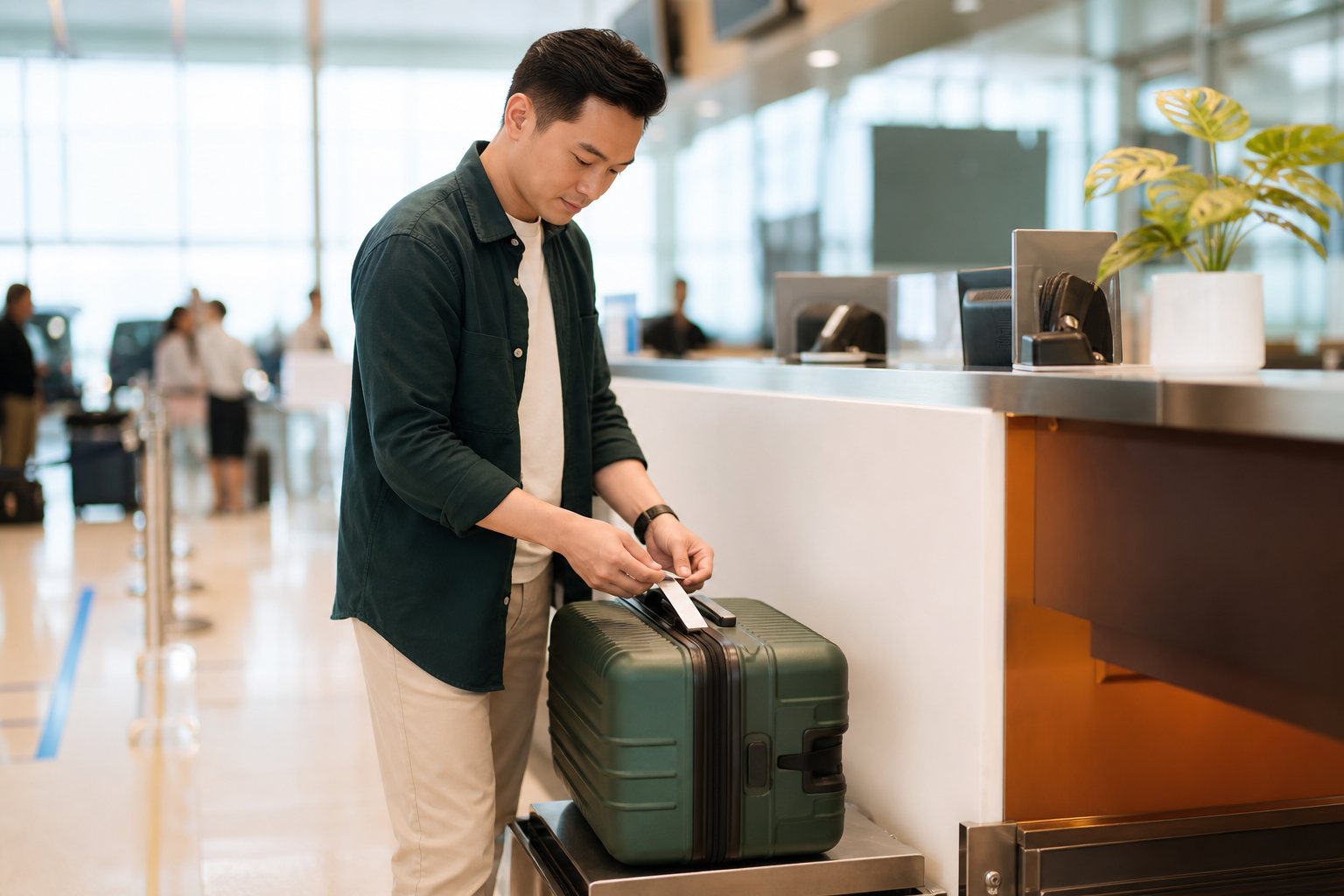
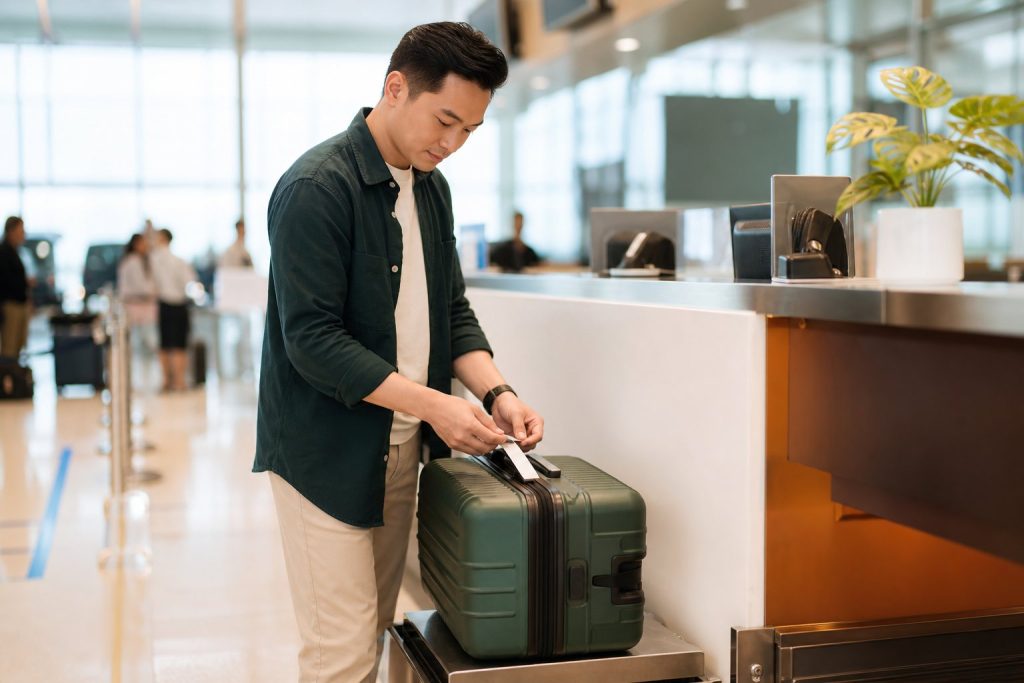
Arrive earlier if traveling during peak season, carrying special items, or checking multiple pieces. At the counter, staff will weigh your suitcase, check allowances, and print your baggage tag. Look over the destination airport code on the tag before your bag enters the belt, especially for connecting flights.
Keep your baggage claim stub or a photo of the barcode until you have collected all your belongings. If your suitcase needs to be dropped off at the oversized baggage counter, staff will direct you to the correct location. Do not leave the counter until you know your items have been accepted.
Collecting luggage after landing
Follow the directional signs to the baggage claim area and find the carousel number matching your flight. Check the color, tag, and name on the label before picking up your bag, as many suitcases look alike. For international flights with connections, check whether your baggage is checked through or if you need to collect it for customs clearance and re-check it.
If your suitcase does not appear, is damaged, or items are missing, visit the lost and found luggage desk before leaving the baggage hall. Have your boarding pass, baggage claim stub, suitcase photo, and accommodation address ready. Take clear photos of any damage at the airport and ask for a file reference number to track the case.
Tips to reduce baggage fees
- Purchase the correct luggage allowance right when booking your ticket or within the airline’s deadline before departure.
- Choose versatile clothing that can be mixed and matched, and utilize laundry services at your destination.
- Share shared items reasonably if traveling in a group while still adhering to piece limits.
- Avoid carrying large-sized bottles when items can be bought at your destination.
- Reweigh your suitcase on the return trip after purchasing souvenirs.
Checklist before locking your suitcase
- Checked piece count, weight, and dimensions against your ticket.
- Ensured no power banks or spare lithium batteries are inside the suitcase.
- Kept documents, money, medication, and valuables in carry-on luggage.
- Wrapped liquids securely and protected fragile items.
- Attached a name tag, contact number, and visual reference photo to the suitcase.
- Confirmed special items have been pre-approved by the airline.
Preparing checked luggage does not have to be overly complicated. By understanding your ticket allowances, separating the right item groups, packing securely, and keeping your baggage tags, you can avoid most common airport hassles.