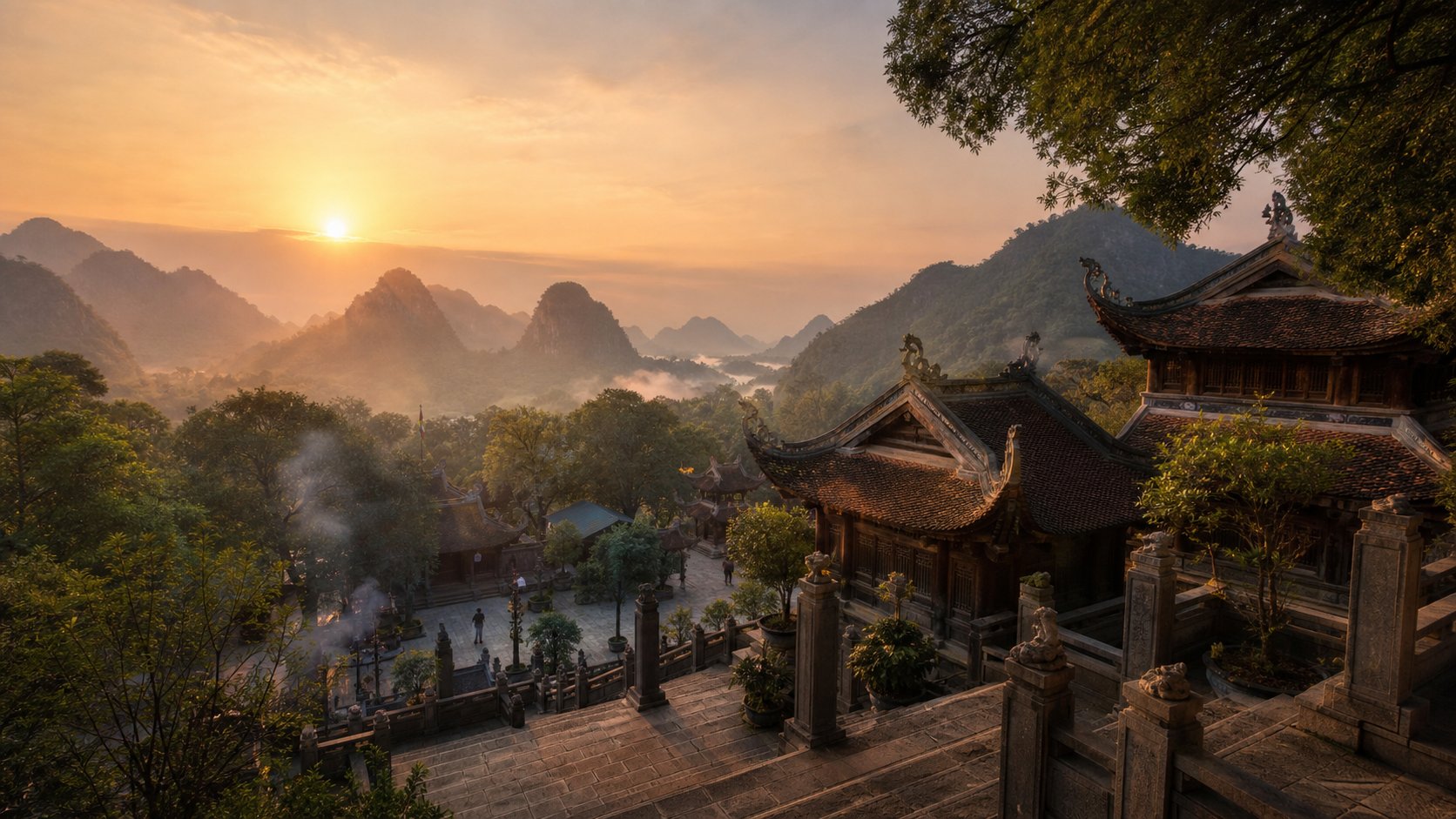
13 Famous Vietnamese Pagodas: Architecture & Visiting Guide
Vietnamese pagodas are not only places of worship but also repositories of architecture, art, and the memories of each region. Some pagodas are nestled amidst bustling city streets, others lean against mountains and face the sea, while certain complexes are so vast that exploring them takes nearly a full day. Consequently, a temple-visiting journey becomes much more rewarding when you understand the distinct characteristics of each location and maintain a leisurely pace.
The list below selects 13 prominent pagodas and spiritual structures from North to South. This article prioritizes independent cultural experiences, independent of amusement parks or commercial services. For locations with rearranged administrative divisions, former familiar names and current province or city designations are noted separately for easy reference.
What are the distinctive features of Vietnamese pagoda architecture?
Traditional pagodas in the North typically feature wooden frames, tiled roofs, inner courtyards, and multi-layered layouts. Familiar components include the triple-gate entrance (tam quan), front hall, main sanctuary, corridors, ancestral house, and stupas. In the Central region, architecture is visibly influenced by local climate and history; meanwhile, many Southern pagodas showcase richer colors, materials, and decorative forms.
Not every pagoda contains every single category, and the names of the chambers may vary. When visiting, you should check the layout map or follow the guided paths rather than wandering into the inner sanctum uninvited.
1. One Pillar Pagoda, Hanoi
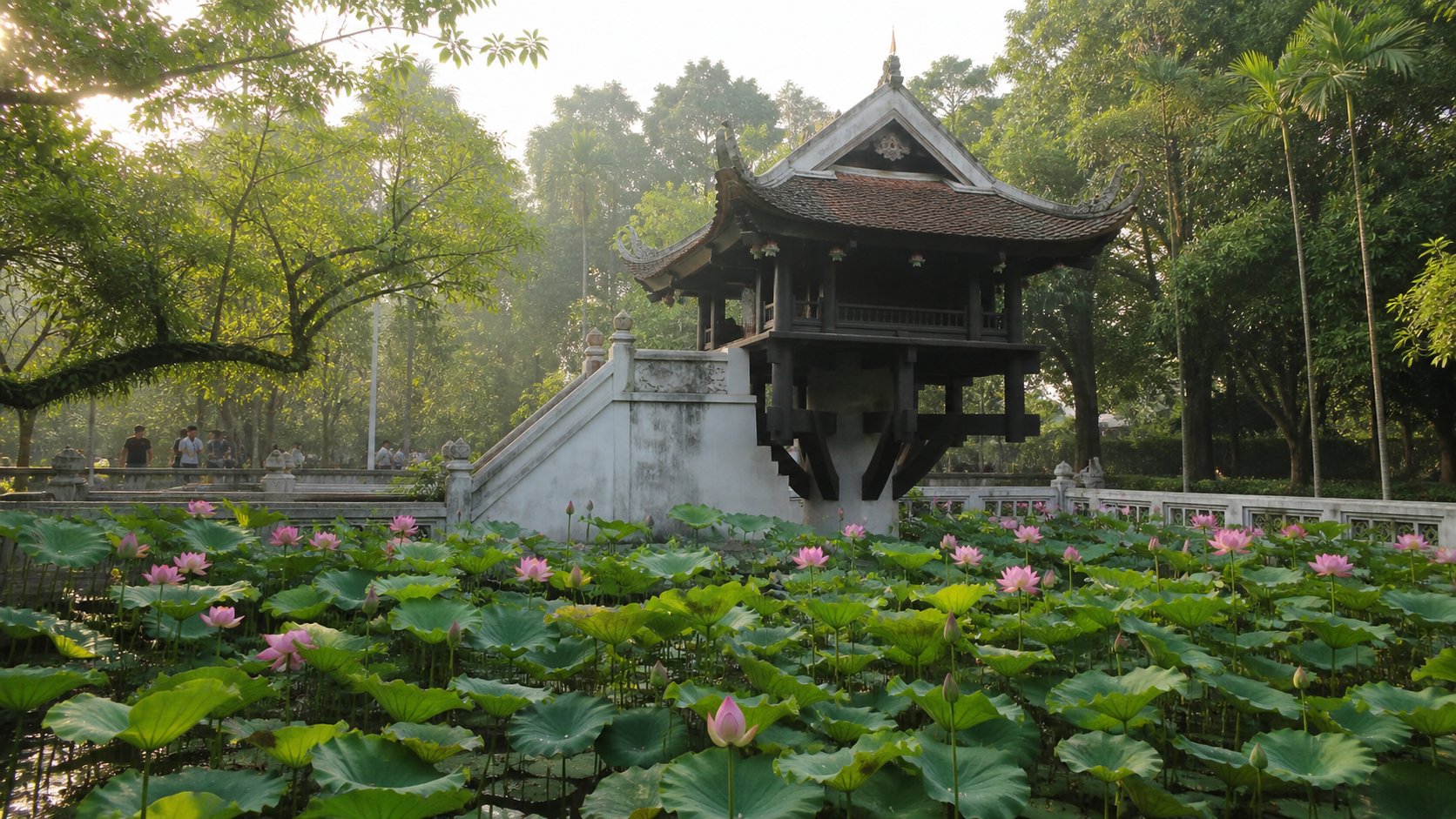
The One Pillar Pagoda is a famous architectural symbol of the Capital. This small structure boasts a unique design: the Lotus Blossom Stage (Liên Hoa Đài) is erected on a single stone pillar in the middle of a pond, evoking the image of a lotus rising above the water surface. The attraction is located within the Ba Đình relic cluster, making it easy to combine with the Ho Chi Minh Mausoleum, Ho Chi Minh Museum, and central streets.
You should arrive early, keep your voice low, and avoid standing too long on the narrow pathway so everyone can observe the structure.
2. Tam Chúc Pagoda, formerly Hà Nam area
The Tam Chúc complex lies amidst a lake and limestone mountains, formerly belonging to Hà Nam province and currently part of Ninh Bình province. The space is very vast, comprising multiple halls, sutra pillar gardens, and elevated viewpoints overlooking the landscape. First-time visitors should map out their desired areas in advance, wear comfortable shoes, and allocate time for rest.
The morning offers soft lighting and less sunshine. If visiting on weekends or during festival seasons, waiting times for internal transport can be long, so avoid cramming too many Ninh Bình sights into a single day.
3. Hộ Quốc Pagoda, Phú Quốc
Hộ Quốc Pagoda sits on a mountain slope overlooking the Phú Quốc sea. The island formerly belonged to Kiên Giang province and currently falls under An Giang province. Memorable highlights here include expansive views, a breezy courtyard, and the harmonious blend of temple architecture with the marine landscape.
It is best to visit in the early morning or late afternoon, wear modest clothing, and avoid inappropriate poses within the worship areas. The route to the pagoda can be combined with several southern beaches on the island, though actual travel distances should be factored in.
4. Dâu Pagoda, Bắc Ninh
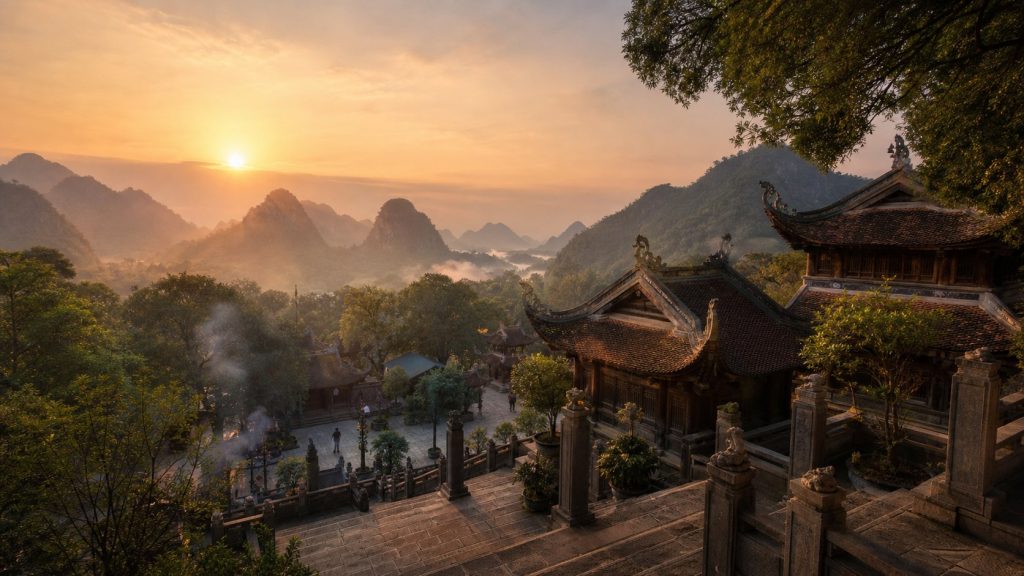
Dâu Pagoda is closely linked to the Kinh Bắc cultural region and a long-standing Buddhist history. Hòa Phong Tower, the temple courtyard, along with the system of statues and ritual objects, create a solemn atmosphere. Bắc Ninh now encompasses the former Bắc Giang area, so when planning your itinerary, you can combine visits to craft villages or historical sites across both former cultural regions.
The pagoda is not too far from Hanoi, making it ideal for a day trip. Check opening hours and avoid making noise when the temple is conducting rituals.
5. Bridge Pagoda (Chùa Cầu), Hội An
Chùa Cầu is a unique structure combining a covered bridge with a sacred worship space. Hội An formerly belonged to Quảng Nam province and is currently part of Đà Nẵng city. Located right in the heart of the ancient town, it is usually crowded from late afternoon until night.
To examine the architectural details closely, you should visit in the morning. Refrain from cutting in line, do not touch wooden structural components, and keep in mind that this is a small heritage site rather than a stop suitable for large tour groups lingering for long periods.
6. Đại Tòng Lâm, formerly Bà Rịa – Vũng Tàu area
Vạn Phật Quang Đại Tòng Lâm Tự features a spacious campus and numerous Buddhist structures. The former Bà Rịa – Vũng Tàu area now belongs to Ho Chi Minh City. This spot is suited for a road trip and can be combined with landmarks in Phú Mỹ or Vũng Tàu if you have two days.
Due to the large grounds and strong Southeastern sunlight, bring water, a hat, and choose cooler hours. Respect the boundaries restricted to the monks’ quarters and inner sanctum.
7. Long Sơn Pagoda, Nha Trang
Long Sơn Pagoda is situated near central Nha Trang, highlighted by the giant Buddha statue atop Trại Thủy Hill. To reach the statue area, visitors must climb numerous stone steps; in return, you are rewarded with sweeping views of the city.
Walk slowly, guard your personal belongings, and politely decline unclear sales pitches. Khánh Hòa currently includes the former Ninh Thuận area, but Nha Trang remains in Khánh Hòa province and retains its familiar geographical name.
8. Som Rong Pagoda, formerly Sóc Trăng area
Som Rong Pagoda bears the distinctive Khmer architecture of the Mekong Delta with multi-tiered roofs, striking colors, and an airy campus. The former Sóc Trăng area is now part of Cần Thơ city. This is an ideal place to learn about Khmer culture, but visitors must distinguish between sightseeing and the community’s religious living spaces.
Modest attire, refraining from close-up photos of people praying, and asking permission before photographing inside the main hall are rules to observe.
9. Linh Ứng Pagoda Sơn Trà, Đà Nẵng
Linh Ứng Pagoda on the Sơn Trà Peninsula commands views overlooking the sea and Đà Nẵng city. The road up is scenic but features steep slopes and sharp curves; motorbike riders must check their brakes, drive slowly, and avoid stopping in the middle of bends to take photos.
Mornings are generally more pleasant. Monkeys may appear in the Sơn Trà area, so do not feed the wildlife and keep food hidden from view.
10. Đồng Pagoda, Yên Tử, Quảng Ninh
Đồng Pagoda sits atop the peak of Yên Tử, marking the final destination of the mountain trek. Whether you choose to walk, take the cable car, or combine both, you must prepare grip-friendly shoes and a jacket because weather conditions at high altitudes change rapidly.
On rainy days or thick fog, stone steps can become slippery. Do not force the climb if your health is compromised; the value of the trip lies in the entire journey through the forest and the pagodas along the way, not just touching the summit.
11. Phúc Lâm Pagoda, Hưng Yên
Phúc Lâm Pagoda is widely known for its striking golden colors and architecture that makes a strong impression in photographs. Hưng Yên now encompasses the former Thái Bình area. If you visit the pagoda, you can combine it with an exploration of rural villages and the cuisine of the Red River Delta.
Do not just focus on taking photos. Spending a few minutes observing the layout, materials, and how locals utilize the space will give your experience greater depth.
12. Bái Đính Pagoda, Ninh Bình
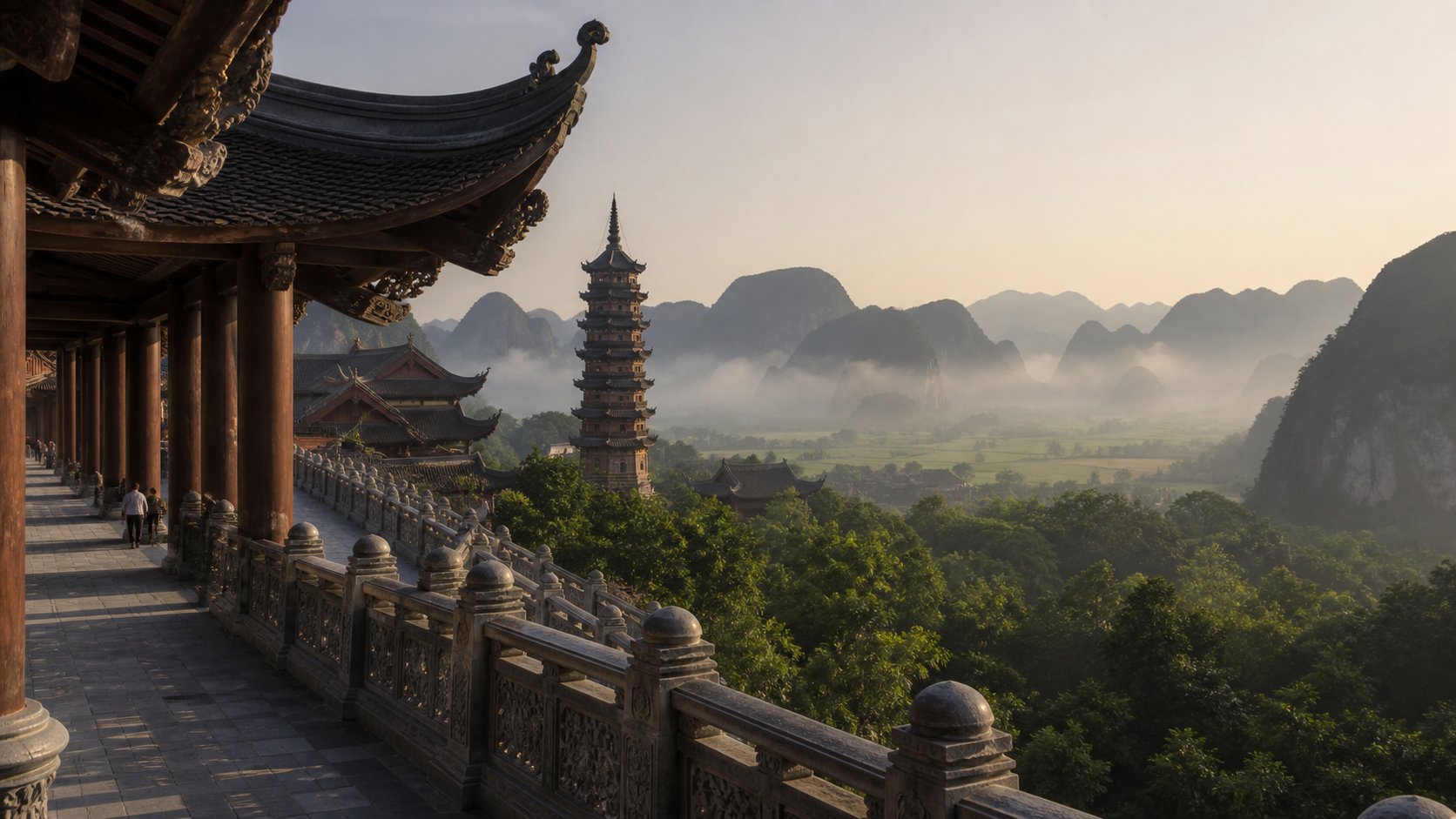
Bái Đính consists of an ancient pagoda sector and a vast new complex. The long corridors, halls, bell towers, and varying terrain mean your visit will take longer than anticipated. It is advisable to choose a one-way route, keep your transport ticket, and set a clear meeting spot if traveling in a group.
Bái Đính can be paired with Tràng An over two days. If you only have one day, select one primary experience rather than rushing through both the pagoda complex and multiple boat routes.
13. Vietnam Quoc Tu, Ho Chi Minh City
Vietnam Quoc Tu is located within a crowded metropolis yet maintains a relatively tranquil atmosphere. The complex stands out with its grand stupa and wide courtyard, making it convenient for travelers looking to explore Buddhist architecture right inside the city.
Check activity hours, park your vehicle in designated areas, and avoid major ritual times if your sole goal is architectural sightseeing.
Suggested regional temple-visiting routes
- Hanoi – Bắc Ninh – Ninh Bình: Suited for three days, combining the One Pillar Pagoda, Dâu Pagoda, and either the Tam Chúc or Bái Đính complex.
- Đà Nẵng – Hội An: Dedicate a half-day to Linh Ứng Pagoda Sơn Trà and a morning walking through Chùa Cầu.
- Nha Trang – Chàm cultural region: Visit Long Sơn Pagoda then expand your journey to other cultural landmarks in Khánh Hòa.
- Ho Chi Minh City – Vũng Tàu: Combine Vietnam Quoc Tu with Đại Tòng Lâm in a two-day trip.
- Cần Thơ – former Sóc Trăng area: Explore Khmer pagodas and local cuisine at a slow pace.
Etiquette rules when visiting pagodas
- Wear modest clothing, covering shoulders and knees.
- Keep your voice low and silence your phone inside the main sanctuary.
- Do not touch statues, altars, or artifacts without permission.
- Do not photograph people participating in rituals; check regulations before taking photos indoors.
- Do not casually place money on statues or altars; make donations in designated areas.
- Do not litter, break branches, or feed wild animals.
- Avoid opaque or high-pressure commercial services, and ask for prices before using any service.
Each pagoda possesses its own history and daily routine. Moving slowly, observing carefully, and maintaining respect will turn your spiritual journey into a true cultural experience, rather than just a quick photo-taking lap before leaving.