Hoai River Hoi An: Walking Both Banks and Tips
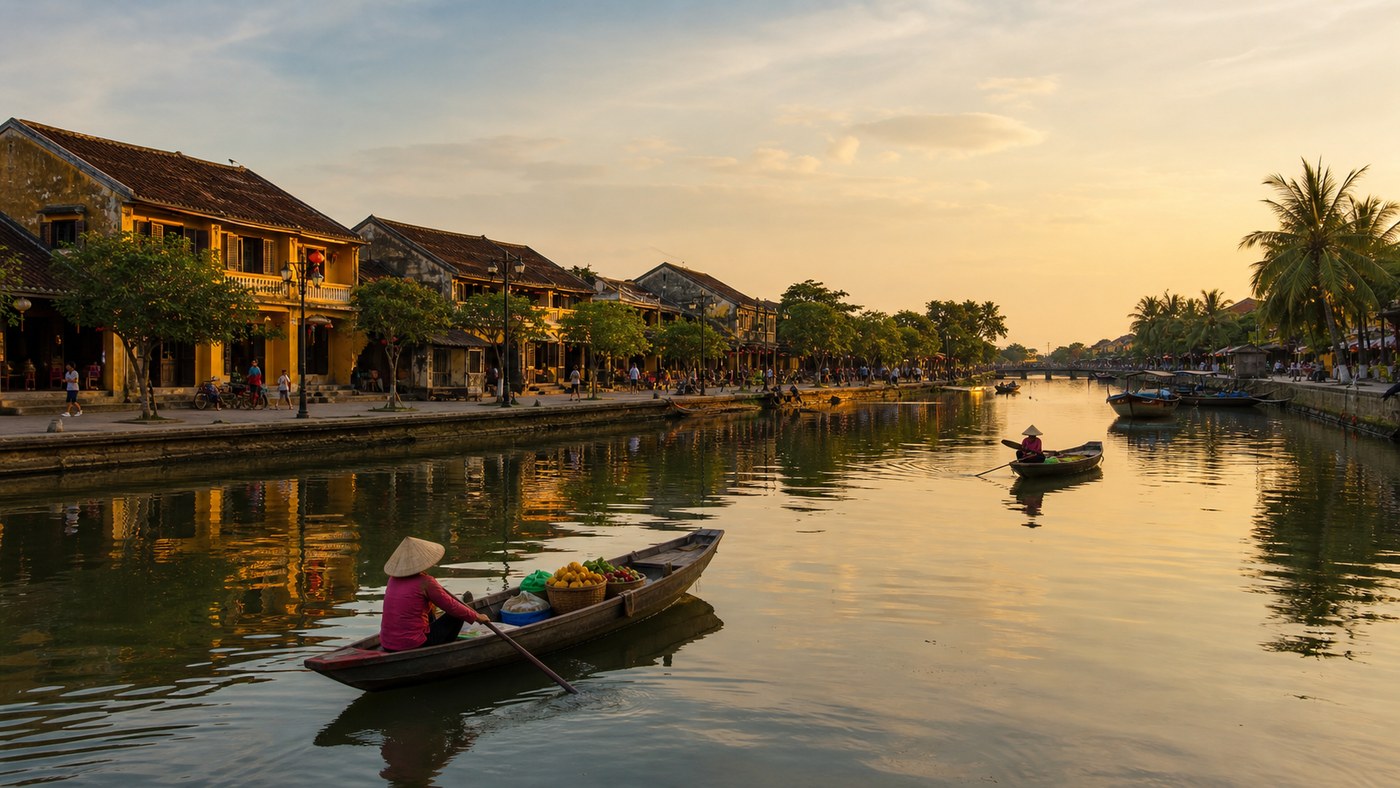
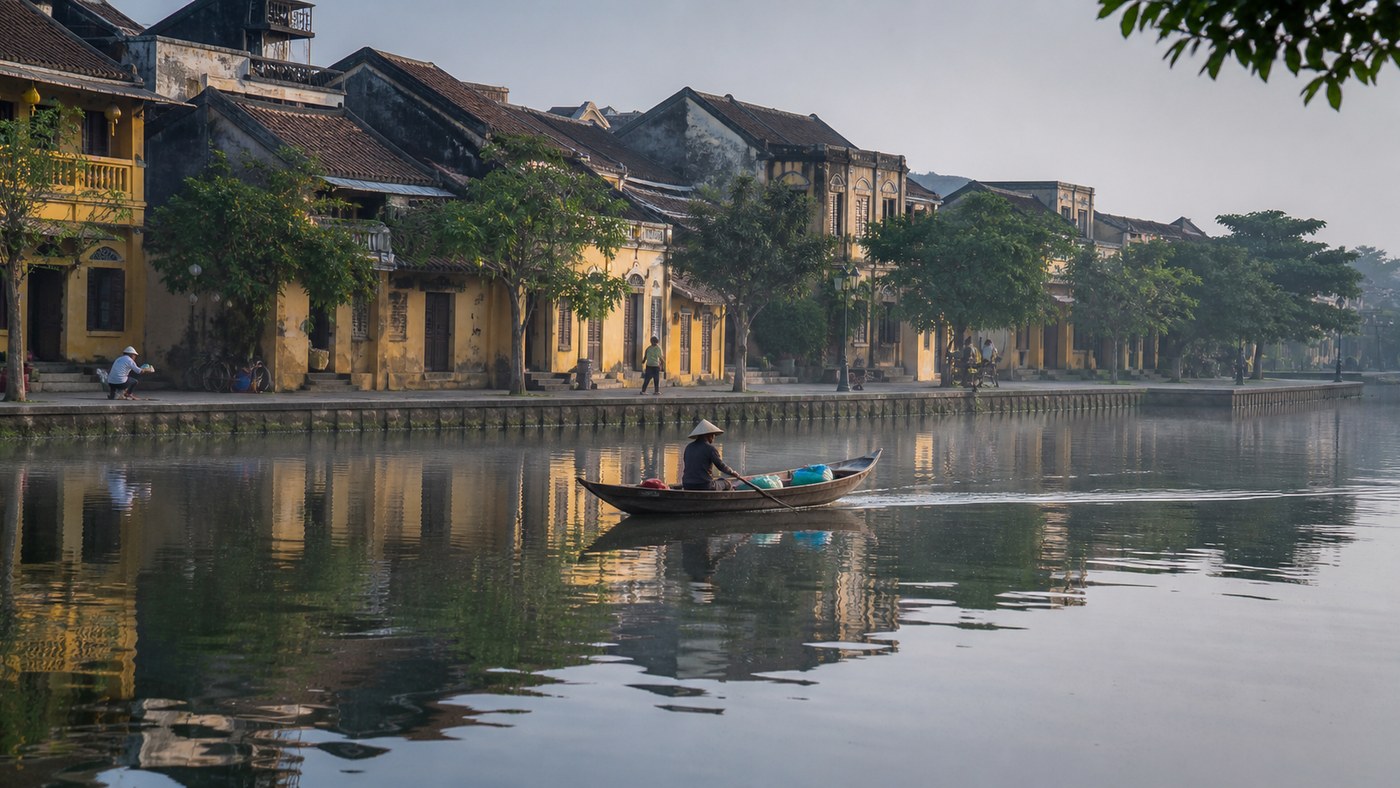
The Hoai River is a small waterway connected to the Thu Bon River system, flowing through the core of Hoi An’s ancient town. The river not only creates a signature landscape but also reflects the rhythm of life from the ancient trading port: yellow-washed houses, boat docks, riverside markets, and pedestrian streets. You can experience this place simply by taking a walk along both banks without needing to rush through every service or crowded activity.
Where is the Hoai River located in the ancient town?
The stretch of the river most known to travelers lies along the southern edge of the ancient quarter, near the Japanese Covered Bridge, Bach Dang Street, the market area, and pedestrian zones. Both banks are connected by several bridges, making it easy to form a closed-loop sightseeing route. You can start near the Japanese Covered Bridge, walk along the north bank, cross the bridge, and return via the south bank.
Most riverside viewpoints are accessible on foot. Motorized vehicles are restricted during certain hours in the ancient town zone, so walking or cycling is usually more convenient. On heavy rainy days or when water levels rise, paths right along the edge of the river can be slippery and narrow; please follow on-site directional signs.
When is the best time to visit the Hoai River?
Early morning is the ideal time to observe local life and photograph the calm water. The air is cool, the streets are uncrowded, and the faded wall colors stand out clearly under soft light. If you prefer a quiet Hoi An, visit before tour groups start arriving in the central area.
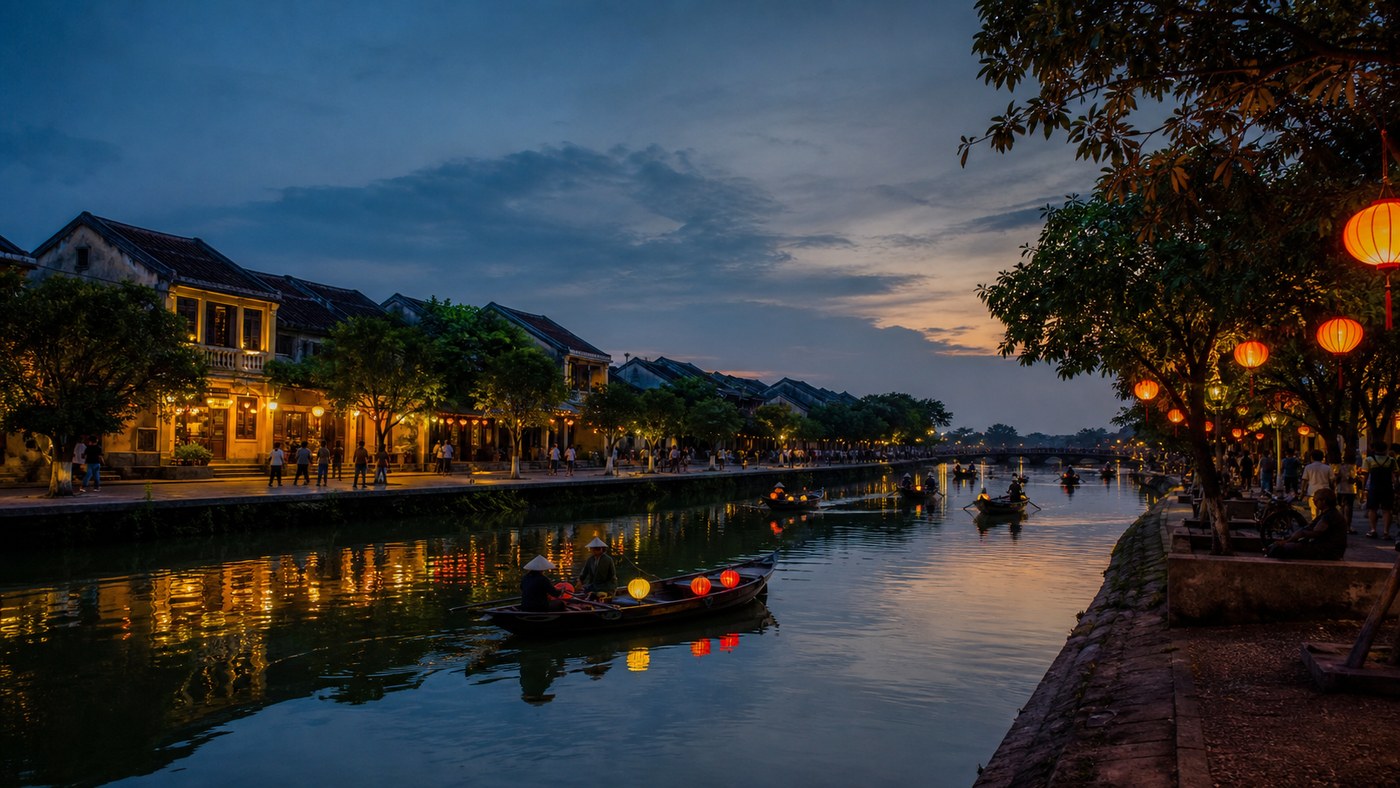
Late afternoon brings warm sunlight over the tiled roofs, while after dark is when the lights from both banks reflect onto the river. Evenings are considerably busier, especially on weekends and holidays. Photographers should arrive while it is still daylight, choose a spot in advance, and wait for the transition to the blue hour rather than squeezing into the most crowded spots.
Experiencing the Hoai River at a slow pace
Walking along both banks
This is the simplest and most proactive way to explore. The north bank is close to ancient houses, small cafes, and markets; the south bank offers wide views of the ancient town facade. When taking photos, stand closely against the inner edge, do not block pathways, and avoid leaning on old railings if warning signs are posted.
Taking a short boat ride
A short boat trip provides a different perspective, but safety should always take priority over framing photos. Only choose legally operating boats equipped with enough life jackets for every passenger and do not overload. Clearly ask about the duration, route, and cost before stepping onto the boat; young children must wear life jackets throughout the trip.
Watching the town light up
The best lighting usually comes from the houses and riverside lamps, requiring no excessive props. If you participate in releasing floating paper lanterns, choose eco-friendly materials, follow collection instructions, and do not throw packaging, candles, or plastic items into the water. The true value of the experience lies in the cultural atmosphere, not the number of lanterns released.
Suggested half-day itinerary
- Early afternoon: visit a heritage site in the ancient town, then rest in a shaded area.
- Late afternoon: walk along Bach Dang Street, view the river, and photograph the building facades in the golden sunlight.
- Dusk: cross the bridge to the opposite bank for a panoramic view of the ancient town lighting up.
- Evening: walk back to the central area, watch Bai Choi folk singing or public cultural activities if scheduled.
Notes on weather, crowds, and the environment
The sunny season keeps schedules more stable, but central Vietnam’s weather can be hot and humid. Bring water, a hat, and plan a mid-day break. During the rainy season, monitor weather forecasts, river water levels, and local announcements; do not board boats during thunderstorms, strong winds, or if operators do not provide life jackets.
Evenings bring many people, bicycles, and closely packed shops. Keep young children on the inner side of walkways, wear bags in front of you, and set a meeting point in case your group gets separated. Do not sit on embankments, avoid stepping onto steps close to the water in low light, and do not fly recording devices in restricted zones.
The Hoai River is part of a living community, not merely a photo backdrop. Limit noise, do not take close-up photos of residents without permission, and carry your trash away from the riverbanks. These small actions make the trip easier for both travelers and the local community.
Frequently asked questions
Is it necessary to take a boat ride?
No. Walking along both banks offers plenty of great angles and is well-suited for those prone to motion sickness or traveling with small children. Boating is just an optional activity when weather and safety conditions are right.
How much time should I spend in the Hoai River area?
About two to three hours is enough to complete a loop, rest, enjoy the view, and wait for the town lights to turn on. If you combine it with visits to ancient houses, assembly halls, or cultural activities, allocate half a day.
The most memorable experience along the Hoai River often comes from slowing down: watching the changing light on the water, listening to the sounds of the ancient town, and choosing a quiet corner instead of trying to check off a long list of sights.