Da Nang Dragon Bridge: Architecture and Han River Viewpoints
The Dragon Bridge can be experienced in two very different ways: from a distance, its curves form a distinct silhouette across the Han River; closer up, the dragon head and steel details become subjects of their own. A walking tour to admire the bridge therefore does not necessarily need to be tied to a performance or a crowded schedule.
A transportation structure shaped like a dragon
Crossing the Han River in Da Nang, the Dragon Bridge was opened to traffic on March 29, 2013. The dragon motif is inspired by the Ly dynasty dragon, with its head facing the sea. Continuous curves create the impression of a dragon’s body moving across the water’s surface.
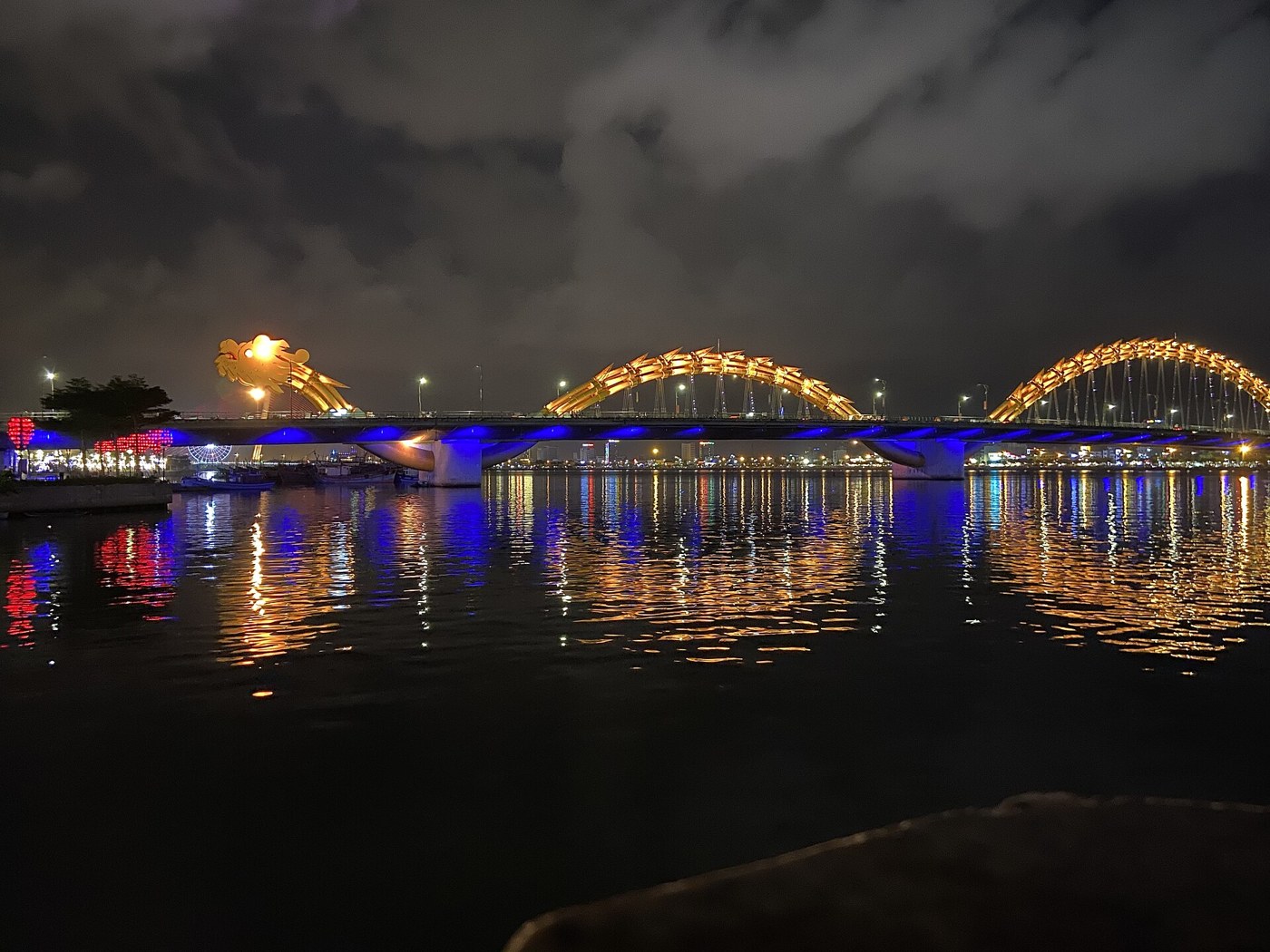
The noteworthy point is not only the yellow dragon head. The continuous arch shape and the combination of structural elements give the structure its own silhouette when viewed from the side. Standing far back, you can observe the relationship between the bridge spans, the dragon body, and the space underneath that a close-up photo cannot fully capture.
Choosing your viewpoint based on what you want to observe
- To see the bridge shape: find a permitted standing position along the riverbank, far enough from the structure to see multiple spans in the same frame. There is no need to cram the entire length into the photo if obstacles clutter the composition.
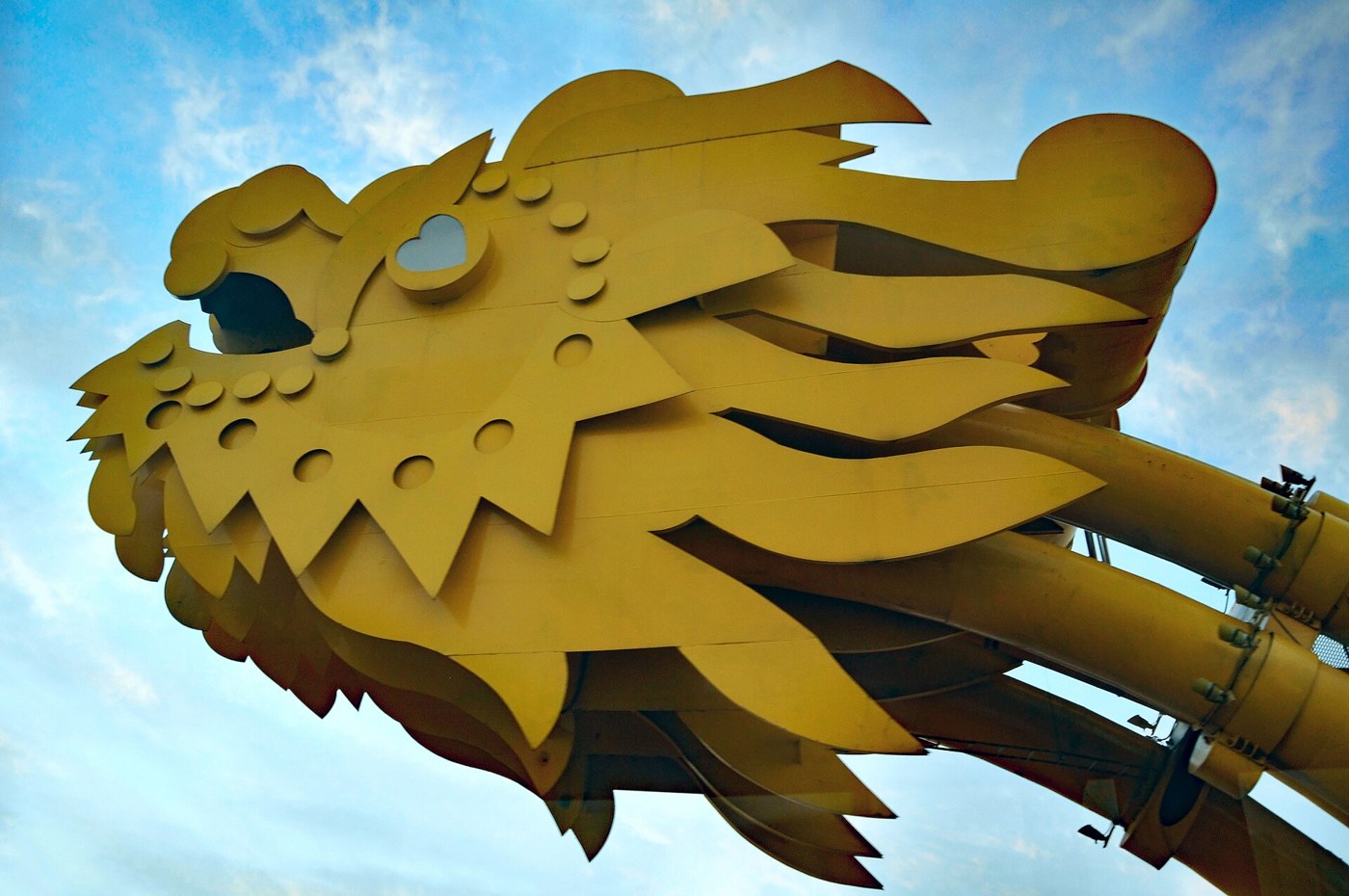
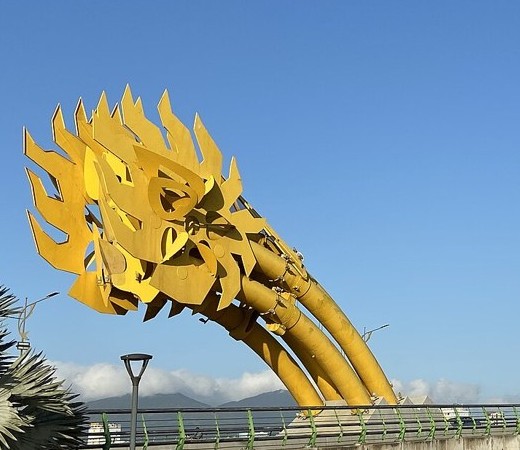
- To view the dragon head: choose a valid pedestrian walkway and observe from a stable standing point. A side angle reveals facial features more clearly, while a diagonal angle emphasizes the upward reach of the head and neck.
- To photograph reflections: prioritize viewpoints with the water surface in front. Wind and river currents will alter the light streaks; do not expect a mirror-flat surface at all times.
Do not stand in the roadway or stop vehicles on the bridge just to adjust shooting angles. If your desired spot is crowded or has limited access, change your position instead of crowding the outer railing.
Daytime for details, evening for massing
Daytime is convenient for observing surface textures, the dragon head shape, and how structural parts connect. When shooting against the light, try changing your standing direction on the permitted path or framing the entire mass as your subject; do not try to make the yellow color look brighter than it actually is.
In the evening, the lighting on the bridge and water creates a different atmosphere. With a phone, keep it steady, tap the bright areas to avoid blown-out highlights, and take a few shots to select the least blurry one. If using a tripod, set it up neatly to leave room for pedestrians.
A compact walk around the bridge
Start by identifying a suitable pick-up/drop-off point or parking spot. Then choose a section along the riverbank, admire the bridge from afar first, and only then decide whether to proceed to a closer angle. This approach helps you know what you want to see, rather than walking back and forth just to find a photo that matches social media.
If you want to see both daylight scenery and evening lighting, you can spend a late afternoon there when weather permits. This is merely a suggestion for pacing, not a fixed schedule for lights turning on. Rain, strong winds, or local traffic diversions are reasons to shorten your trip.
When walking with young children, pick an easy-to-recognize meeting point and keep them in sight. If anyone in your group has mobility difficulties, check steps, pavement surfaces, and return paths before walking far. A short, comfortable walk is usually better than trying to cover both banks in one go.
The bridge is still a functioning roadway
Scenery does not change the primary function of the bridge. Obey traffic signs, pedestrian walkways, and traffic control instructions; cross the street at designated crossings. Do not climb railings, scale structures, or hold phones outside the edge to take photos.
This article focuses on architecture and viewpoints, and does not provide a performance schedule. If your trip depends on a specific activity, check official announcements close to your arrival date; lit-up lights do not prove an event is taking place.
Pack light, spend time looking
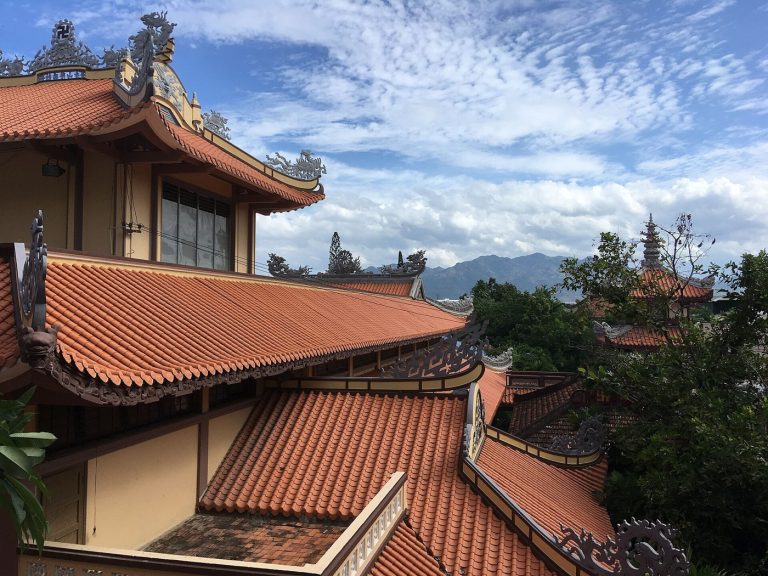
Drinking water, comfortable walking shoes, and a phone with enough battery are usually more useful than a bulky set of props. Keep your bags compact, do not block walkways, and dispose of trash properly. The photos in this article are architectural references, two of which were taken in 2020; surrounding landscapes and pedestrian layouts may have changed.
The interesting part of the Dragon Bridge is that a single subject can offer multiple frames without needing to move too far. Try observing the panorama, picking one detail, and then returning to watch the river surface: those three approaches are enough for an intentional bridge visit.