Hanoi One Pillar Pagoda: Architecture & Visitor Guide
The One Pillar Pagoda is one of the most recognizable landmarks in Hanoi. The structure features a small shrine perched on a single pillar in the middle of a pond, with curved tile roofs and a flight of stairs leading up. Its actual footprint is compact, yet the concise architectural composition makes it a notable stop when exploring the Ba Đình district.
This remains an active place of worship and frequently welcomes many visitors. Therefore, the best experience comes not from rushing to take countless photos, but from observing the architecture, yielding the pathway, and maintaining polite behavior. Operating hours, entrances, and accessible areas may change; it is advisable to check official information close to your travel dates.
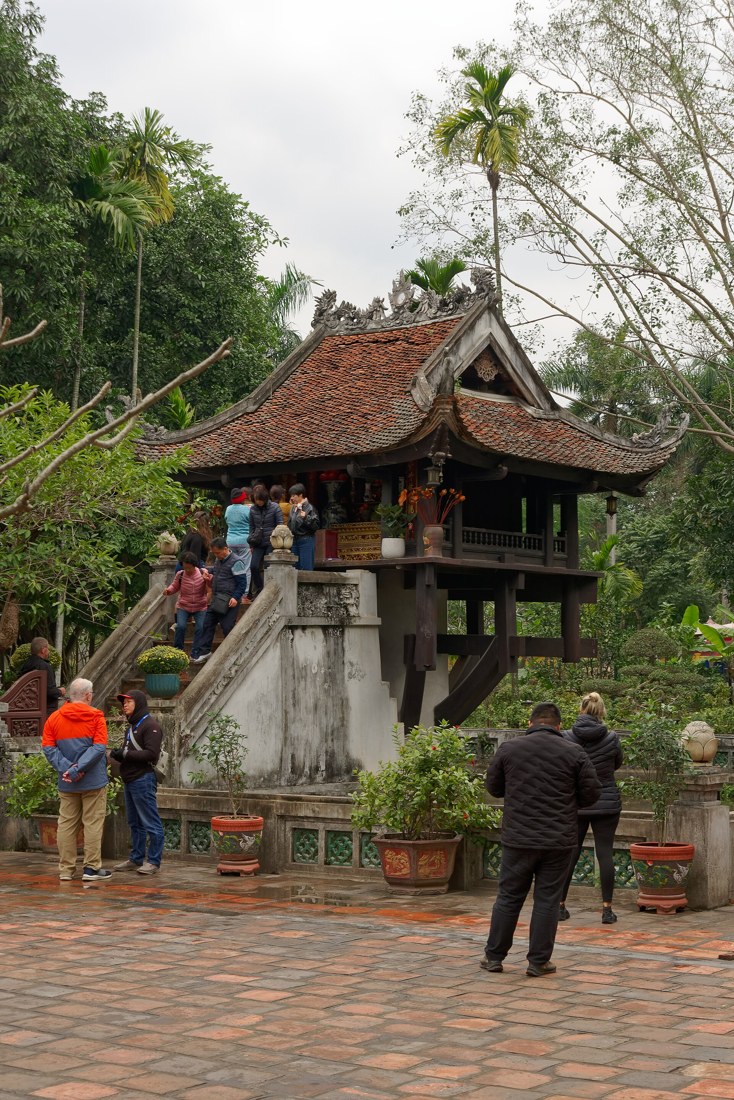
Key Features of the Lotus Stage
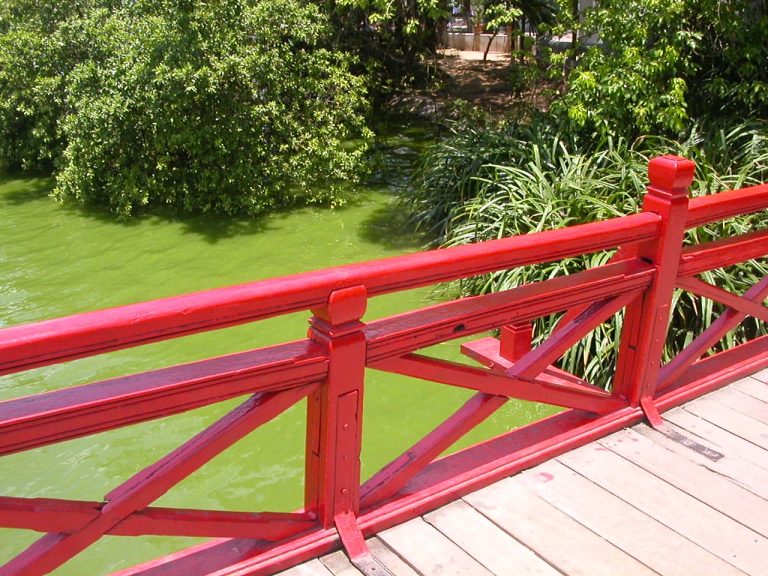
The main sanctuary is commonly known as the Lotus Stage (Liên Hoa Đài). Viewed from the side, one can clearly see the structural block rising above the water surface and the supporting framework underneath. The roof shape, upward-curving eaves, wooden railings, and staircase create multiple layers of lines despite the very neat overall composition.
To fully observe it, walk slowly around the pond along the permitted pathways rather than just standing at the foot of the stairs. Each angle reveals a different relationship between the tiled roof, the supporting pillar, the water surface, and the surrounding trees.
The Lotus Pond and Surrounding Gardens
The body of water gives the structure breathing room and creates reflective shapes when the lighting is right. Lotus flowers change with the seasons, so the scenery does not always match promotional photos. Even when the lotus is not in bloom, the proportion between the pond and the shrine remains a key detail for understanding the architectural concept.
Do not step over the railings, touch, or pick plants in the pond. If you want to take reflection photos, lower your camera angle from the legal pathway and avoid placing bags or equipment on the edge of the pond.
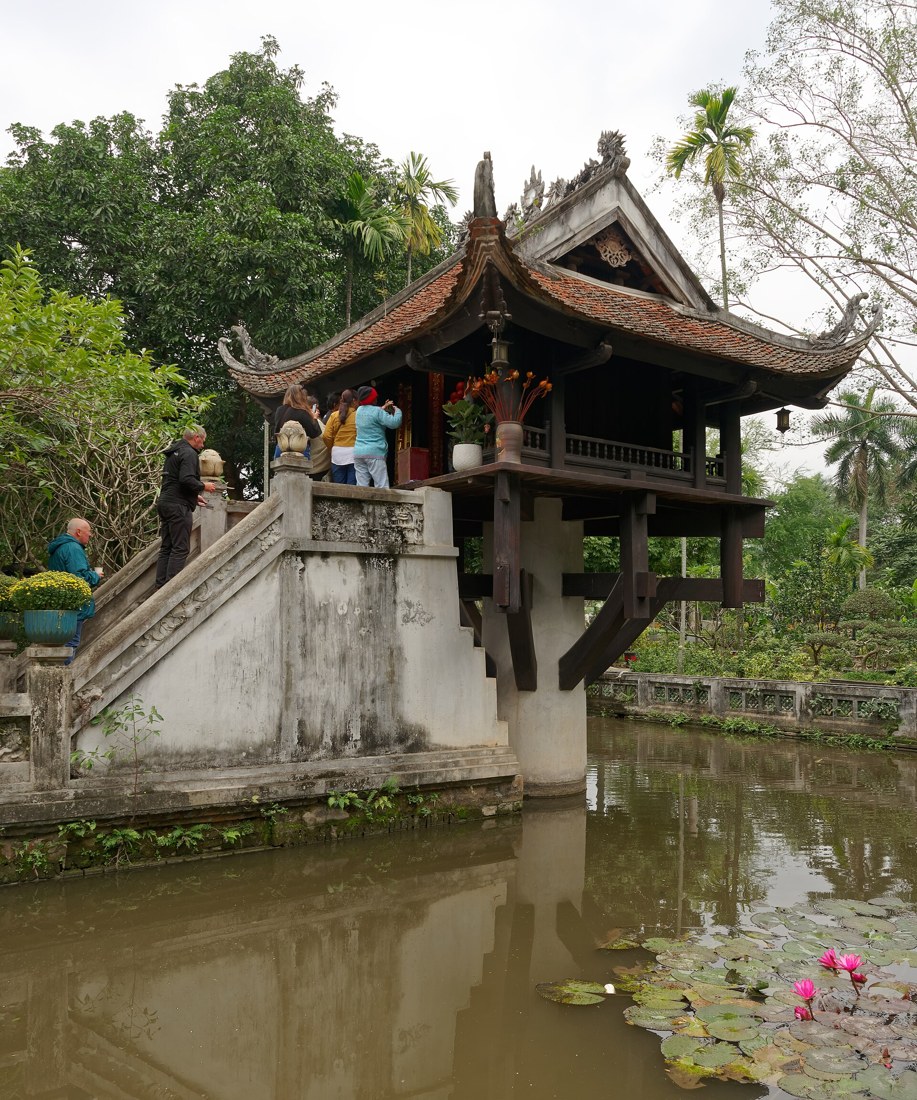
Observing Roof Tiles and Wooden Details
The tiled roofs feature a pronounced curve at the corners, creating a lighter visual feel for the small sanctuary. Standing close, you can observe the textures of the roof tiles, wooden structural components, and decorative ridge elements. Overcast days generally help details appear evenly, while strong sunlight can easily cast shadows under the roof.
There is no need to crowd onto the stairs to see every detail. A diagonal angle from across the pond usually offers a more complete view without obstructing worshippers.
Etiquette When Accessing the Sanctuary
- Queuing: Wait your turn properly on the narrow stairs and do not linger in the middle of the pathway.
- Attire: Choose modest, neat clothing that is convenient for climbing steps.
- Noise Levels: Speak quietly, silence your phone, and do not play audio out loud.
- Photography: Follow on-site guidelines, and do not use flash inside sacred spaces.
- Offerings: Do not arbitrarily touch, move, or place offerings in unguided locations.
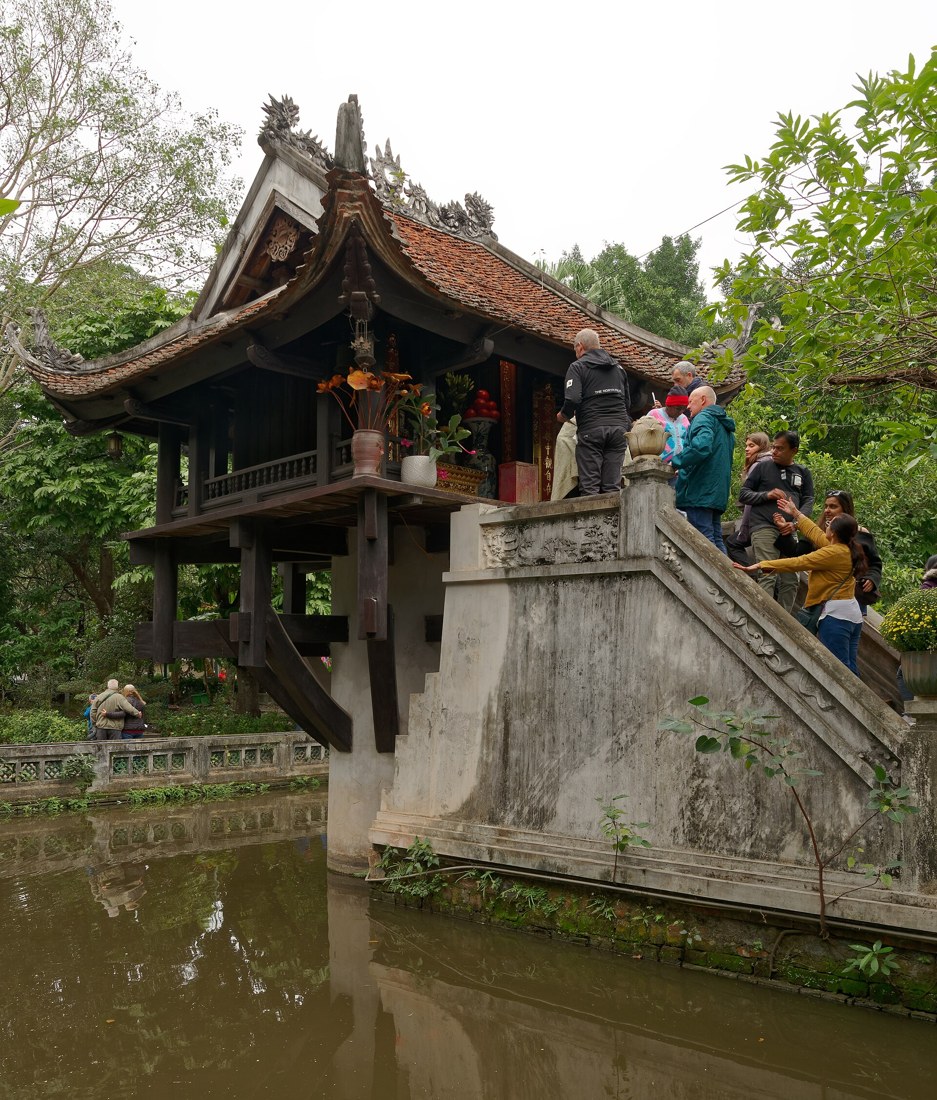
Choosing the Best Time to Visit
Weekdays and early mornings are generally easier for observation when visitor numbers are not too high. On weekends, holidays, or during peak tour group hours, the area around the stairs can become crowded. If it gets busy, take time to walk around the gardens first and return when the access way is clearer.
Hanoi summers are hot and humid, while rainy days make the stone steps slippery. Good grip shoes, a small water bottle, and light luggage will make getting around much easier. Avoid bringing large tripods unless truly necessary.
Combining Your Itinerary in Ba Đình
The One Pillar Pagoda fits well into a walking tour exploring monuments and historical spaces around Ba Đình. Choose a few close-by points of interest, leave time to rest, and check individual regulations for each site. A moderately paced visit helps travelers look closer rather than just rushing between photo spots.
When calling a taxi or using personal transport, use designated pick-up, drop-off, and parking areas. Do not stop to block gates, walkways, or security checkpoints.
Tips for Clean and Polite Photography
Horizontal shots from the pond side showcase the relationship between the shrine, pillar, and water surface; vertical shots suit the curved roof and staircase. Keeping the camera level prevents the structure from appearing tilted. If other visitors are in the frame, avoid close-up face shots and do not ask people engaged in worship to move aside.
The pagoda is compact in scale, so a few well-chosen angles are plenty. After taking photos, put your phone away to directly observe the textures of wood, tile, water, and greenery.
Check Before You Go
Information on opening hours, entrances, photography regulations, and temporarily restricted areas may change due to management activities or ceremonies. Confirm details through reliable local channels near your travel date and follow on-site directional signs.
A visit to the One Pillar Pagoda may be brief, but it is rich in value if visitors understand how the structure sits on the water, recognize the rhythm of the roofs, and maintain respect for the sacred space. Moving slowly, observing carefully, and avoiding crowding are three simple ways to ensure a complete experience.