Lap An Lagoon: Mountains, Waters, and Shoreline Walks
At Lap An Lagoon, what is truly worth observing is how the mountain range, clouds, and water surface shift within the same frame. A stroll along the lagoon does not require many activities: find a suitable vantage point, observe the scenery from a few different distances, and let the trip slow down a little.
How is Lap An Lagoon different from Lang Co Beach?
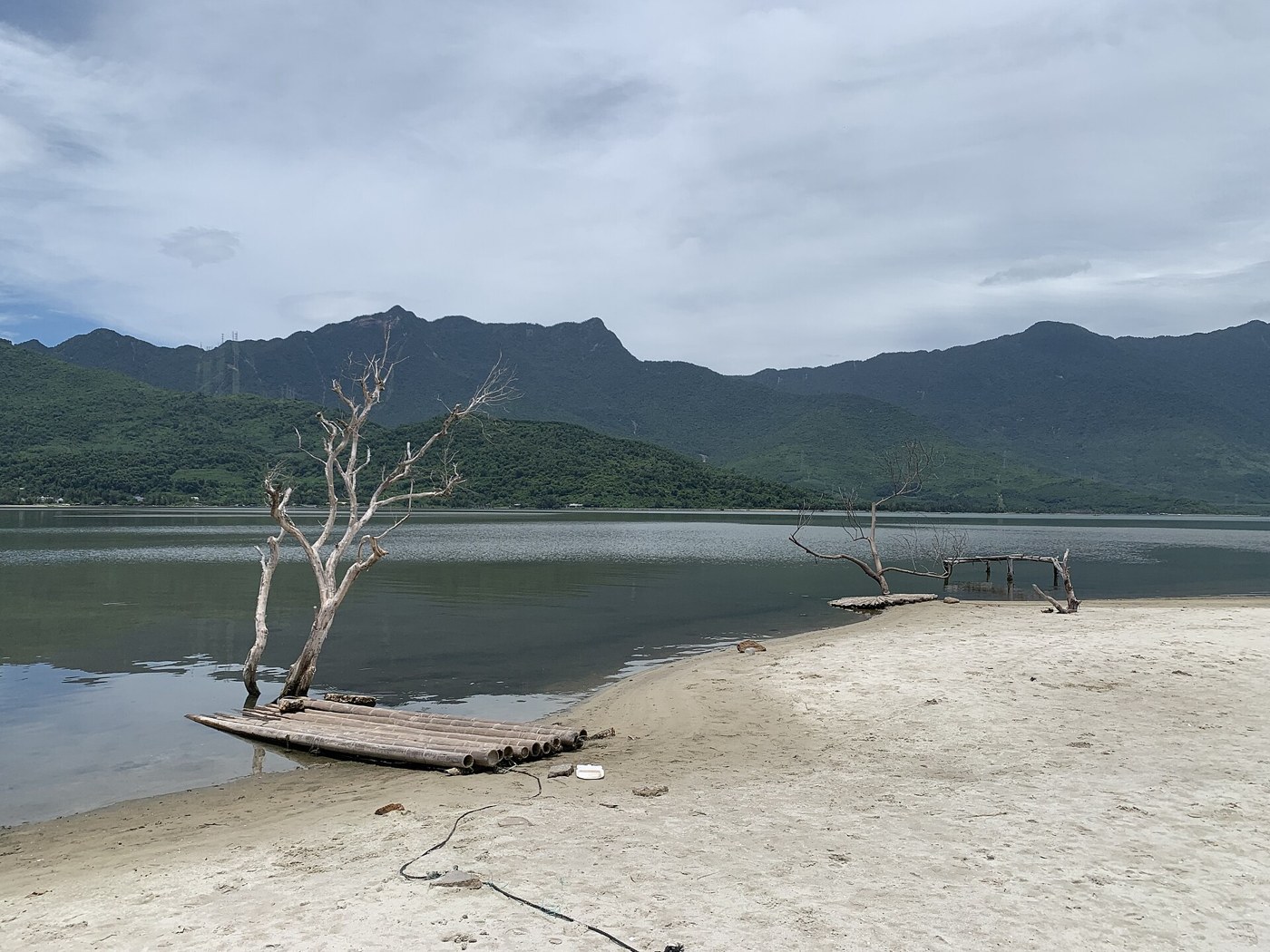
Lap An is a brackish lagoon in the Lang Co area of Hue, with mountains serving as a backdrop for the aquatic landscape. This is not the same experience as the open beach nearby: instead of waves crashing on a coastal strip of sand, you visit the lagoon to view the shoreline waters, layers of mountains, and the rhythm of life around the area.
If your itinerary already includes Lang Co Beach, treat Lap An as a supplementary viewpoint rather than a place to repeat all your seaside swimming activities. In particular, a calm water surface does not mean it is safe for swimming or wading far from the shore.
Choose a stretch of shore instead of trying to walk it all
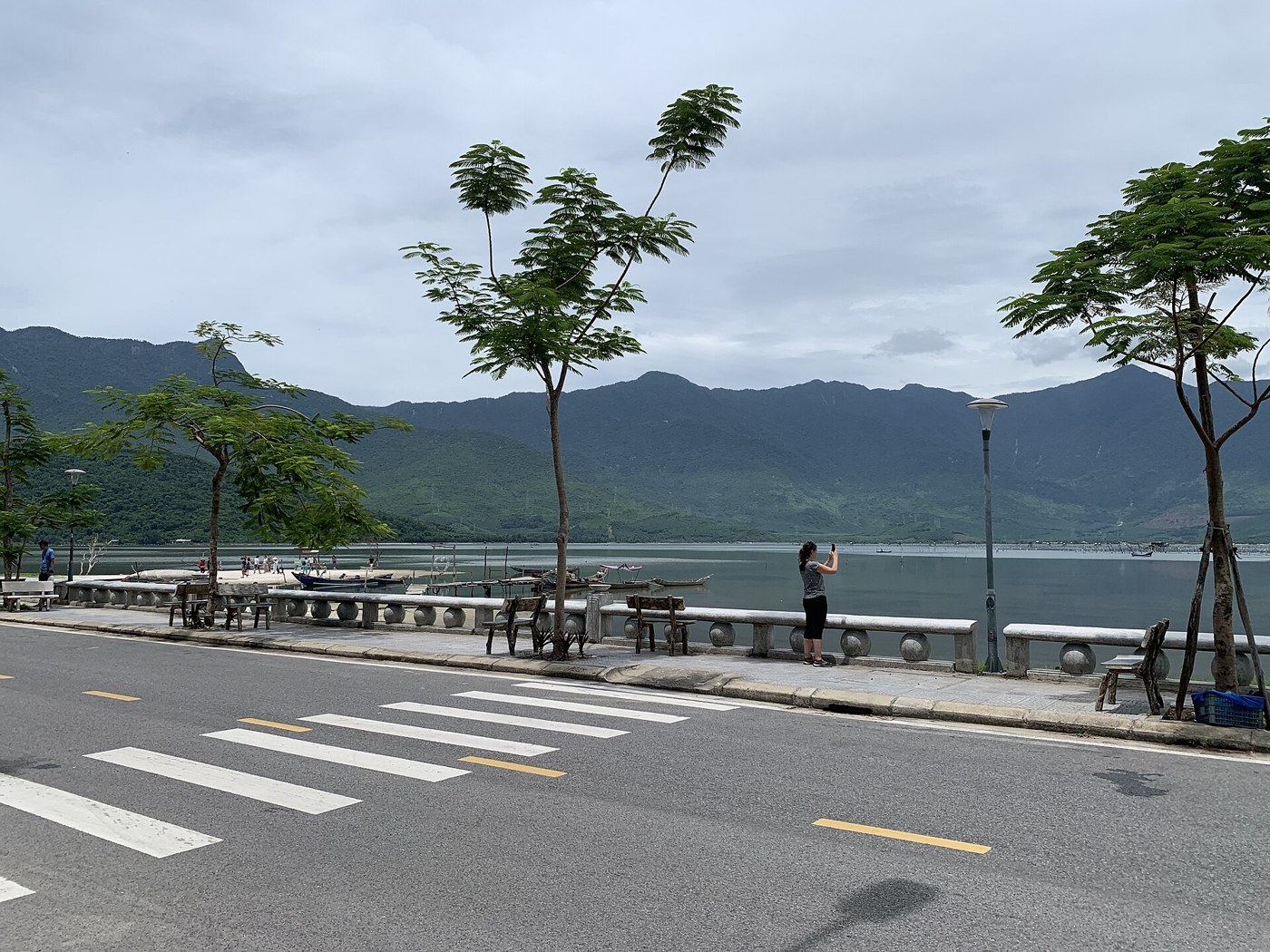
Before stopping your vehicle, identify permitted parking spots and practical pedestrian paths. Do not stop in the middle of traffic just because you spot a scenic view. If traveling with young children or elderly family members, prioritize stable footing, few steps, and easy access back to your vehicle rather than a distant, hard-to-reach angle.
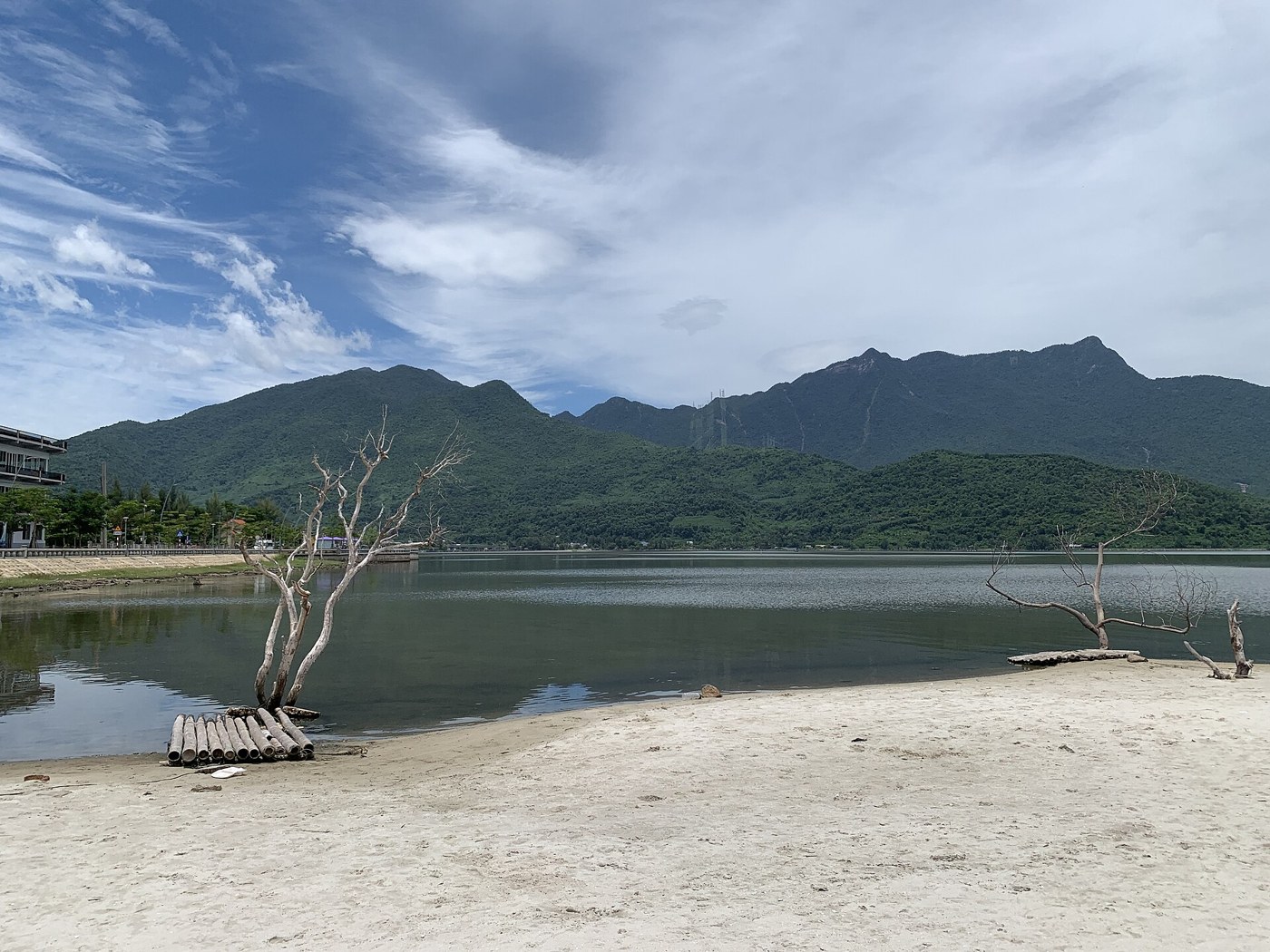
The 2024 photo series in this article shows some shoreline sections featuring sandbanks, bamboo rafts, tree lines, and handrails. These are archival images and do not guarantee that every feature remains intact or open for visitors on the day you arrive. Rafts, boats, and decorations near the water’s edge are not automatically public pathways.
Three layers of scenery to find in your frame
- Foreground: a tree branch, the curve of the shoreline, or a patch of sand that gives the photo depth. There is no need to move objects, snap branches, or step into mud to create a foreground.
- Water surface: when wind is light, try observing reflective areas. If the water ripples, use those very ripples as detail rather than waiting for a flawless mirror surface.
- Mountain range: choose a wide enough composition to see the layers of mountain slopes. When the sky is cloudy, reduce the sky portion if it makes the shot too bright, while keeping the horizon balanced.
Taking a few photos and then lowering your camera will help you notice many more details. If a working local appears in the scene, keep your distance and ask permission before taking a close-up shot.
Do not pin all your hopes on exposed sandbanks
When the tide goes out, certain patches of sand in the lagoon may become more visible. The shape of the shoreline is therefore not fixed as seen in photographs. You should not assume that arriving at a familiar hour will yield the exact same sand path seen online.
If you want to understand the daily water conditions, ask site managers or locals, but still obey warning signs and barriers. Do not follow strangers into mud, onto rafts, or far out just because they are standing there. Washable shoes are useful for damp shorelines, but they do not replace choosing a safe path.
Tips for a light and easy lagoon visit
Dedicate the first part of your visit to choosing observation points and noting the way back. Then take a manageable walk, stopping at a few different angles instead of constantly moving around the lagoon. If you wish to wait for late-day light, check the weather, agree on a pickup time, and head back before travel becomes difficult.
Sunset is a lighting possibility, not a guarantee of vibrant colors. Overcast days have their own unique charm; when thunderstorms or strong winds strike, you should leave open waterfront areas. Never trade safety just to wait for a photo.
Keep your distance from local working areas
Lap An is not merely a tourism backdrop. Aquaculture and aquatic harvesting, including oyster farming, take place around the lagoon. Do not step uninvited into workspaces, board boats, or touch equipment. When walking, yield the path to workers transporting goods and do not block water access points.
Bring drinking water, a hat, a phone protection pouch, and your own trash bag. Along the way, use proper crosswalks and watch for vehicles instead of walking while looking at your screen. A brief stop that respects the location will leave you with a much more pleasant experience than trying to chase every possible camera angle.