Phu Quoc National Park: Jungle Trekking & Safety Guide
Phu Quoc National Park reveals another side of the pearl island: tropical forests, streams, mountain slopes, and an ecosystem that must be protected. This is not a place for wandering off onto random trails. A proper trip begins with confirming permitted routes, checking the weather, and preparing to leave the forest without leaving behind trash or disturbing wildlife.
Where is Phu Quoc National Park Located?
The conservation area spans across the northern and northeastern parts of Phu Quoc Island, encompassing diverse topographies and habitats. There is no single “visitor gate” representing the entire park. Entry routes, accessible paths, and the requirement for a guide depend on the specific sector and current management regulations.
Before your trip, consult management authorities or authorized local guides regarding trail conditions. Online maps may display old paths, patrol routes, or off-limits sections; do not rely solely on an application’s trackline to venture into the forest.
Which Experience Should You Choose?

Observing Forest Scenery from Permitted Trails
This is a gentle option for those unaccustomed to trekking. Stop at safe locations without blocking paths and only step onto verified accessible sections. A slow pace helps you observe the tree canopy, vines, bird calls, and changing humidity within the forest.
Guided Jungle Walks
If you want to venture deeper, choose a route suited to your fitness level and go with someone familiar with the terrain. They help identify turns, slippery spots, stream crossings, and conservation rules. Beginners should prioritize short routes with clear return times rather than pushing for a distant destination.
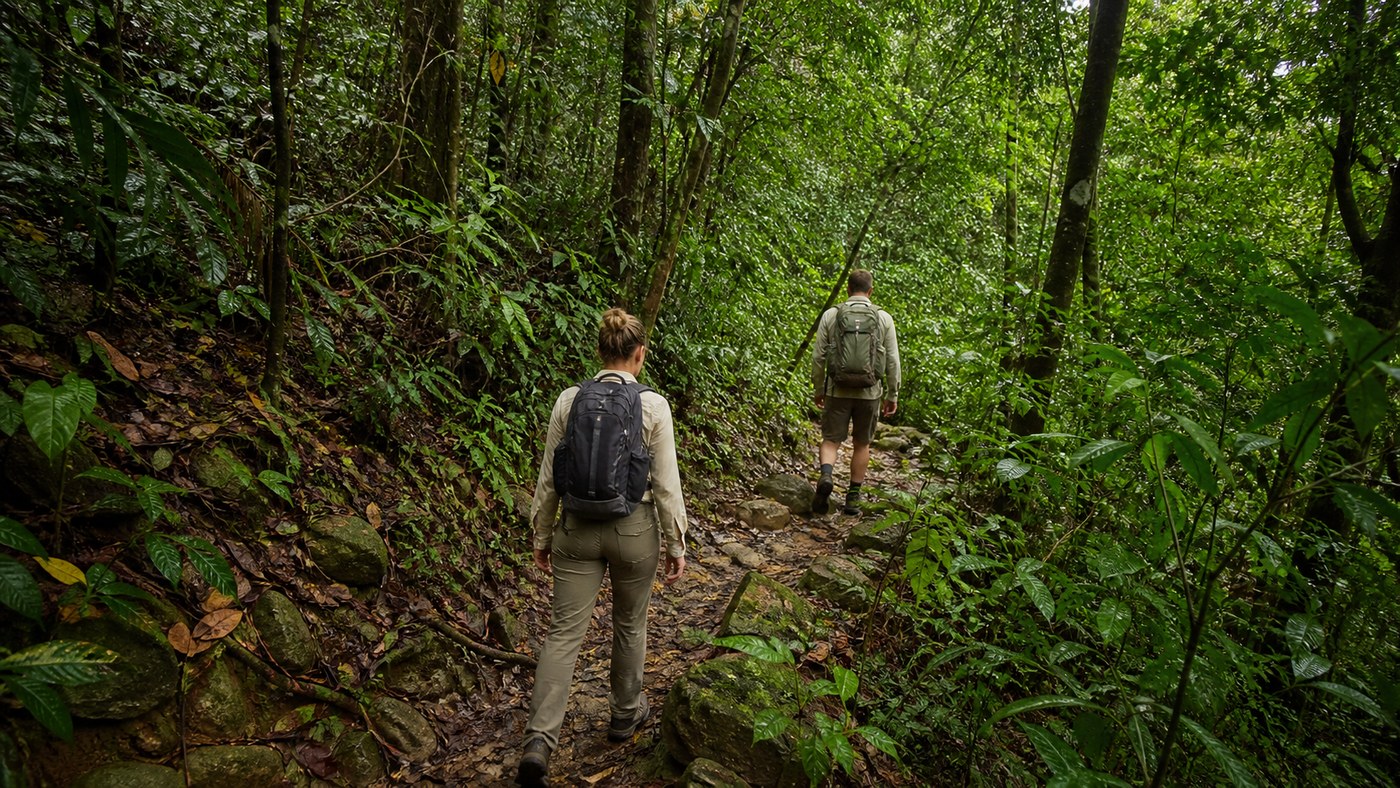
Preparing for a Trek
- Footwear: Wear closed-toe shoes with strong tread; avoid slippery sandals or untested new shoes.
- Water and food: Bring enough for the planned duration plus a small emergency reserve; minimize single-use packaging.
- Clothing: Prioritize long pants, breathable long-sleeve shirts in visible colors, and a compact rain layer.
- Personal items: Current medications, basic first aid, insect repellent, and a waterproof bag for your phone.
- Communication: Inform someone not on the trip about your route and expected return time; do not rely entirely on mobile signals.
Weather and Trail Conditions
After rain, red soil, rocks, and tree roots can become much more slippery; stream waters may also rise rapidly. If heavy rain or thunderstorms are forecasted, or if management issues a warning, change your plans. Even on sunny days, forest humidity remains high, so maintain a steady pace and rest before exhaustion sets in.
Starting early helps avoid harsh heat and provides a buffer if the trail takes longer than expected. Always establish a turnaround time; do not wait until you are exhausted or darkness falls to leave the trail.

Ecosystem Protection Principles
Do not pick plants, collect rocks, catch insects, or take any natural objects out of the forest. Do not feed wildlife, make calls to lure animals, or approach nests, dens, or young animals for photos. If you encounter wildlife, keep your distance, stand still, and let them move away on their own.
All trash, including tissues and fruit peels, must be carried out. Stay only on permitted paths, do not create shortcuts, and do not carve into tree trunks. Boomboxes, loud music, smoking, and campfires pose risks to the forest environment.
Safety at Streams and Slopes
Do not cross streams when water is murky, fast-flowing, or higher than the level deemed safe by your guide. Moss-covered rocks are extremely slick; do not jump across just for a photo. On slopes, maintain distance between members to prevent someone from pulling others down if they slip.
If you lose your way, stop moving randomly, keep the group together, and communicate according to your pre-planned strategy. Continuing deeper to “find a shortcut” usually makes your location harder to determine.
Who Should Consider Before Visiting?
Individuals with underlying medical conditions, joint injuries, young children, or those unaccustomed to hot and humid environments should choose very short routes and consult a guide beforehand. A trip does not need to be long to be valuable; observing the forest scenery in legally accessible areas is still a memorable experience when done responsibly.
Phu Quoc National Park is suited for travelers wanting to understand the island’s nature rather than finding a check-in backdrop. Following the right paths, preparing thoroughly, and respecting all conservation limits is the best way to fully enjoy the experience.