Hoi An Trade Ceramics Museum: Exhibits and Visitor Guide
The Trade Ceramics Museum is a small yet deeply enriching attraction on Tran Phu Street in the heart of Hoi An’s Ancient Town. Its collection of ceramics helps visitors visualize the former trading port’s role in the maritime goods exchange network. The exhibition space is housed in a traditional wooden building, making the visit an opportunity to observe Hoi An residential architecture as well.
Where is the museum and what is worth seeing?
The attraction is located at 80 Tran Phu Street, along the pedestrian axis of the Ancient Town. While not large, its presentation linking artifacts with trading history makes it ideal for lovers of heritage, archaeology, and port city history.
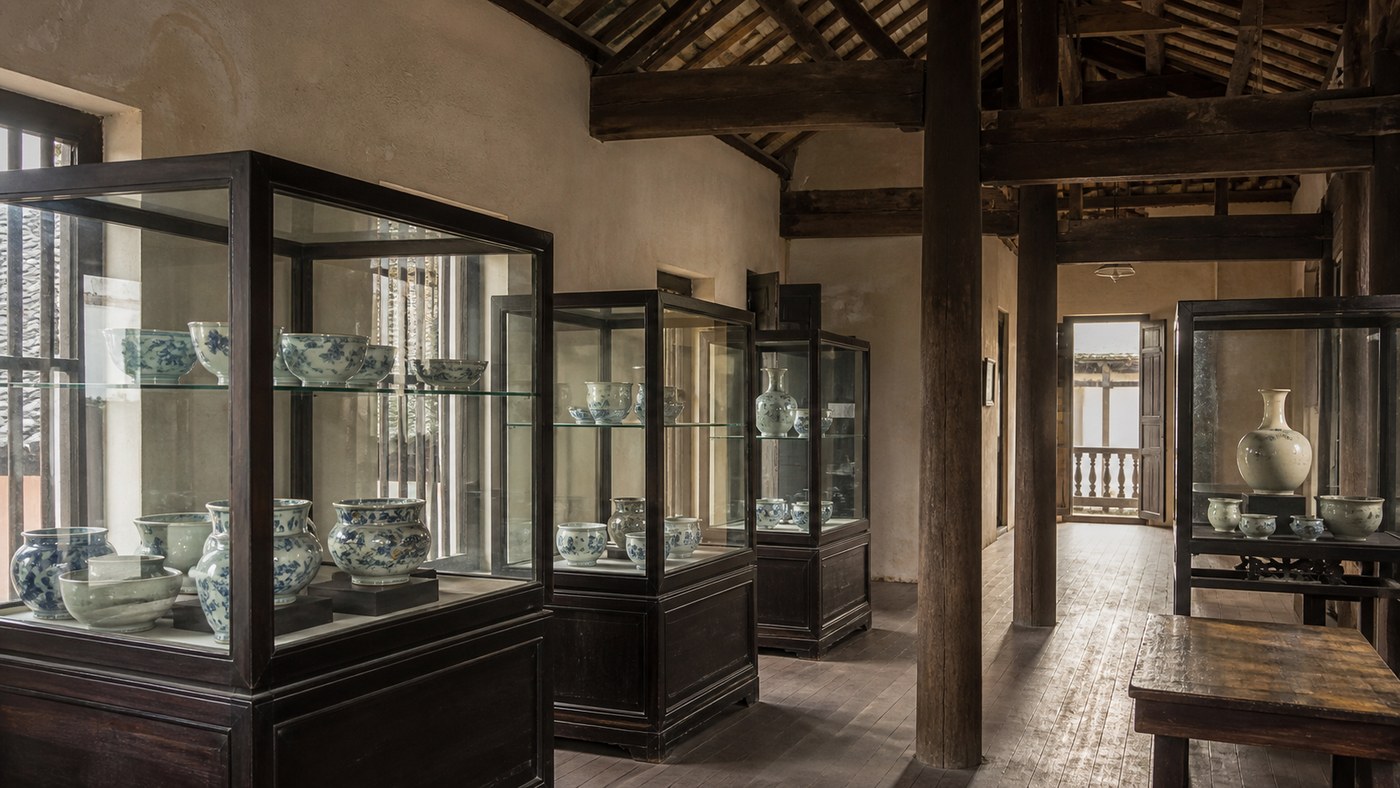
The collection generally features hundreds of ceramic artifacts dating from around the 9th or 10th century to the 19th century. Many pieces demonstrate goods once circulated between Vietnam and various parts of Asia. The number of displayed items may vary during preservation or rotation, so treat the information at the museum on the day of your visit as the primary reference.
How to view ceramics without skimming past them
Instead of trying to memorize every era, pick a few details to observe: clay quality, glaze color, shape, patterns, and signs of use. Reading labels by group makes more sense than reading items individually. A bowl, vase, or plate is not just decorative; it tells stories about firing techniques, tastes, shipping routes, and the communities that once inhabited the trading port.
If there is a layout map or general introduction, review it before looking at the display cases. This sequence helps connect production areas with trade periods, avoiding the feeling of just looking at a series of identical objects.
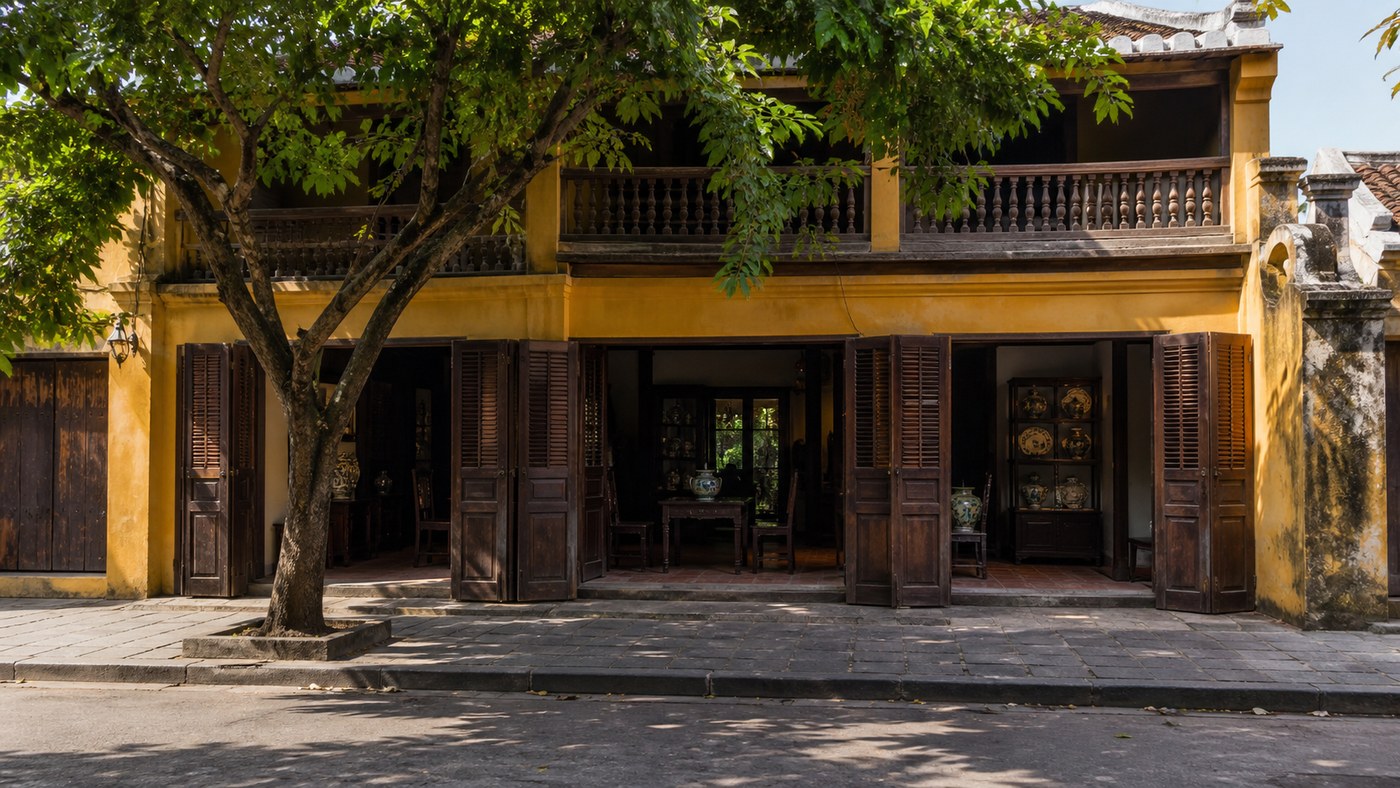
The ancient house is an exhibit in itself
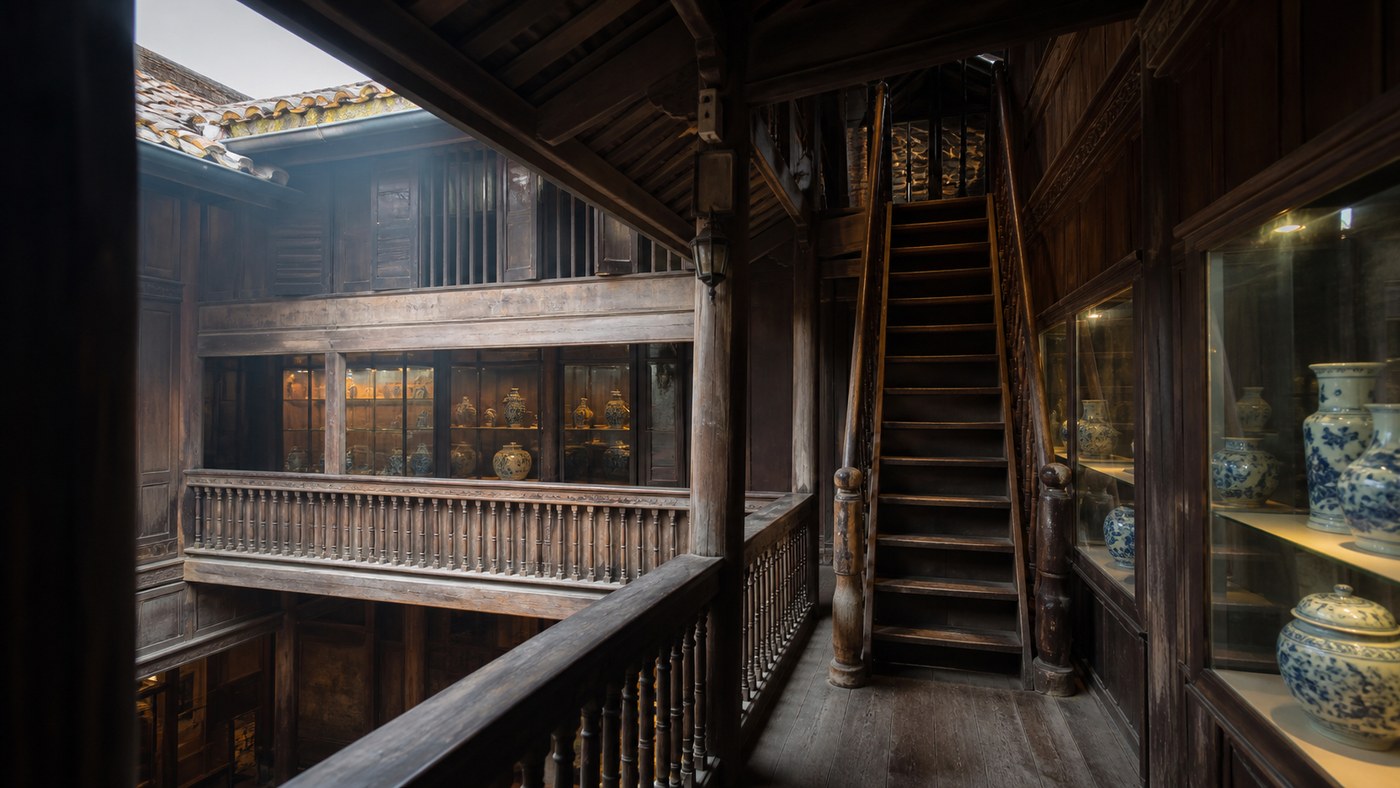
The wooden framing, inner courtyard, staircase, and spatial layers reflect the traditional tube-house style of Hoi An. When moving around, pay attention to high steps, narrow passages, and floors that can become slippery on humid days. Adults should keep children close, especially around staircases and upper-floor railings.
Indoor lighting is usually soft to aid preservation. Do not use camera flashes, auxiliary lights, or place equipment on glass cabinets. The dark corners and natural light streaks are part of the building’s atmosphere and do not need to be artificially brightened.
Rules of visiting to keep in mind
- Do not touch artifacts, glass cabinets, wooden frames, or open restricted areas yourself.
- Wear backpacks in front of you when the gallery is crowded to avoid bumping into people and objects.
- Keep your voice low, do not eat or drink, and do not sit on stairs to take photos.
- Read signs regarding photography permissions; turn off the flash and avoid tripods unless permitted.
- Yield the right of way in stairwells or corridors wide enough for only one person.
Duration and itinerary planning
About 45 to 75 minutes is reasonable if you want to read labels and observe the architecture. Ceramic researchers may need longer. Combine the museum with a few nearby ancient houses or cultural sites, but avoid cramming too many locations into one morning because heritage spaces can start to blur together when viewed too quickly.
Mornings are generally better for those who prefer a quieter environment. However, opening hours, Ancient Town ticket regulations, and entry scopes can change. Check at the heritage information counter close to your travel date rather than relying on outdated prices or schedules.
Tips for a deeper visit
Before arriving, you can read briefly about Hoi An’s role as a trading port. Inside the museum, photograph information boards only when permitted and note artifact group names instead of shooting every display case. After the visit, walking along Tran Phu Street helps connect the collection to the location of the former trading streets.
Light clothing, good-traction shoes, and a bottle of water consumed outside the museum are sufficient. On hot days, rest before climbing to the upper floor to avoid dizziness in enclosed spaces. Mobility-impaired visitors should ask staff about suitable access, as the ancient house stairs can be quite steep.
Frequently Asked Questions
Is the museum suitable for children?
Yes, if adults guide children to observe simple cues like glaze colors, shapes, and uses. Children must be kept close on stairwells and prevented from touching display cases.
Should I buy tickets online in advance?
That is not necessary by default. Heritage site regulations can change; it is best to check official information counters or posted guidelines in the Ancient Town on the day of your visit.