Thay Pagoda Hanoi: Mountain Lake Views and Woodcarving
Thay Pagoda is well worth a leisurely half-day visit: take in the panoramic lake and mountain base first, then step into the architectural spaces to observe the finer details. The charm of this site lies not in checking off numerous spots, but in the transition from open village scenery to layered temple roofs, pillars, and carvings.
Where is Thay Pagoda and what name should you use?
The pagoda sits at the foot of Sai Son mountain in the Quoc Oai district, west of Hanoi. Also known as Thien Phuc Tu, it dates back to the Ly dynasty and is closely associated with Zen Master Tu Dao Hanh. When navigating, use the phrase “Chua Thay – Sai Son” to avoid confusion with other pagodas named Thien Phuc elsewhere.
Addresses in older documents may list districts or communes based on previous administrative systems. For an actual trip, cross-reference the exact location on the map and the drop-off point near the entrance rather than relying solely on administrative names.
Start with the surrounding lake scenery
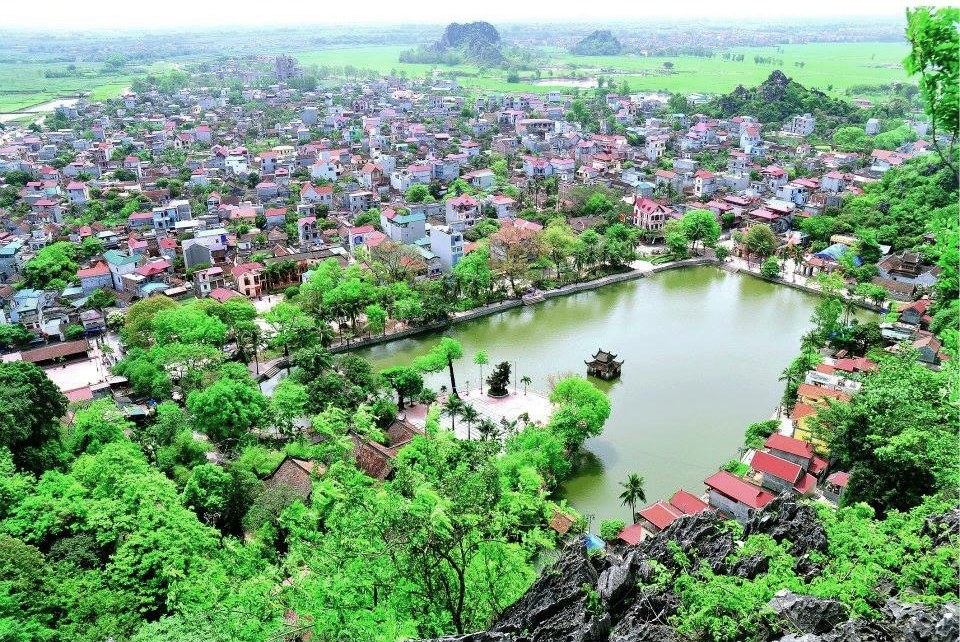
Panoramic views reveal the lake nestled among the architecture, greenery, and residential areas, backed by rocky terrain. From a safe viewing spot by the lake, you can observe the relationship between the water’s surface and the tiled roofs before heading deeper into the temple. This also helps younger travelers understand the layout of the site without needing lengthy introductions.
Climbing the mountain is not mandatory for a complete experience. For groups with elderly members or those who prefer to avoid stairs, spending time in the lower areas and open paths is a sensible choice. The photo above was shot from an elevation, which does not mean every visitor should seek out that exact camera vantage point.
Up close: Layered reliefs and rhythmic details
When observing a relief carving, do not rush to identify every single figure. First, look at how the human figures, patterns, and forms are arranged in multiple layers. The raised elements catch the light differently than the recessed areas, giving the surface depth even when viewed from a single standing position.
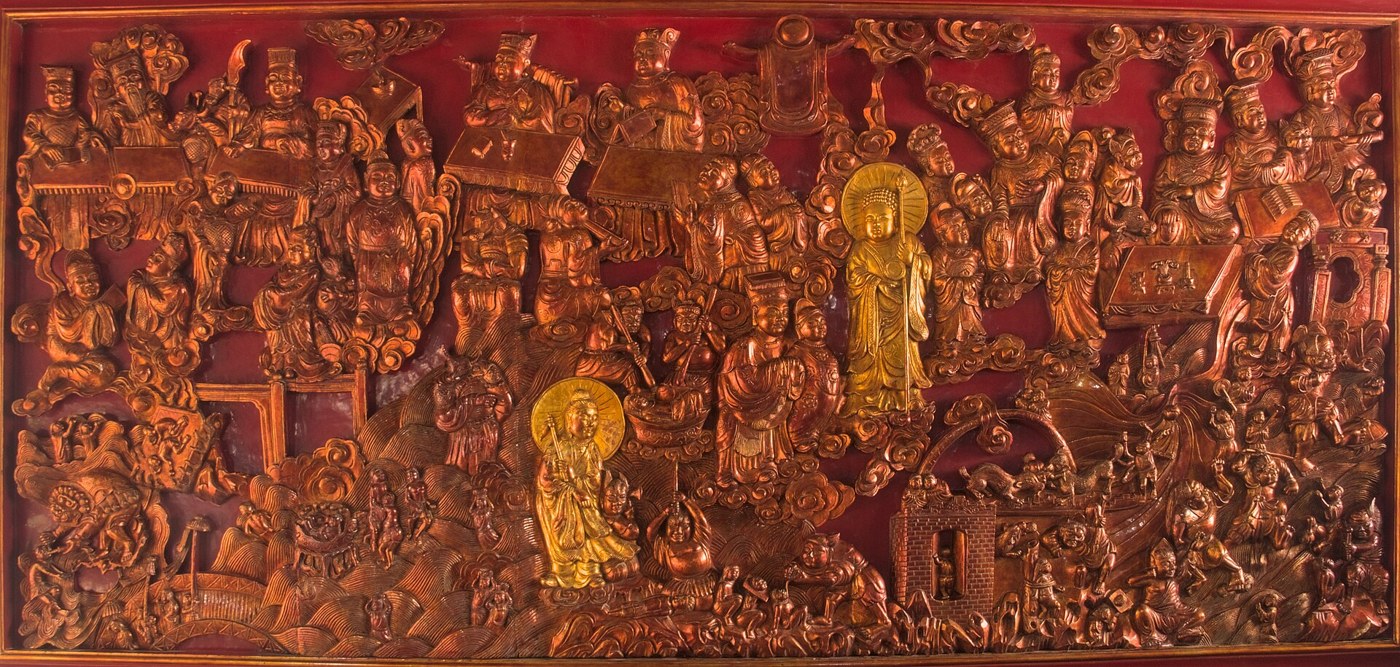
An easy way to appreciate the art is to pick three details: the face of a character, the hem of a garment, and the surrounding motif. Then step back to a moderate distance to see how they connect into a whole. If you want to understand the exact meaning of a legend or the dating of an artifact, ask an on-site guide rather than guessing based on paint color or weathering.
Worship statues are heritage, not photo props
The photo of the Dharma Protector (Ho Phap) statue below focuses on the head and upper body, highlighting facial expressions, garments, and decorative layers. When visiting the pagoda, maintain a respectful distance, do not touch the surfaces, do not move ritual objects to create a clearer frame, and do not place personal belongings on statue pedestals.
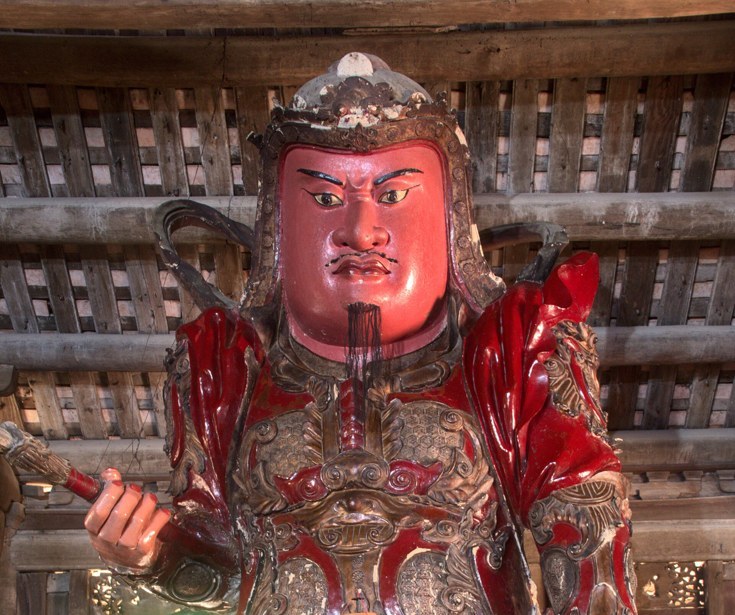
Past permission to take interior photos does not mean all chambers allow photography today. Check for directional signs or ask beforehand; if permitted, turn off the flash, avoid making noise, and give space to those performing rituals. The photos in this article are for documentation and do not guarantee current preservation conditions or spatial arrangements on your visiting day.
Suggested manageable itinerary
- Before entering: Check open pathways, visitor hours, and current fees if any. Confirm your return transportation pickup spot.
- First phase: Enjoy the lake views and exterior architecture, taking time to identify directions rather than following the crowds.
- Main phase: Enter permitted areas to observe carvings and statues in silence. Studying a few details closely is much more rewarding than snapping hasty photos.
- Extended phase: Only consider mountain trails or caves if you have confirmed accessibility conditions and the entire group has sufficient energy. Do not assume a pagoda visit must include mountain climbing.
Preparation and etiquette at heritage sites
Wear modest clothing, supportive footwear, and pack light. After rain, exercise extra caution on stone steps; if there are barriers or warnings, change your route. Visitors with children should establish meeting points and keep children within sight near bodies of water.
Do not carve names into stones, pillars, or walls; do not pluck branches, take artifacts, or keep material fragments as souvenirs. If you wish to learn more about the history, note down questions to ask the site management rather than interrupting active worshippers. A fulfilling trip to Thay Pagoda balances careful observation with deep respect for the sacred site and the local community.