Ho Chi Minh Museum Hanoi: Hours and Exhibition Guide
The Ho Chi Minh Museum in Hanoi suits visitors who want to spend time learning about the life of President Ho Chi Minh through documents, artifacts, and exhibition layouts. Your visit will be easier to follow if you decide in advance what you want to see, rather than rushing through every space or only taking photos of the facade.
Address and Opening Hours to Check Before You Go
The museum address is 19 Ngoc Ha, Ba Đình, Hanoi. When searching for directions, select the correct facility in Hanoi, as the name Ho Chi Minh Museum also appears in other localities. The museum, the Ho Chi Minh Mausoleum, and nearby historic sites are separate attractions; do not use the Mausoleum visiting schedule for the museum opening hours.
Regular hours listed as of September 12, 2026, are: open Tuesday, Wednesday, Thursday, Saturday, and Sunday; mornings 8:00–12:00, afternoons 14:00–16:30; closed Monday and Friday. Please re-check announcements before your arrival date, especially during holidays or when operational changes occur. Avoid arriving close to lunch breaks or closing times as you will not have enough time to read the exhibitions.
A good suggestion is to set aside about two hours for your first visit, plus travel and rest time if you go with family. This is a personal time estimate, not a museum-regulated duration. Admission fees and categories for free or discounted entry should be checked directly based on your visiting time; this article does not use old price lists to plan your budget.

Observe the Architecture Before Entering
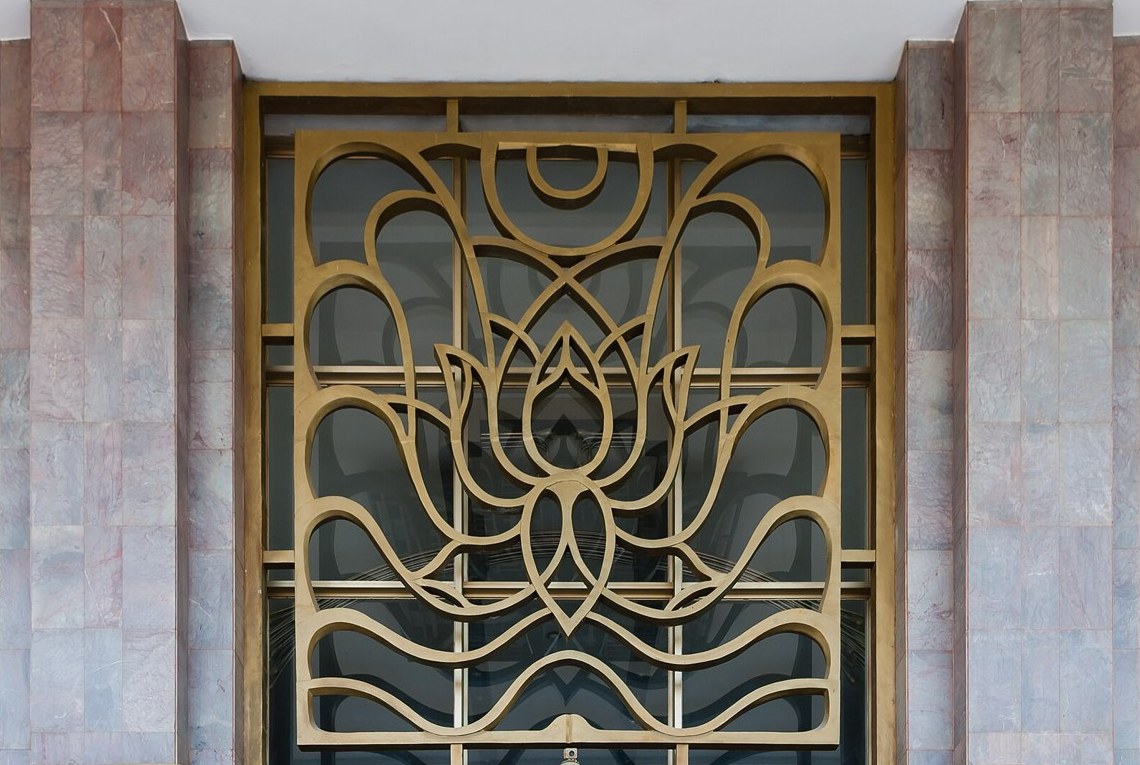
At the facade, try looking from a distance to recognize the light-colored walls and prominent decorative elements, then approach the entrance. A wide shot shows the building’s proportions, while a close-up helps reveal details easily missed from afar. The photo above focuses on the upper part of the facade and does not show the entire approach path.
The lotus detail above the door is a point where you can pause for a brief observation. The curves of the motif contrast with the straight columns and door frames. When taking photos, stand away from the flow of people entering and exiting, keep the camera level, and do not back down the steps without watching your step.
View Exhibits by Topic Rather Than Artifact Count
Before starting, find the floor plan and general introduction to understand the direction. You can choose a question such as: what documents help understand a period of activity, or what does a personal artifact show about daily life? From there, linger longer on relevant content groups rather than trying to read every line of text.
With historical documents and photos, pay attention to three pieces of information: time, location, and context. With objects, read the function and origin stated on the label. If the label indicates this is a replica or reconstructed item, keep that distinction in mind when recounting your trip; do not assume everything on display is original.
Sculptural elements and spatial arrangements are also part of the experience, but they do not replace historical commentary. If you do not understand the meaning of a symbol, ask the staff or check the corresponding explanation rather than assigning your own story to it.
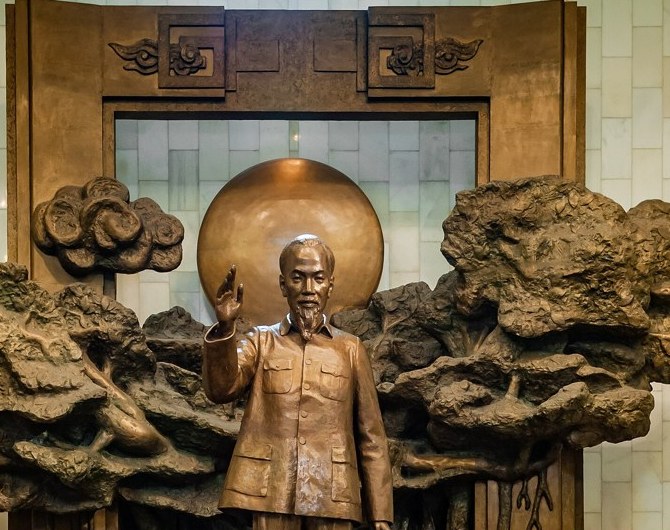
The close-up photo above shows the upper part of the statue of President Ho Chi Minh inside the museum. All three photos in this article are archival images with cropped frames and optimized sizes, not a confirmation set of the entire current exhibition layout. Introductory boards or thematic exhibitions may change over time.
Visiting With Children or Elderly Family Members
With children, choose a few stopping points and ask easy-to-observe questions: what material is this object made of, what daily activity was it used for, what time period does this photo capture? There is no need to turn the visit into memorizing many dates. A story a child understands and can retell is usually more valuable than a fast walk through all the rooms.
For elderly visitors or those needing mobility assistance, ask in advance about accessibility, elevators, and resting areas. The facade photo is not enough to conclude that the entire journey is wheelchair-friendly. You can agree on rest spots and break the time into short segments, without forcing everyone to keep the same pace.
Tips for a Comfortable Visit
- Dress politely, wear comfortable shoes for standing and walking; keep your voice down in the exhibition areas.
- Read the regulations on luggage, food, and photography upon arrival. Only use flash or support equipment if the area permits.
- Do not touch artifacts, lean on glass cabinets, or cross boundary barriers to get closer photos.
- If you want to combine nearby attractions, check the schedules of each place individually and leave time for walking; do not assume a single admission includes the whole area.
- When visiting in a group, agree on a meeting spot but do not block doors or pathways leading into rooms.
The worthwhile part of spending time at the museum is the ability to read a slice of history through specific documents. Preparing a reasonable schedule, choosing a few questions, and observing slowly will give your visit a clearer purpose than a quick stop just for photos.