Bun Rieu: Choosing Portions, Tasting Broth, and Seasoning
Bun rieu is a worthwhile choice when you want to switch things up on your Vietnamese food journey. But faced with options like standard rieu, snail rieu (bun rieu oc), or a fully loaded bowl, what should you order? A moderate portion, tasting the broth first, and adding condiments little by little will help you appreciate the dish better than piling on lots of toppings right from the start.
Key Characteristics of Bun Rieu
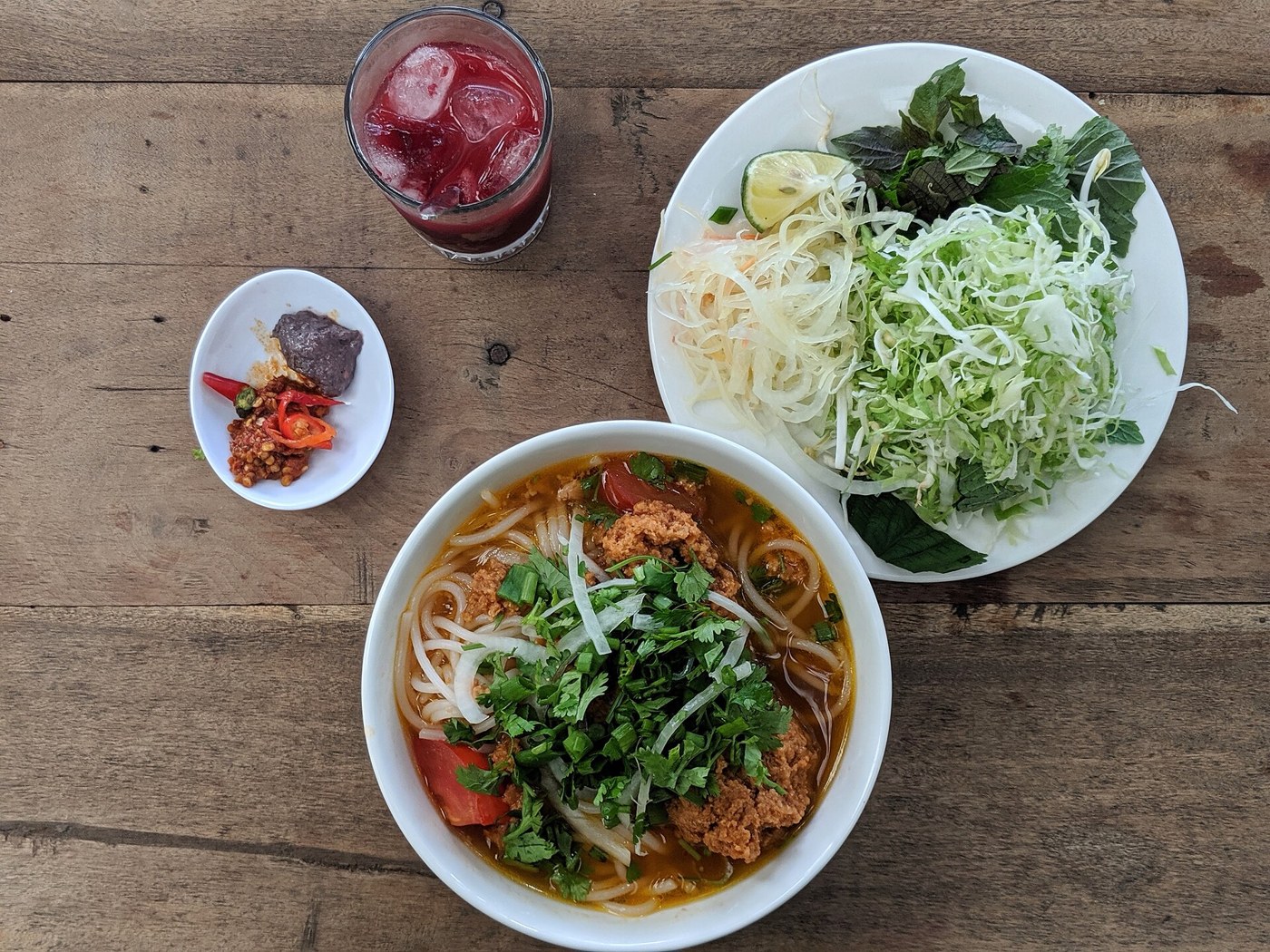
Crab vermicelli soup typically combines rice noodles with a broth made from freshwater crab and tomatoes, creating a mild tang alongside the rich flavor of the crab paste. Fried tofu is a common ingredient, but a bowl may include other items depending on the kitchen. The size and texture of the crab paste pieces also vary by location.
Do not judge the amount of crab solely by the size of the crab paste piece. Some recipes incorporate eggs, meat, or other ingredients. If you want to know what you are eating, asking the vendor is more reliable than guessing from the color or shape inside the bowl.
Basic or Fully Loaded Portion?
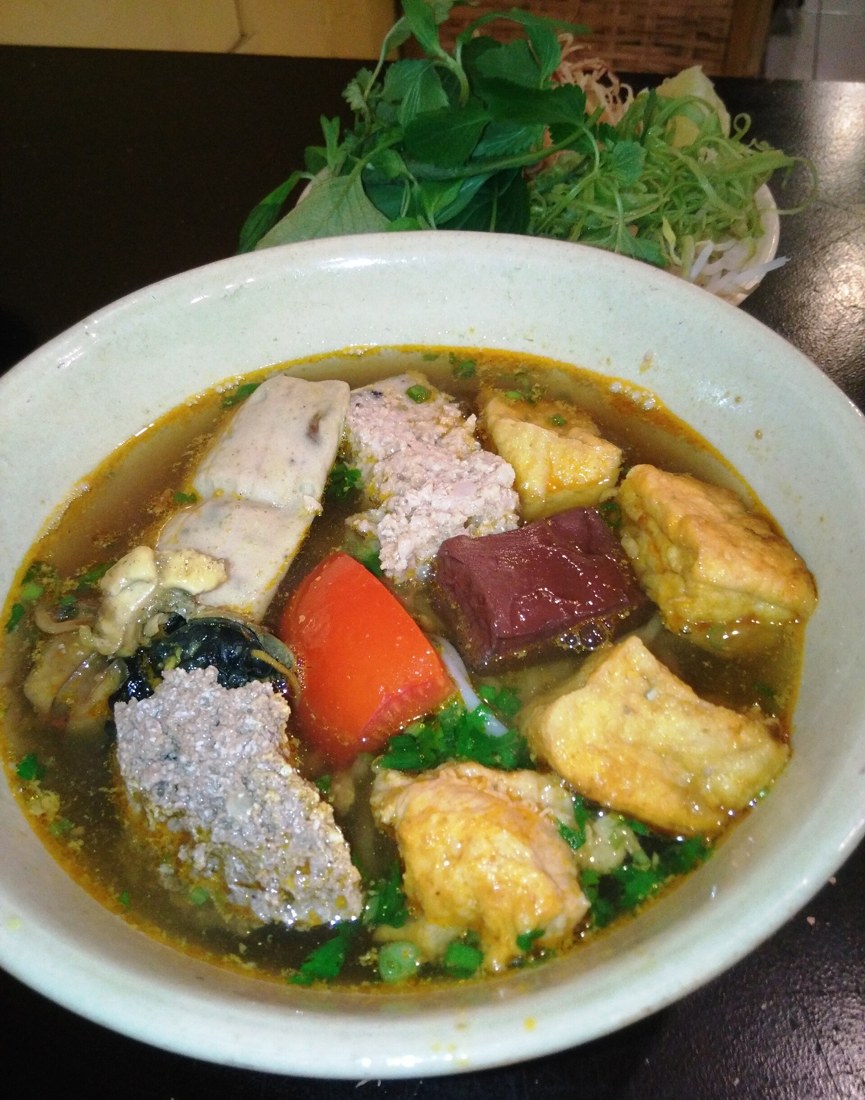
The term “fully loaded” (day du) is not a standardized recipe. Some places add snails, meat, pork sausage, tofu, or congealed pig blood; others offer a simpler selection. Therefore, ask what is included in the basic portion and how extras are priced, especially when the menu only lists names without detailing ingredients.
- Want to try the rieu flavor: start with the basic portion to easily distinguish the broth and crab paste before adding many other things.
- Eating as a main meal: ask about the noodle quantity and ingredients, then choose extra items you actually want to eat.
- Many eating stops planned for the day: ask if there is a small portion or reduced noodle option; not every stall serves smaller portions.
- Avoiding an ingredient: speak up when ordering, rather than waiting until the bowl is assembled and mixed to request a change.
Season from Least to Most
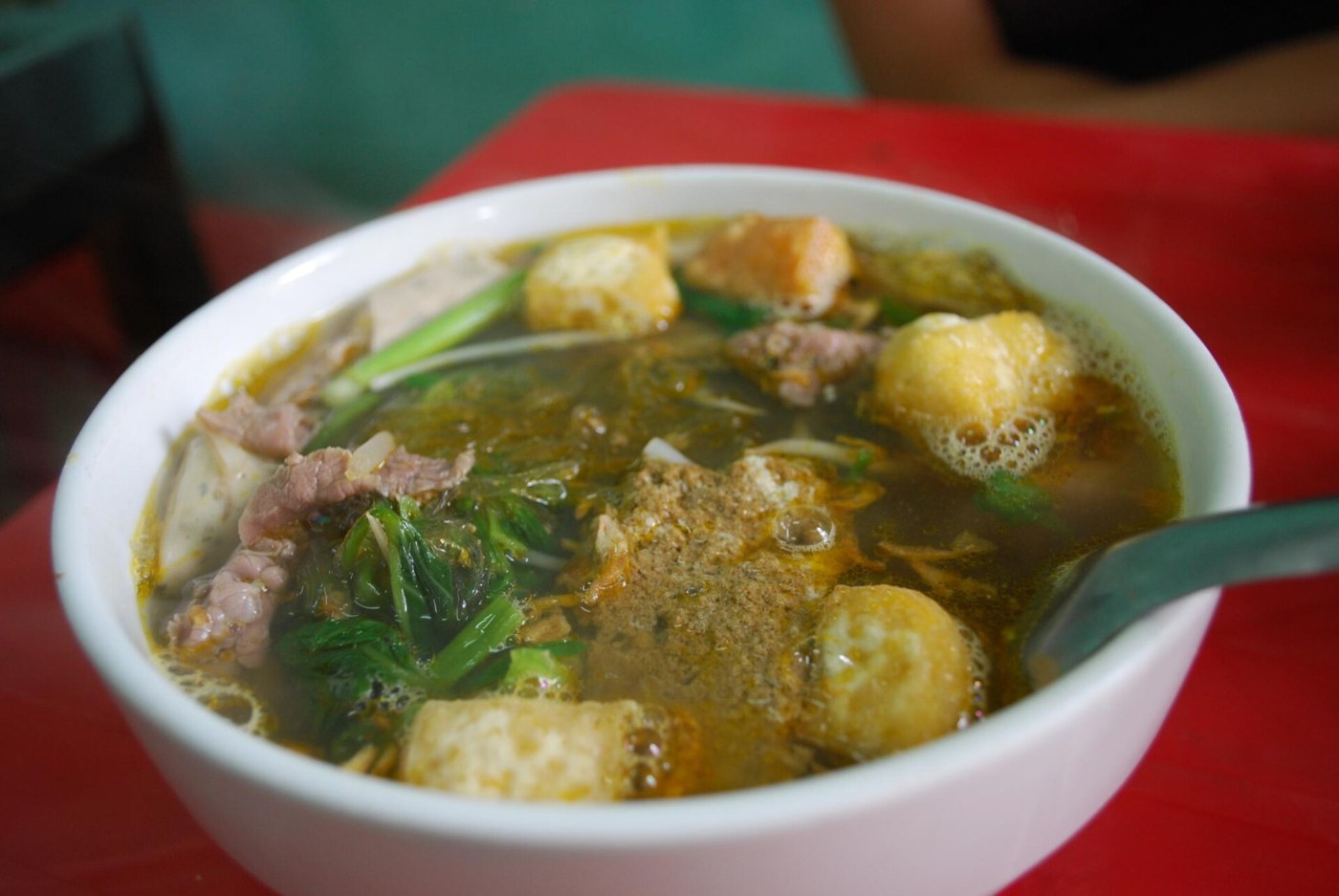
When your noodle bowl is served, use the spoon to taste a little broth first. You will discover how sour, salty, or spicy the kitchen has seasoned it. Fermented shrimp paste (mam tom), chili oil, and lime can alter the flavor quite quickly; there is no need to add everything just because they are placed on the table.
If using shrimp paste, take a small amount, stir well, and taste again. With chili, start with less than your usual habit if you do not yet know the spice level. Lime should also be added bit by bit, as the broth already has its own sour profile. This is not a mandatory rule on how to eat, but a way to prevent the entire bowl from exceeding your personal palate.
Herbs may be served separately or mixed in depending on the vendor. Choose the types you like, adding them little by little so the bowl does not overflow. If you prefer blanched vegetables, ask before the dish is prepared. Anyone needing to avoid specific ingredients should ask about both the broth and the crab paste, not just the visible toppings on top.
Do Not Confuse Bun Rieu Oc with Cold Snail Noodles
A bowl of crab rieu with added snails is not the same dish as cold snail noodles (bun oc nguoi). These are two different serving styles; if you are looking for a specific dish, state the full name rather than just calling out “snail noodles.” The photos in this article illustrate bowls of bun rieu and should not be used to depict cold snail noodles.
Trying the Dish in Hanoi and Ho Chi Minh City
When visiting Hanoi, you can dedicate a breakfast or lunch to bun rieu, depending on the operating hours of your chosen spot. Archival photos on Ly Quoc Su street show one presentation style of the dish, but do not represent current menus or operating hours. Check the information for your chosen location before setting out.
In Ho Chi Minh City, it is also wise to carefully read the basic and fully loaded sections when ordering. A kitchen serving many extra toppings does not mean every Southern-style bun rieu bowl is identical. If you want to compare experiences between the two places, record the ingredients, amount of vegetables, and seasoning methods of the two meals you actually tried, rather than rushing to conclusions about an entire region.
Choosing a dining spot along your travel route will save transit time. For large groups, ask about seating in advance; a small stall might accommodate two diners easily but struggle to arrange space for a whole group at once. This article does not recommend specific restaurants, fixed prices, or quality guarantees for any single address.
Questions to Make Ordering Easier
- What does the basic portion include, and which extra items incur additional charges?
- What ingredients are used in the crab paste and broth?
- Can the shrimp paste, chili, or herbs be served on the side?
- If taking away, can the noodles, herbs, and broth be packed separately, and what are the recommended consumption and storage instructions?
Bun rieu is prepared in many ways, so a new experience does not necessarily have to match your previous meal. Choosing a moderate portion and adjusting seasonings slowly helps you discover what you like while keeping your meal a relaxing break during your trip.