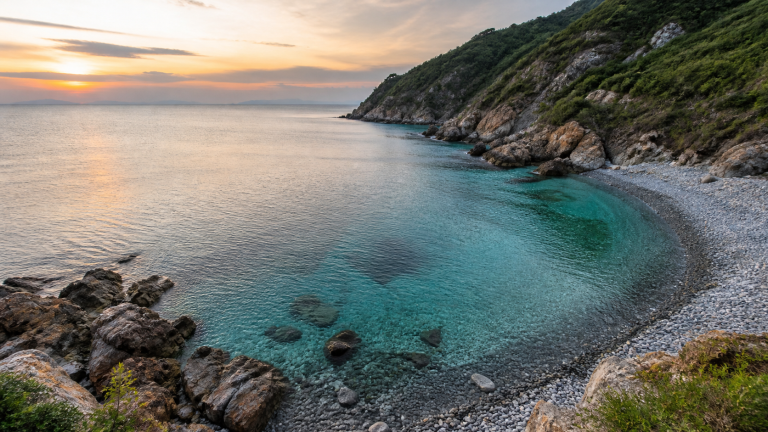
Nha Trang Mossy Rocks: Season, Tides and Safety Guide
The Nha Trang mossy rocks are a seasonal phenomenon that appears on the boulders and embankment sections along Tran Phu coastal road. When the tide recedes, a vibrant green layer of moss emerges against the white waves, creating a natural view distinct from the usual sandy beaches. This beauty comes with a very slippery surface, making tide observation and personal safety far more important than chasing a risky photo angle.
Where are the mossy rocks located?
The frequently mentioned area lies along the Tran Phu coastline in Nha Trang city. This is not a private beach with fixed boundaries; the locations of dense moss shift depending on the season, wave action, and the condition of the sea wall. When you arrive, it is best to observe from the public walkway first before deciding whether to step closer to the water’s edge.
Motorbikes must be parked in designated areas, not left on sidewalks or blocking pedestrian paths. If using a map, treat the location pin as a reference because actual coastal conditions can differ from old photos.
When is the green moss at its best?
Moss typically develops visibly during late winter and spring, commonly around February to May. Each year can vary depending on water temperatures, wave activity, and weather patterns. During the day, only low tide reveals the moss-covered rocks; tide times are never fixed.
Early morning offers soft light and gentle sun. Late afternoon is also scenic, but you must leave enough time to head back before dark. Check the tide schedule near your visiting days and observe actual wave conditions since forecasts cannot replace on-site reality.
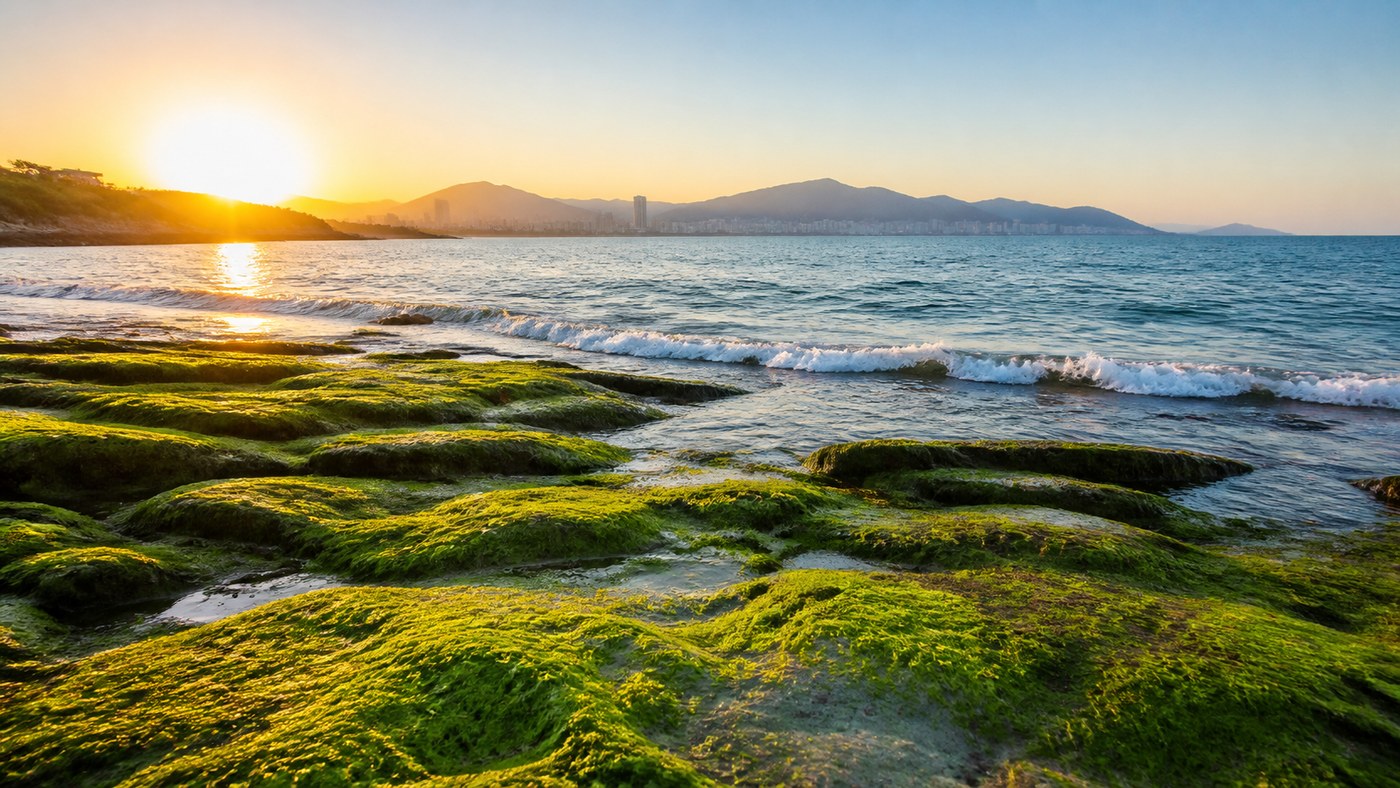
Safe viewing and photography
Do not step onto patches of moss just to pose for a photo. The moss reduces traction, while unexpected waves can easily cause you to lose your balance. It is safer to shoot from dry concrete surfaces, use a telephoto lens, or lower your camera rather than advancing right to the water’s edge.
If the area features railings, warning signs, or barrier ropes, you must obey them. Do not go down when there are high waves, rain, strong winds, or a rapidly rising tide. Children must always stay close to adults and should not play on the rocks.
What to prepare before you go?
- Wear shoes or strapped sandals with good grip; avoid high heels or worn-out soles.
- Bring a waterproof phone pouch, a small towel, and drinking water.
- Check rain, wind, wave, and tide conditions close to your departure time.
- Do not pick, scrape, or step on the moss; do not move rocks to create photo compositions.
- Take all trash out of the area and ensure plastic items are not blown into the sea by the wind.
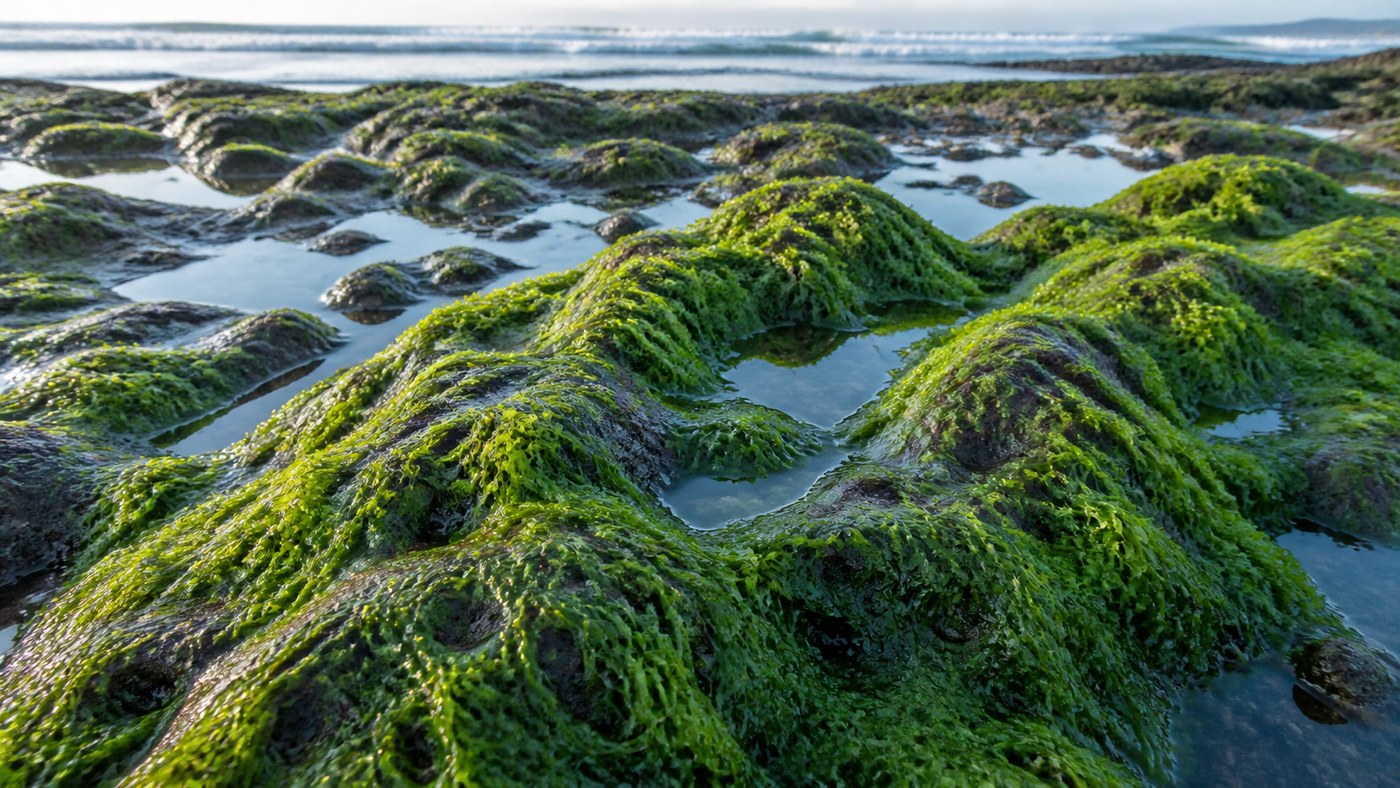
Short itinerary suggestions
Only 30 to 60 minutes is needed to observe the mossy rocks, depending on the tide stage. You can combine this with a coastal walk, but prioritize a nearby route rather than driving to multiple spots. If you arrive and the water has not receded or the moss does not look good, treat it as a pleasant seaside stroll and do not force your way onto the rocks.
The mossy rocks are appealing because their season is short and constantly changing. A memorable trip lies not in standing closest to the waves, but in choosing the right time, keeping a safe distance, and leaving the landscape intact.
Frequently Asked Questions
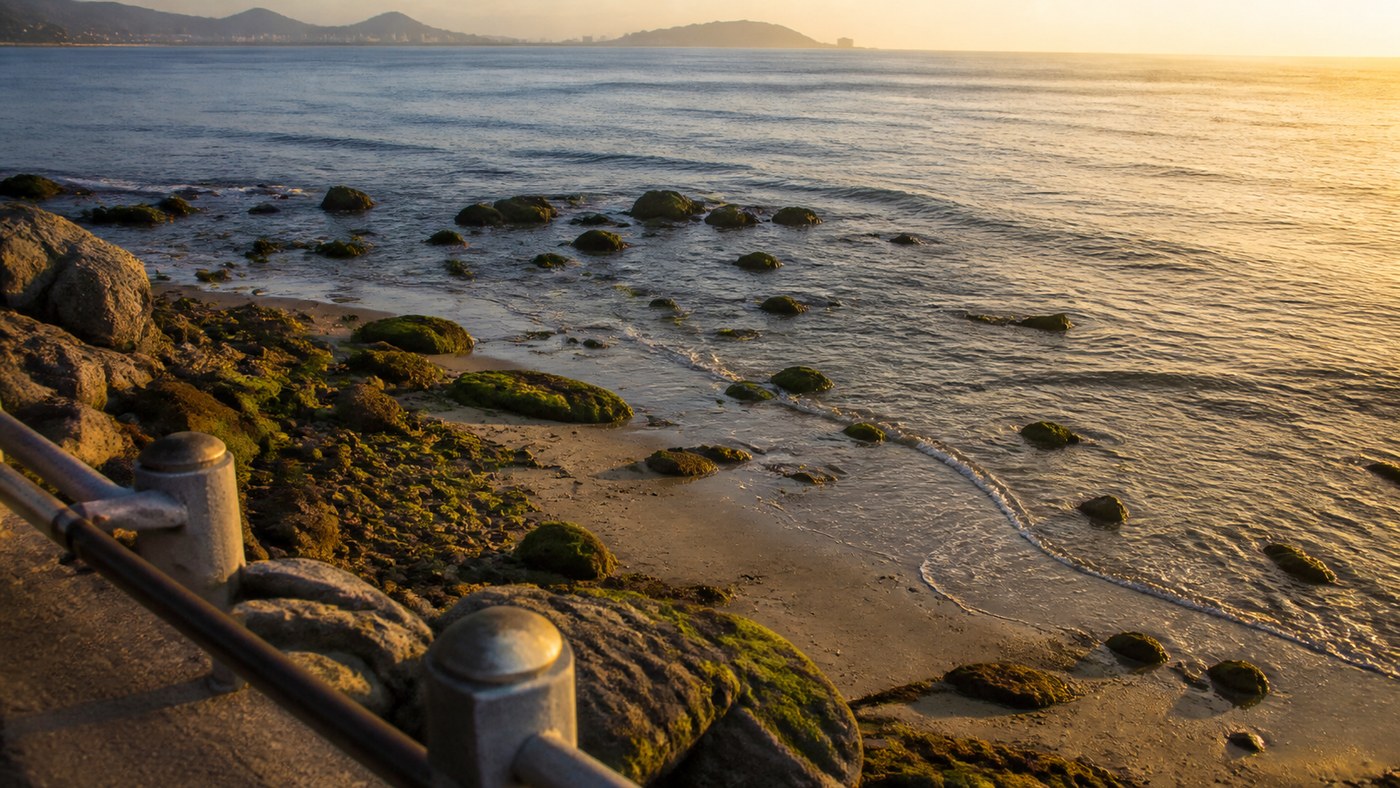
Are the mossy rocks there all year round?
No. Moss density and color change by season; the spring period is generally the easiest time for observation.
Can you swim right at the mossy section?
Not recommended. Slippery rocks, embankment edges, and waves make this area suitable for observation rather than swimming.