Truong Tien Bridge Hue: History, Architecture & Guide
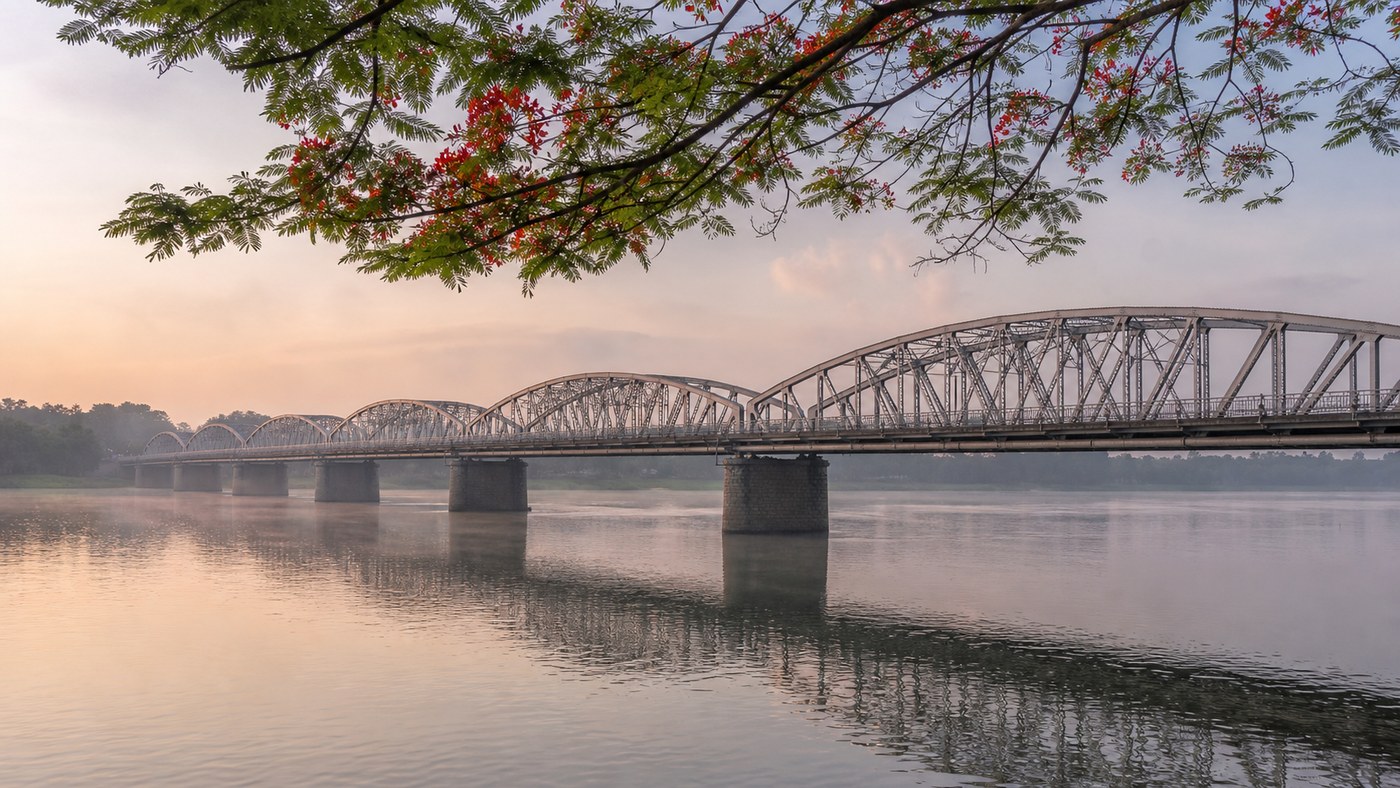
Truong Tien Bridge spanning the Perfume River is one of Hue’s most recognizable landmarks. Six arched steel spans create graceful lines, serving transportation while recounting over a century of fluctuating history for the city by the river.
The bridge’s location in central Hue
The bridge connects both banks of the Perfume River right in the central area, near the Le Loi axis and Dong Ba Market. Visitors can access it on foot, by bicycle, or via public transport, combining it with a stroll along the riverbank. Avoid stopping vehicles in the middle of the bridge as this easily obstructs traffic.
Early morning is suitable for enjoying the mist and slow pace of life. Late afternoon offers beautiful light on the water surface; in the evening, the lighting system creates a different appearance. When walking, always use the permitted pathways and watch out for vehicles at merge points.
Milestones over a century
The idea of building an iron bridge across the Perfume River was implemented under King Thanh Thai in the late 19th century. The project was completed in 1899 with six steel girder spans. Through storms, wars, and numerous repairs, the bridge was once damaged and then restored to continue holding its important transportation role.
A major restoration in the 1990s contributed to shaping the familiar appearance seen today. That history makes the bridge not just a scenic backdrop, but also a trace of modernization and the resilience of Hue city.
How to observe the architecture
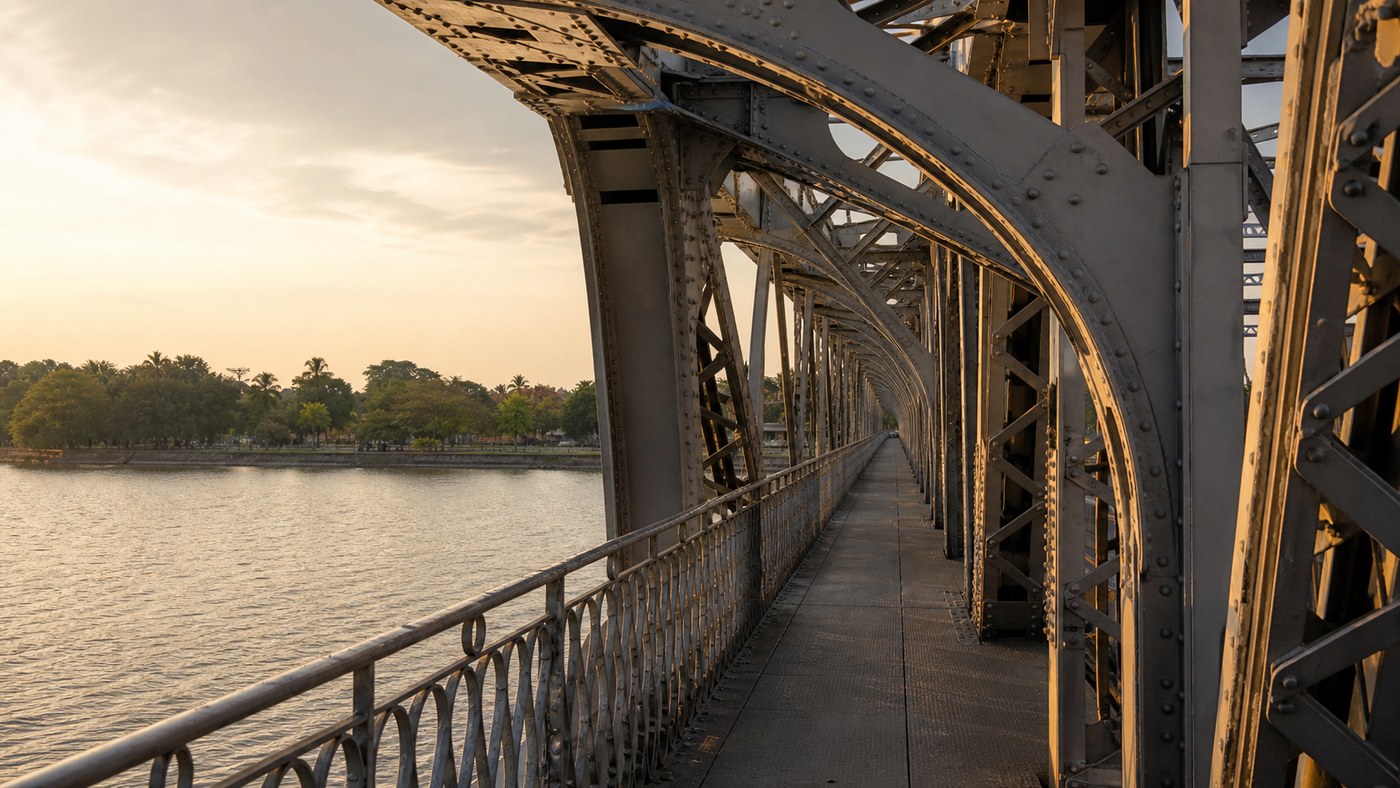
From the riverbank, visitors can see all the bridge spans and their proportions with the landscape. On the bridge, the successive steel frames create strong depth, but you need to stand compactly and not lean against the railing. Another angle is from the riverside park, where greenery and water can be included in the composition.
Rainy weather makes surfaces slippery and limits visibility. Sunny seasons require a hat, water, and avoiding midday times. Do not climb on the structure, do not step onto the roadway, and do not use tripods to occupy walkways when crowded.
Walking itinerary suggestions
Start from the southern shore park, admire the panoramic view, then cross the bridge to the Dong Ba Market area. Afterward, you can follow the northern bank or return by another route to see the bridge from both directions. If combining with the Imperial City, plan resting times because Hue’s sun can be strong and walking distances longer than they appear on a map.
In the evening, choose a spot to stand on the shore instead of the middle of the bridge to watch the lights and photograph reflections. Keep equipment close to your body, do not step back suddenly while taking photos, and avoid standing at the road edge.
Important notes
- Walk on the designated pedestrian paths and always watch out for vehicles.
- Do not stop vehicles, gather, or place tripods in the middle of the passageway.
- Keep young children on the inside, away from the roadway and railing.
- Check the weather; change plans if there is heavy rain, strong winds, or poor visibility.
- Keep the landscape clean and do not write, paste, or hang items on the bridge structure.
Truong Tien Bridge is beautiful in its intersection of steel engineering, urban history, and the rhythm of the Perfume River. Spending time looking at the bridge from afar, crossing it once, and returning at night will bring three very different experiences.
Frequently asked questions

Where should I view the bridge from?
The park and riverside walkways offer safer panoramic angles; the bridge itself is suitable for viewing structural details.
Should I walk across the bridge at night?
You can if the weather is stable, but you must stay on the correct path, watch traffic, and avoid stopping for long in narrow sections.