Hoi An Old Brick Kiln: Route, Best Photo Times & Safety Tips
The Hoi An old brick kiln stands out prominently amid the rice fields in the Nam Phước area, just south of the Ancient Town. Its red brick structure, bamboo bridge pathways, and pastoral surroundings offer a stop distinct from the crowded streets. However, this is an agricultural area and an aging structure, not a closed film set; visitors must respect the rice paddies, land use rights, and all on-site safety barriers.
Where is the Hoi An old brick kiln located?
The destination is situated in Vĩnh Nam village, Nam Phước commune, a short distance south of central Hoi An. The name “Hoi An old brick kiln” is commonly used due to its convenient location for combining with an exploration of the ancient town, even though the structure does not sit within the heritage quarter.
The access route typically passes through residential areas and farmlands. Map pins, turn-offs, and entry privileges can change over time, so you should check the route close to your travel date, watch for directional signs, and ask locals if you are unsure. Do not drive vehicles onto the field dykes or across actively cultivated land to take shortcuts.
What makes the structure special?
The kiln is built from multiple layers of fired brick, with surfaces discolored by time. Its tall, standalone geometric form in the middle of a flat field makes it easily recognizable from a distance. The exterior brick steps once created famous photo angles, but structural conditions and access regulations may vary; a good photo is not worth trading for climbing a restricted or warned area.
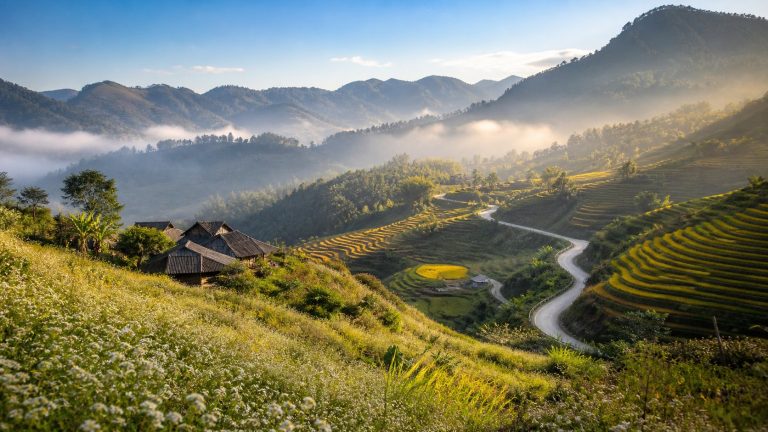
The surrounding landscape is what makes the visit truly worthwhile: rice fields changing colors with the seasons, small pathways, coconut palms, and the daily rhythms of local farmers. Instead of only shooting close-ups of the structure, step back to capture the wider field and sky. A wide angle also helps the photo convey the true rural context.
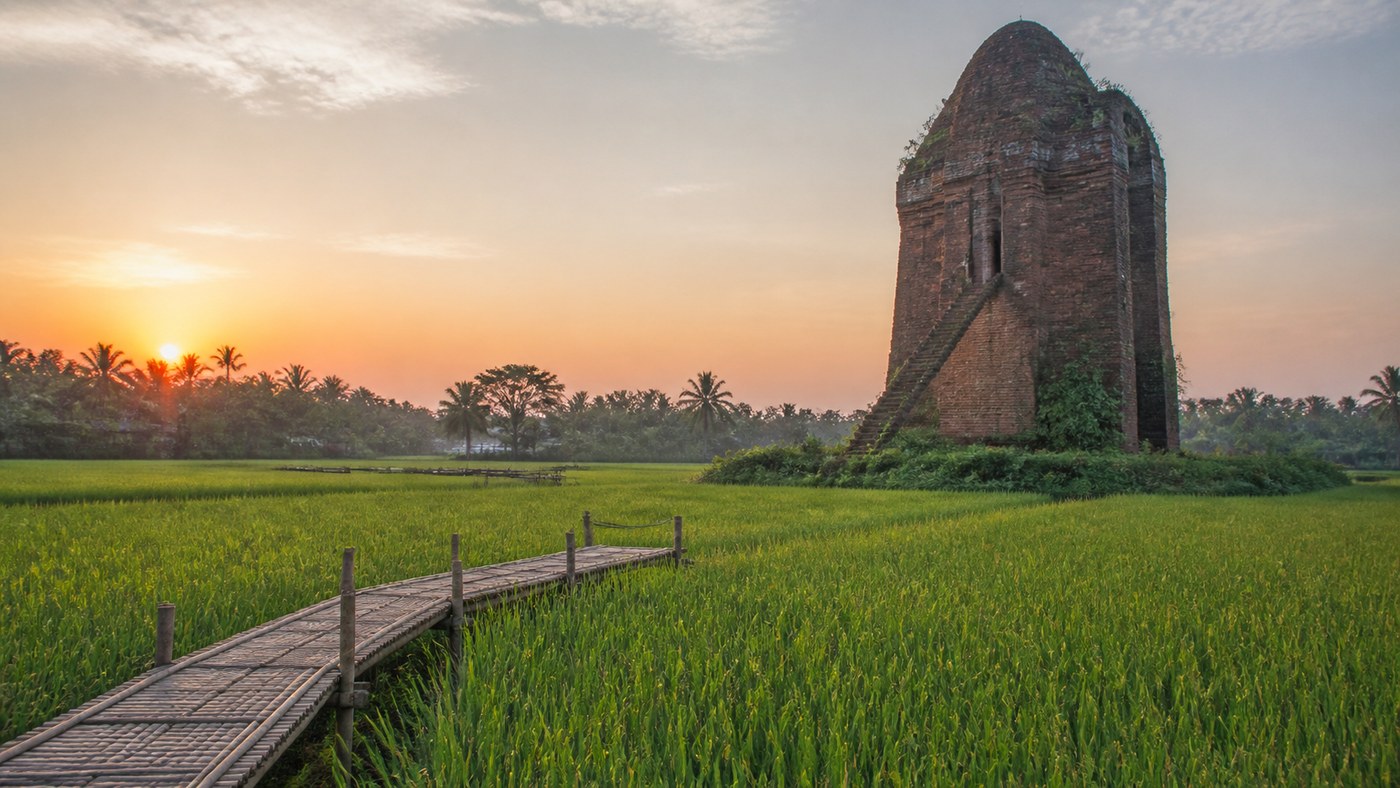
When is the best time for photography?
The color of the rice fields depends on local planting and harvesting schedules per crop, so there is no fixed month that guarantees the rice will always be green or golden ripe. If your main goal is to photograph the rice season, inquire about actual field conditions before your trip. Even if the fields have just been harvested, the stubble and rich brown earth have a distinct charm under good lighting.
Early morning lacks harsh sunlight, village paths are quiet, and the field surface may carry a slight mist. Late afternoon offers warmer brick tones, but you need to budget time to head out before dark as the rural paths lack lighting. Avoid visiting at noon or right after heavy rain; strong sun drains your energy while dirt roads, bamboo bridges, and brick foundations can become very slippery.
How to combine it into a half-day trip
- From Hoi An: Dedicate the morning or late afternoon to the brick kiln, then head back to the ancient town before evening.
- Combining with Cẩm Kim: Choose the countryside route, cycling if fitness and weather permit, without packing too many distant stops into the itinerary.
- Traveling with family: Prioritize transportation with shade coverage, and do not let children run onto bridges or right up to the base of the structure.
Allow extra time for finding routes, parking properly, and asking about local regulations in the area. Do not schedule your visit too close to train, bus, or flight departures because country lanes can take longer to navigate than anticipated.
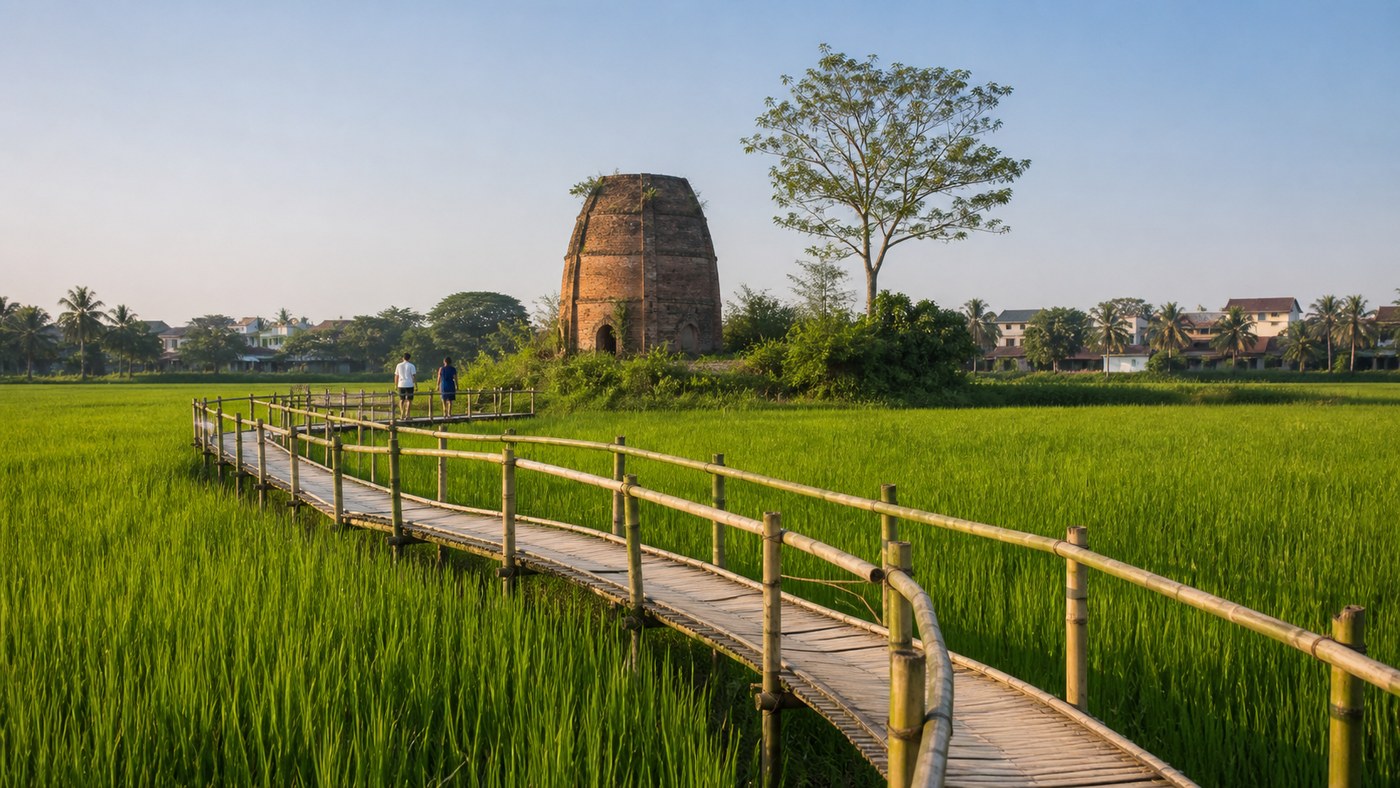
Safety guidelines and etiquette in the countryside
Do not climb the brick steps if there are ropes, prohibition signs, or wet surfaces. Old bricks may crumble, feature sharp edges, and cannot support concentrated loads. Do not crawl into dark chambers, lean against walls, or stand directly under cracked brick sections. If the area is closed for maintenance, switch to shooting panoramic views from public roads.
Rice fields are the livelihood of local residents. Only walk on established paths, do not trample plants, snap stalks, or move farming equipment to frame a shot. If the attraction lies within a managed facility, ask about current usage rules and any applicable fees rather than relying on outdated articles.
Wear shoes with good grip, and bring drinking water, a hat, sunscreen, and insect repellent. Avoid long dragging skirts or high heels on bamboo bridges. When operating a camera, stand steadily before looking at the screen; do not walk backward while shooting on narrow paths.
Frequently Asked Questions
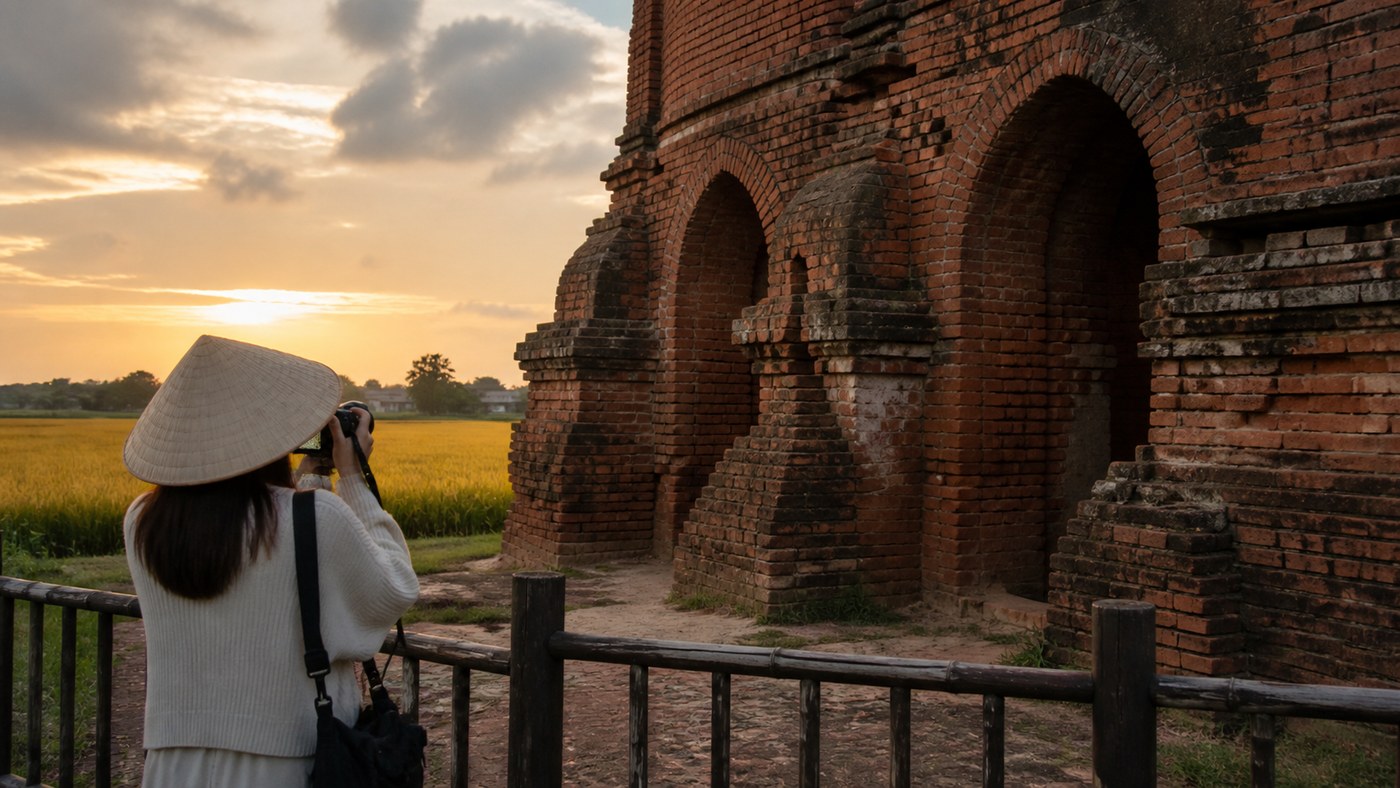
Can visitors climb up the brick kiln?
Only follow direct instructions from the management unit present at the time of your visit. When barriers are present or safety cannot be confirmed, the correct choice is not to climb. Old photos online are not proof that the site is currently open.
Is an admission ticket required?
Access regulations and service activities around the area can change. Please check on-site before utilizing the space; this article does not claim a fixed fee.
How much time is sufficient?
About one to two hours is suitable for walking around, admiring the fields, and taking photos. The most valuable time to spend here is when the lighting is best, rather than lingering long under the harsh midday sun.
The Hoi An old brick kiln appeals through its contrast between brick architecture and wide open fields. The experience is most complete when visitors maintain a safe distance, avoid disrupting local farming seasons, and accept that agricultural landscapes change with the seasons.