Hoi An Walking Street: Walking Routes and Exploration Tips
Hoi An Walking Street is not a single standalone road but a network of ancient town streets where vehicles are restricted during specific time frames. When motorcycles temporarily leave the main axes, the rhythm of the town slows down, footsteps become more distinct, and the yellow houses, old tiled roofs, flower trellises, and the banks of the Hoai River become the most appealing parts of the trip. To fully experience it without getting exhausted by crowds, you should choose a sensible time, follow a short loop, and spend time observing rather than just chasing photo angles.
Where is Hoi An Walking Street located?
The pedestrian zone is concentrated in the core of the ancient town, around Tran Phu, Nguyen Thai Hoc, and Bach Dang streets, the paths leading to the Japanese Covered Bridge, and the small alleys connecting to the Hoai River. The vehicle-restricted area may change according to hours, events, or local traffic management. When you arrive, observe the guide signs and park your vehicle at a valid designated spot outside the walking zone.
From the edge of the ancient town, you can start near the Japanese Covered Bridge, walk along Tran Phu, turn into Nguyen Thai Hoc, and finish at the riverbank. A loop like this is enough to see old houses, assembly halls, wells, narrow alleys, and riverside life without having to retrace your steps multiple times.
When should you go?
Early morning: quiet and easy for architectural photography
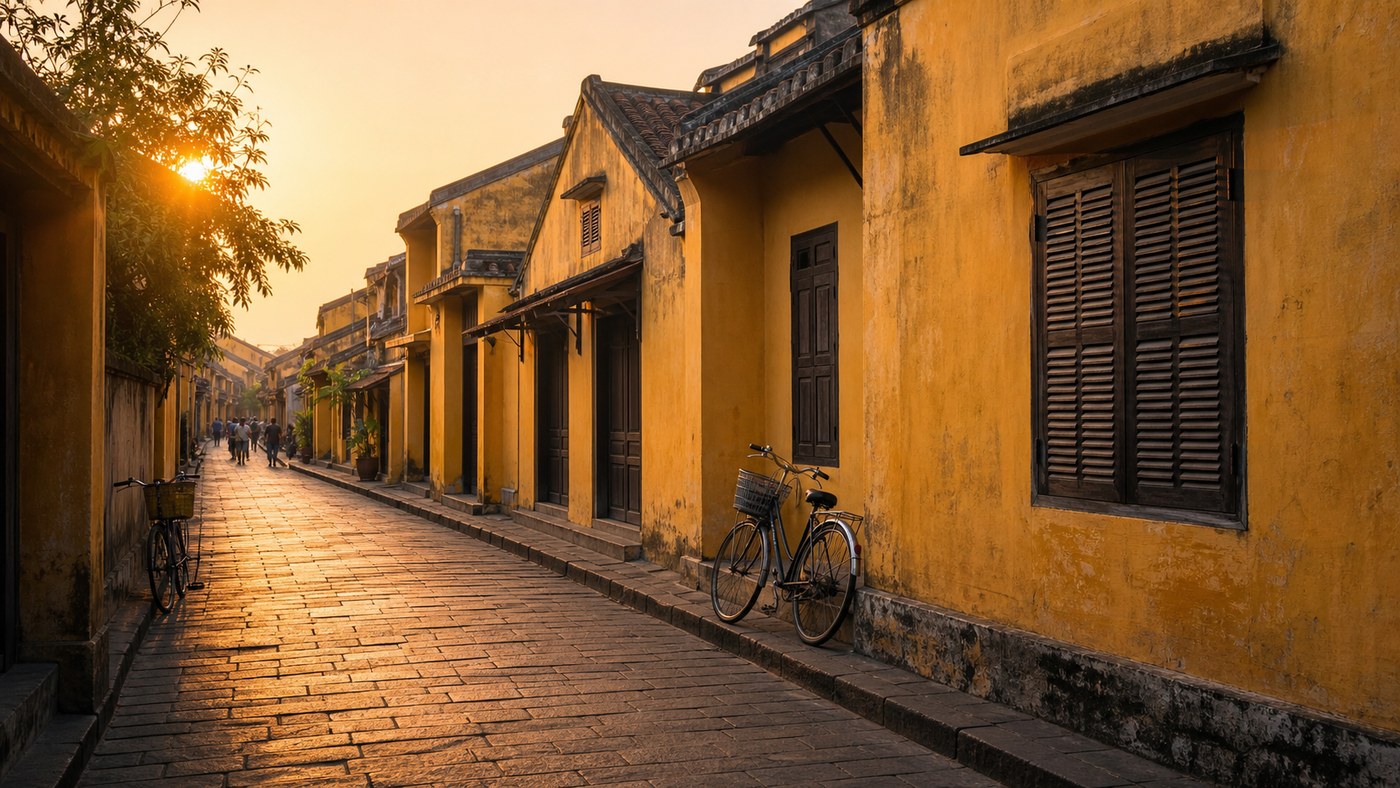
The beginning of the day is suitable for those who prefer clear streets, slanting sunlight on yellow walls, and the local daily rhythm. Many shops are not fully open yet, so the experience focuses more on architecture, cycling, and slow-paced coffee. This is also the best time to visit with young children or elderly travelers because temperatures are usually more comfortable.
Late afternoon: transitioning from day to night
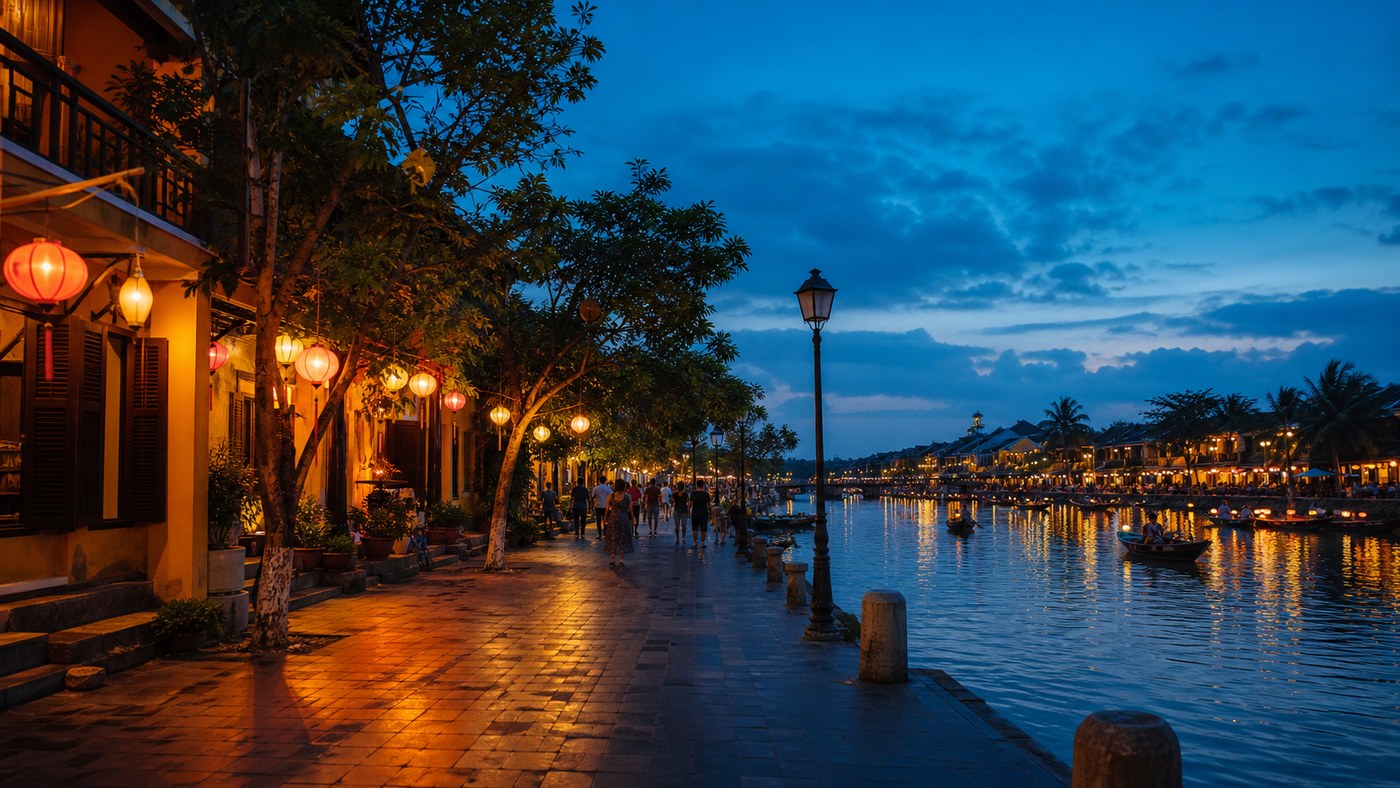
Late afternoon allows you to watch the ancient town change colors: natural light is still sufficient to photograph facades, and then lanterns gradually light up as darkness falls. This is a busier time, so it is best to agree on a meeting point if you are traveling in a group and avoid stopping in the middle of the pedestrian flow to take photos.
Suggested easy-to-follow walking route
- Japanese Covered Bridge and western area: walk slowly to observe the roof structure, the stream of people crossing the bridge, and the old house fronts, but avoid gathering right at the narrow passageways.
- Tran Phu Street: suitable for exploring assembly halls, historic houses, and architectural facades. When entering sacred spaces, dress modestly and keep your voice low.
- Nguyen Thai Hoc Street: features many yellow house corners, wooden balconies, and connecting alleys. Take photos from the sidewalk, and do not lean against doors or step into private courtyards without permission.
- Bach Dang Street and Hoai River: a breezy final stretch where you can easily rest your legs, watch boats, and admire lights reflecting on the water.
How to take great photos without disturbing others
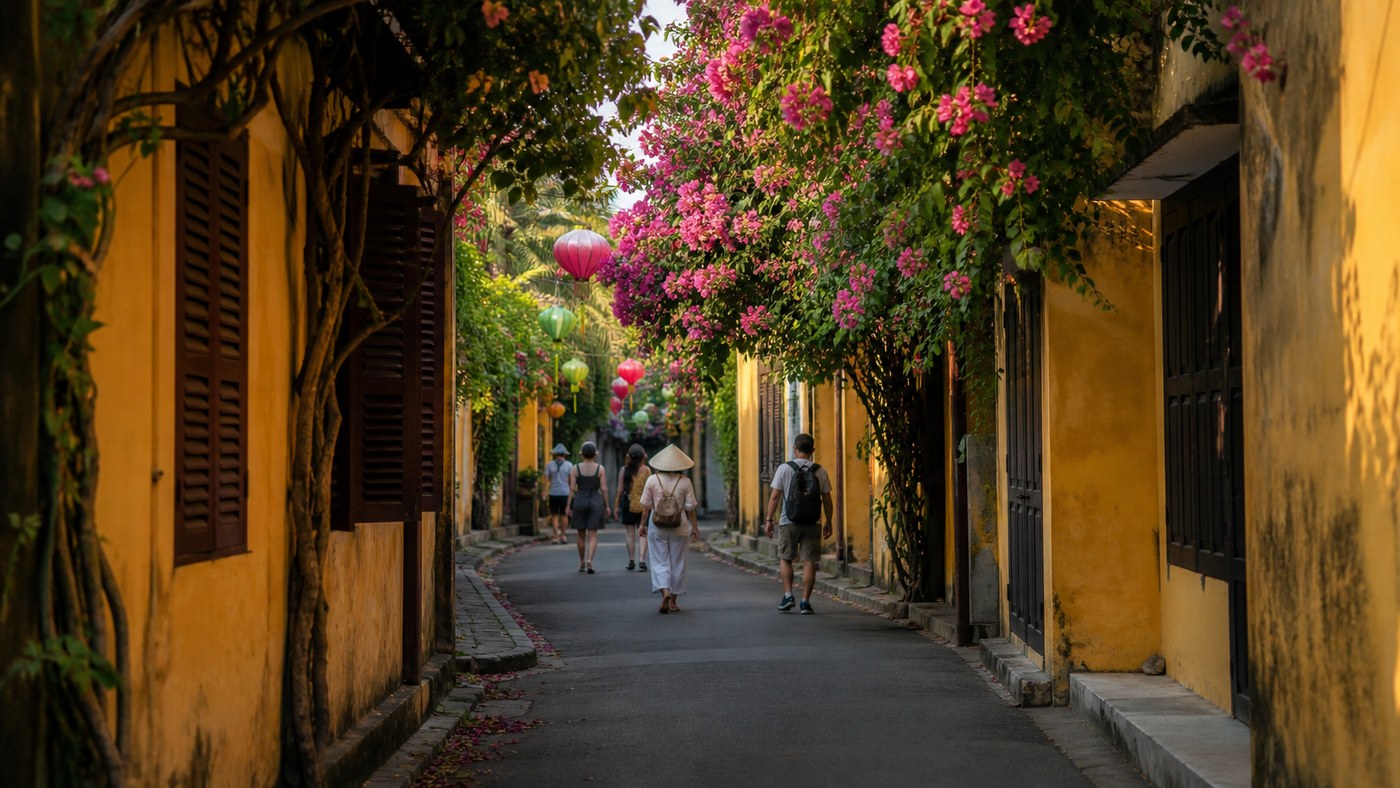
The best angles usually come from the lighting and the depth of the street; you do not necessarily need to stand right against someone’s doorway. Use rooflines, wooden doorframes, sun shadows, or bougainvillea frames to create your composition. If you want to photograph a storefront that is open for business, avoid blocking the entrance and ask permission before arranging props or lingering for a long time.
Lanterns look their best just after dark when the sky still retains a blue hue. Avoid shining strong flashlights directly at passersby or into worship spaces. When taking photos by the riverbank, maintain a safe distance from the edge and do not step backward while looking only at your screen.
Cultural experiences to prioritize
Instead of trying to check off as many spots as possible, choose one historic house or assembly hall to explore thoroughly, then spend time observing local crafts, household routines, and how residents utilize urban space. Hoi An is captivating because of its living culture, so a respectful attitude toward residents matters far more than the number of photos you bring home.
If you encounter community performances or festival activities, stand outside the main pathways and follow crowd control instructions. Performance schedules may change depending on the day, weather, and city programs; do not plan your itinerary solely based on outdated online information.
Weather, clothing, and safety notes
The ancient town features stone-paved surfaces, and some sections become slippery when it rains. Grippy shoes and lightweight clothing are much more convenient than high heels or overly long outfits. During sunny seasons, bring water, a hat, and take a midday break; during the rainy season, monitor forecasts, river water levels, and travel restriction announcements.
Do not sit on residents’ doorsteps, do not litter, do not touch artifacts, and do not casually burn incense in unguided areas. In the crowded evening hours, keep your personal belongings secure and remind children to remember their meeting points. If riding a bicycle, dismount and walk it through crowded areas or where required.
Frequently asked questions
How much time is needed to explore the walking street?
About two to three hours is enough for a loop covering architecture, narrow alleys, and the riverbank. If you plan to enter multiple monuments or want to wait for the town to light up with lanterns, allocate half a day.
Should you visit in both the morning and evening?
If your schedule allows, the two times offer completely different atmospheres. Mornings are great for viewing architecture and daily life; evenings stand out with lanterns and a lively ambiance. Those with only one half-day should start in the late afternoon.
Hoi An Walking Street is most memorable when explored at a slow pace. A short route, comfortable shoes, and respect for the residents’ living space will yield a much deeper experience than rushing through a checklist of sights.