Thanh Ha Terracotta Park: Ceramic Architecture & Visitor Guide
Thanh Ha Terracotta Park is a ceramic exhibition and experiential space located within the riverside craft village region along the Thu Bon River, not far from the Hoi An Ancient Town. The appeal here lies not only in the warm red terracotta hue, but also in how architecture, craft, and the story of a pottery village spanning over 500 years are placed side by side in an easily observable journey.
Ceramic Space Along the Thu Bon River
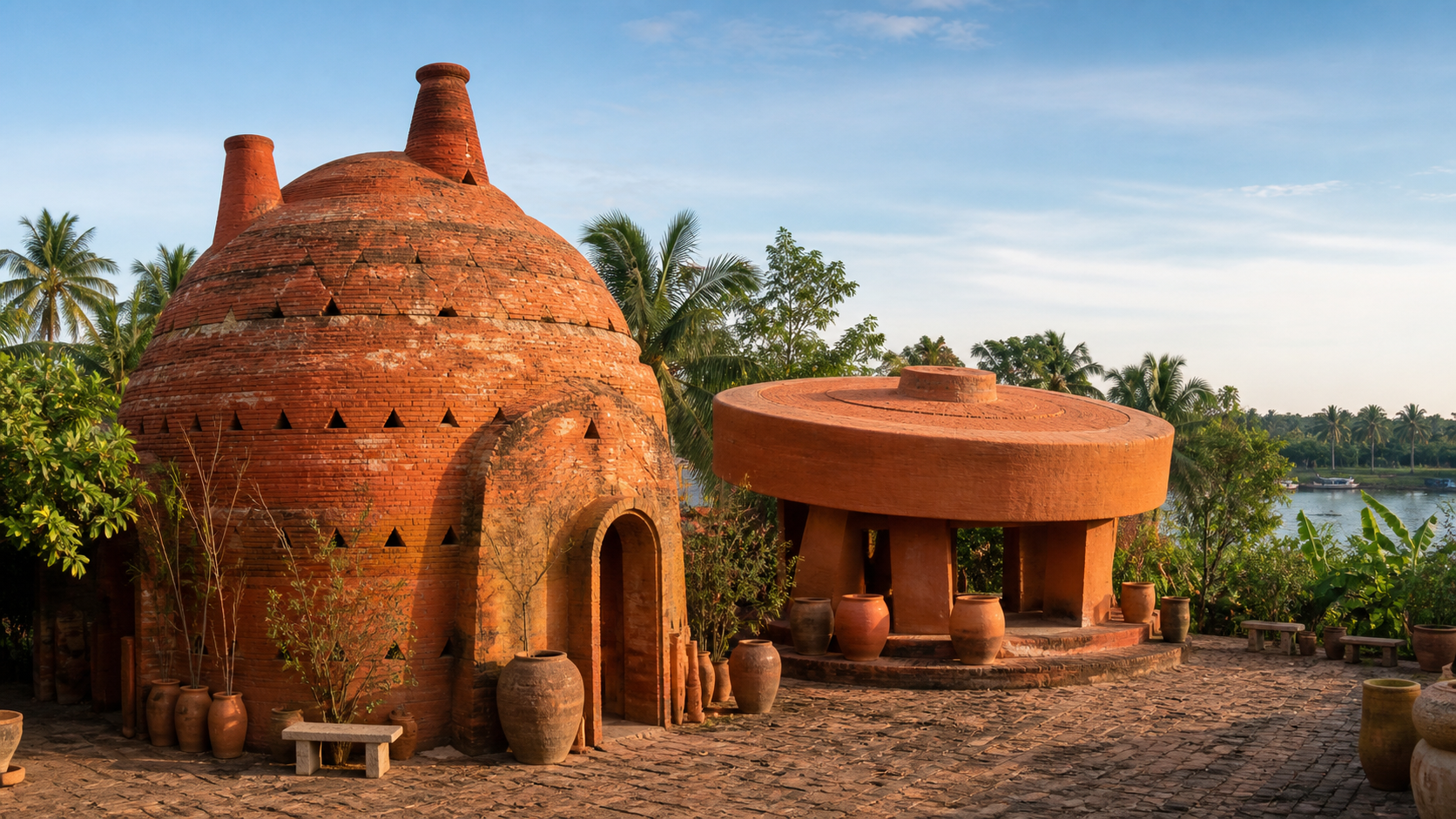
Spanning over 6,000 m², the park features two main buildings shaped to resemble inverted and upright kilns. This spatial organization is not merely decorative: it guides visitors from the story of earth, water, and fire to the stages of pottery making, village products, and contemporary art experiments.
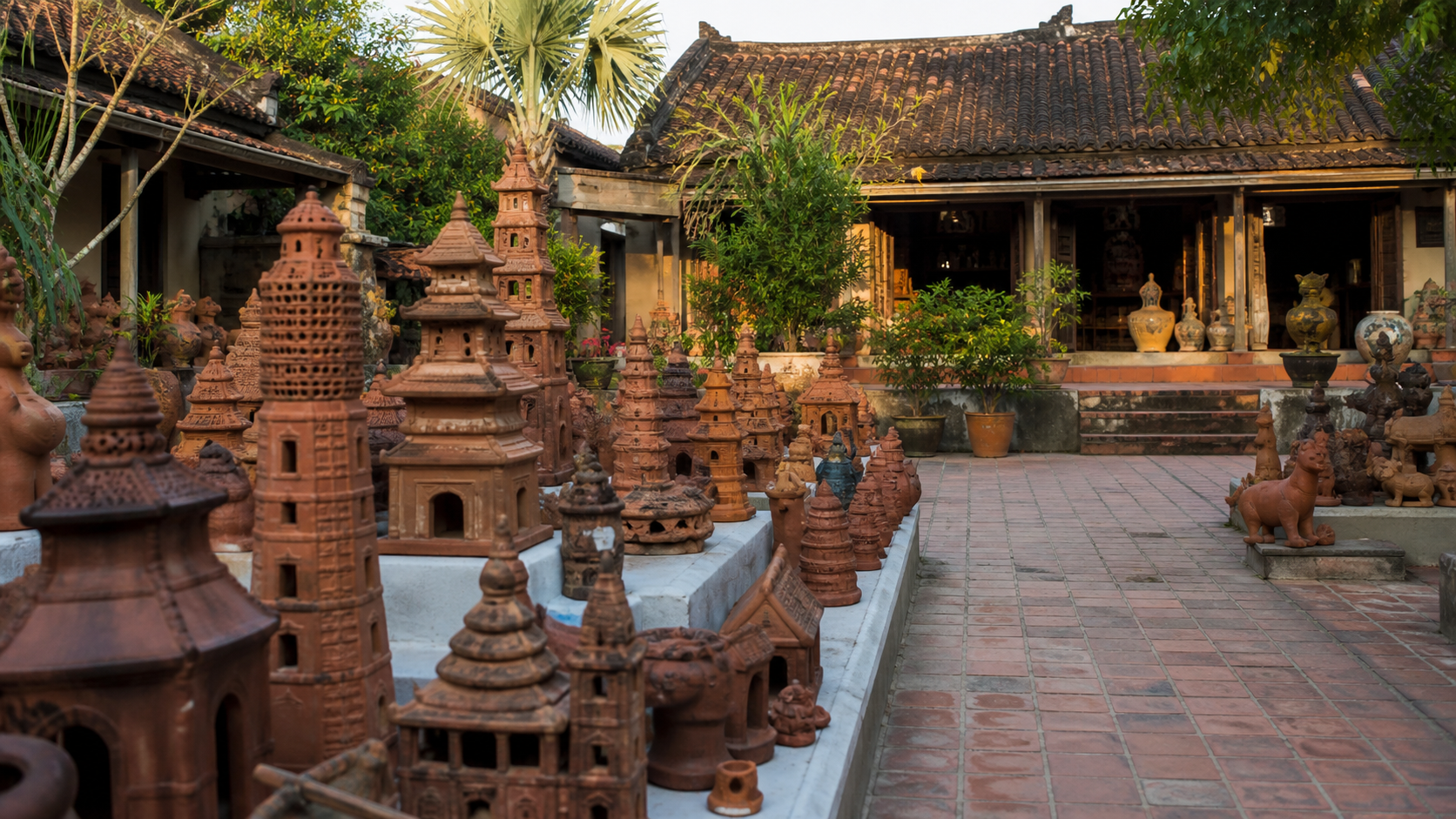
Inside are exhibition areas for artifacts, traditional ceramics, products from various regions, and terracotta architectural models. The outdoor space features an installation garden and small works, ideal for observing the differences between raw clay, shaped clay, and post-firing surfaces.
Observing Pottery Through the Craftsman’s Hands
The section dedicated to the manual crafting process is well worth your time. A seemingly shapeless lump of clay transforms rapidly as the artisan adjusts hand pressure, wheel speed, and the amount of water. Observe how they center the clay, pull the walls, and even out the rim; this is a skill difficult to appreciate just by looking at a finished piece on a shelf.
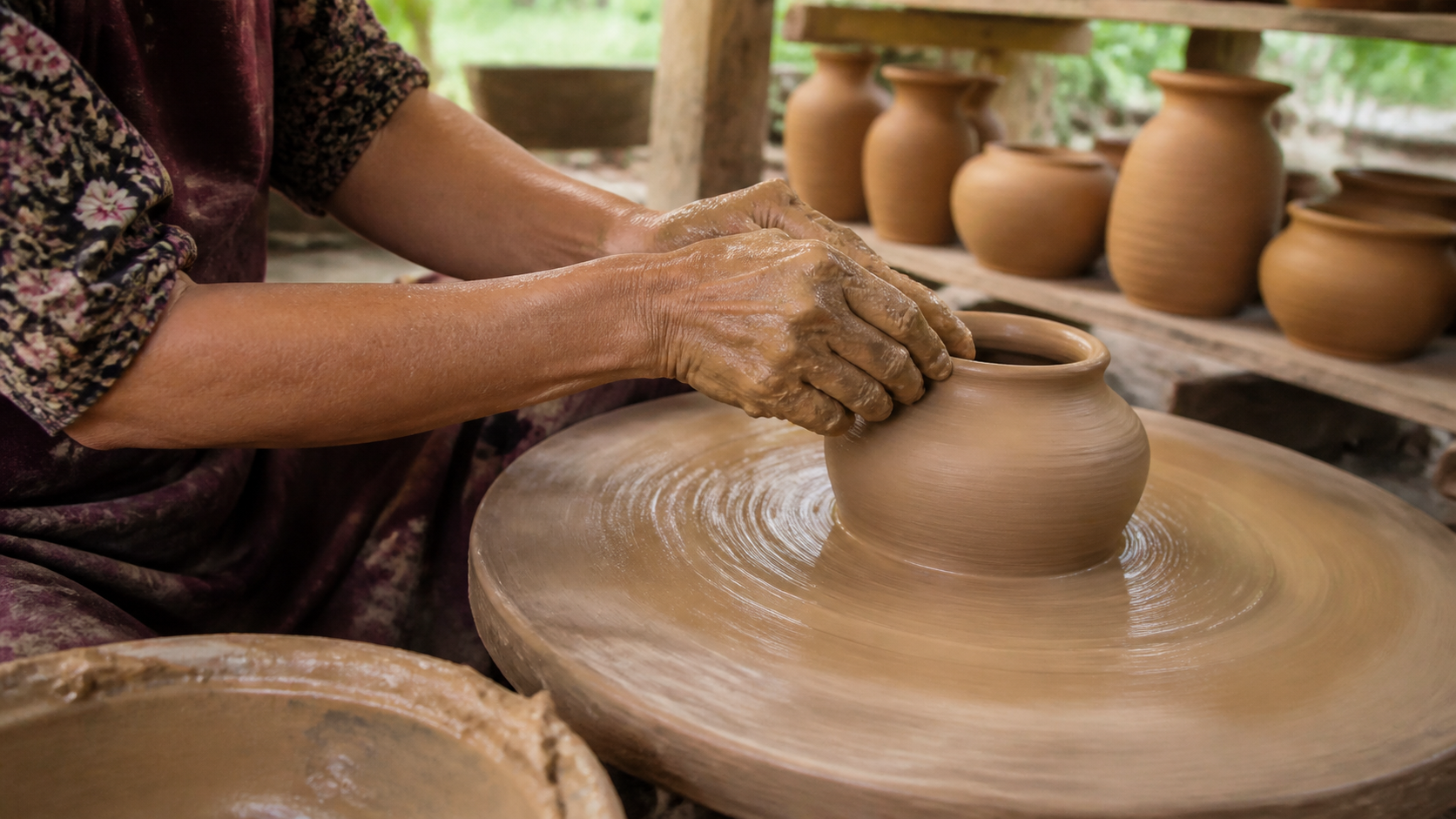
Shaping experiences are available at certain times. If you participate, treat it as an opportunity to understand the material rather than trying to make a flawless item. Short nails, neat clothing, and a readiness to get soil on you will make the process comfortable. Ask clearly which parts can be touched, which are drying, or which are finished to avoid damaging the products.
Details to Look For in the Exhibition Area
- The shapes of the two buildings and how light filters through the openings on the terracotta surface.
- The differences between household ceramics, decorative pottery, and artifacts narrating the village’s history.
- Terracotta architectural models bearing the traces of manual shaping.
- Colors, small cracks, and varying textures revealing the impact of firing temperatures.
- Views of the village and the river landscape from elevated vantage points within the structure.
Visitor Tips
Mornings or after 3:00 PM are generally more pleasant as the sunlight is less harsh and the earth colors appear at their best. Allocate about 60 to 90 minutes for a standard visit, and more if you wish to try pottery making. Opening hours and admission rules may change, so it is best to check the posted information on the day of your visit rather than relying on old prices or schedules.
Do not touch displayed artifacts without permission, do not climb on models for photographs, and keep pathways clear. Since the park is located near the Thanh Ha pottery village, you can combine your visit with a walk or bicycle ride through the family-owned workshops. When purchasing products, ask about packaging and care instructions rather than choosing by color alone.
The journey is most rewarding when visitors connect three layers: the park’s architecture, pottery techniques, and the daily life of the surrounding craft village. As a result, terracotta ceases to be just a photographic backdrop and becomes a material telling the story of labor and Hoi An’s memories.