Vietnamese Women’s Museum: Stories in Everyday Objects
A baby carrier, a back basket, or a grain container can open up many more questions about daily life than their modest appearances suggest. At the Vietnamese Women’s Museum, an engaging way to explore is to start with specific items and then learn about the users, tasks, and contexts associated with them. As a result, the visit is not reserved only for those with prior knowledge of history or traditional costumes.
Where to go and what to prepare?
The museum is located at 36 Ly Thuong Kiet, Cua Nam Ward, Hanoi. Use the full name of the museum and the exact street number when finding directions to avoid confusing it with cultural institutions with similar names in other cities.
Plan for about a short half-day, depending on your reading speed and level of interest. If you combine this with a walk through central Hanoi, set aside dedicated time for the museum first rather than just dropping in during the gap right before closing time. Check visiting hours, admission fees, and open galleries before your trip; this article does not use past hours or prices as a guarantee for your visit.
Three themes to choose your visiting route
The permanent exhibitions are presented across three themes: Women in the Family, Women in History, and Women’s Fashion. You can follow the on-site map while choosing one specific theme to explore in more depth rather than trying to read everything on your first visit.
- Family: Pay attention to the objects, customs, and activities tied to daily life. Read the information regarding the community and the time period so you do not mistake a single instance for representing every Vietnamese family.
- History: Look for individual names, circumstances, and timelines within each story. An object’s significance becomes clearer when placed alongside related accounts or documents.
- Fashion: Observe materials, structures, and patterns, but do not guess an ethnic group or a function based solely on color.
Looking at a baby carrier: from patterns to function
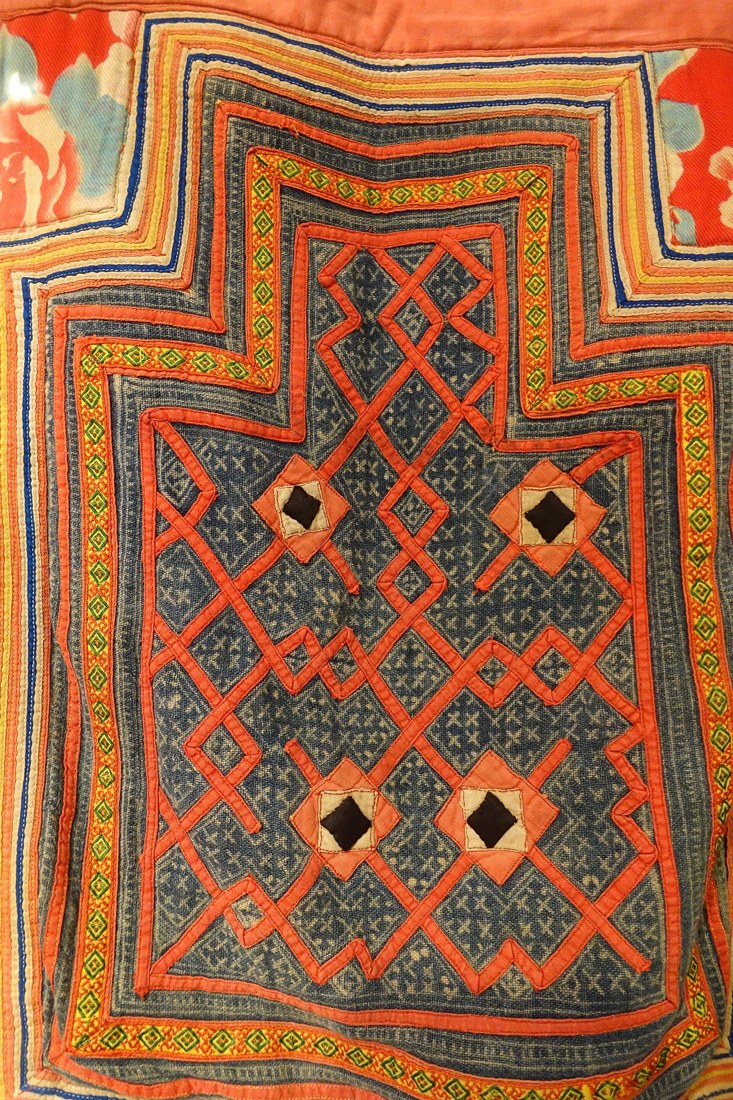
A detailed photo of the baby carrier shows colored borders, fabric panels, and geometric motifs. You can begin by finding the repeating rhythm of the pattern, then read the label for information about the item. The photo is not enough to identify every manufacturing technique or the utilizing community, so this article does not attach unverified information.
If visiting with children, try asking: what need does this object serve, which part needs to be sturdy, and which part is decorated? Questions about usage help children view the artifact as part of living history, rather than just remarking on whether it looks pretty or unusual. Do not touch or try using displayed items unless an authorized guide permits it.
Comparing back baskets and grain containers
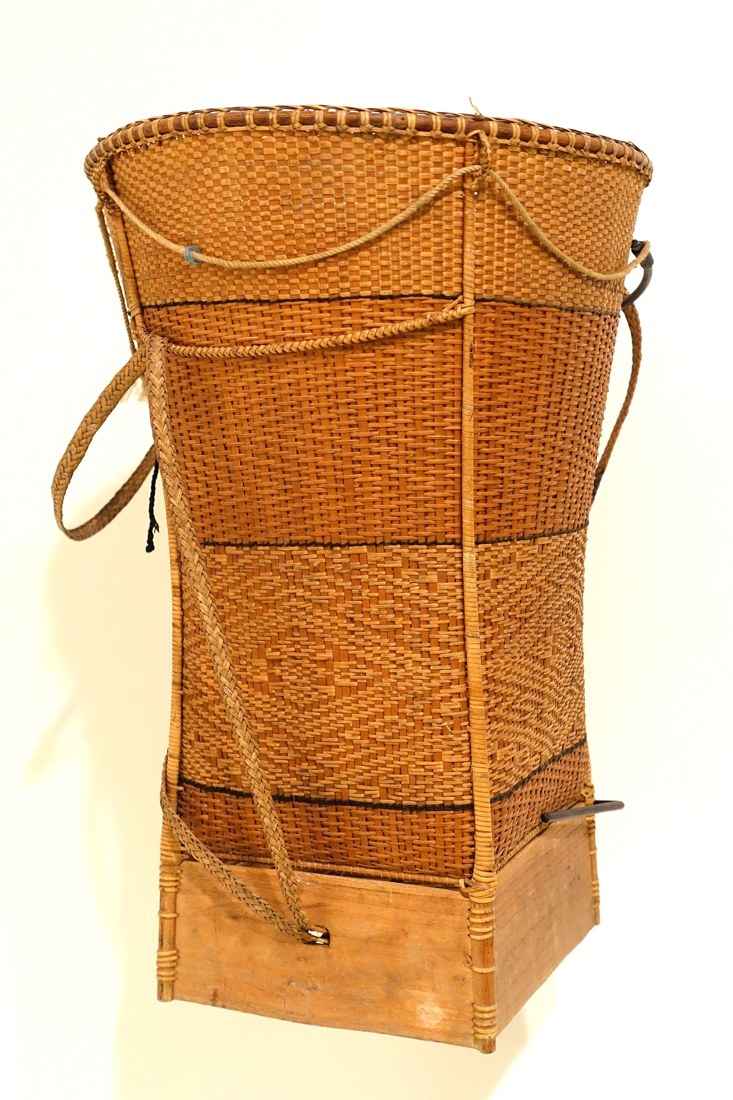
The Ba Na back basket in the photo features straps, a tall body, and a reinforced base. Observe the differences among the rim, the body, and the base: these parts invite questions about how the basket was carried and how it bore weight. Information concerning the maker, user, or types of goods once carried should rely on artifact labels rather than personal deductions from shape alone.
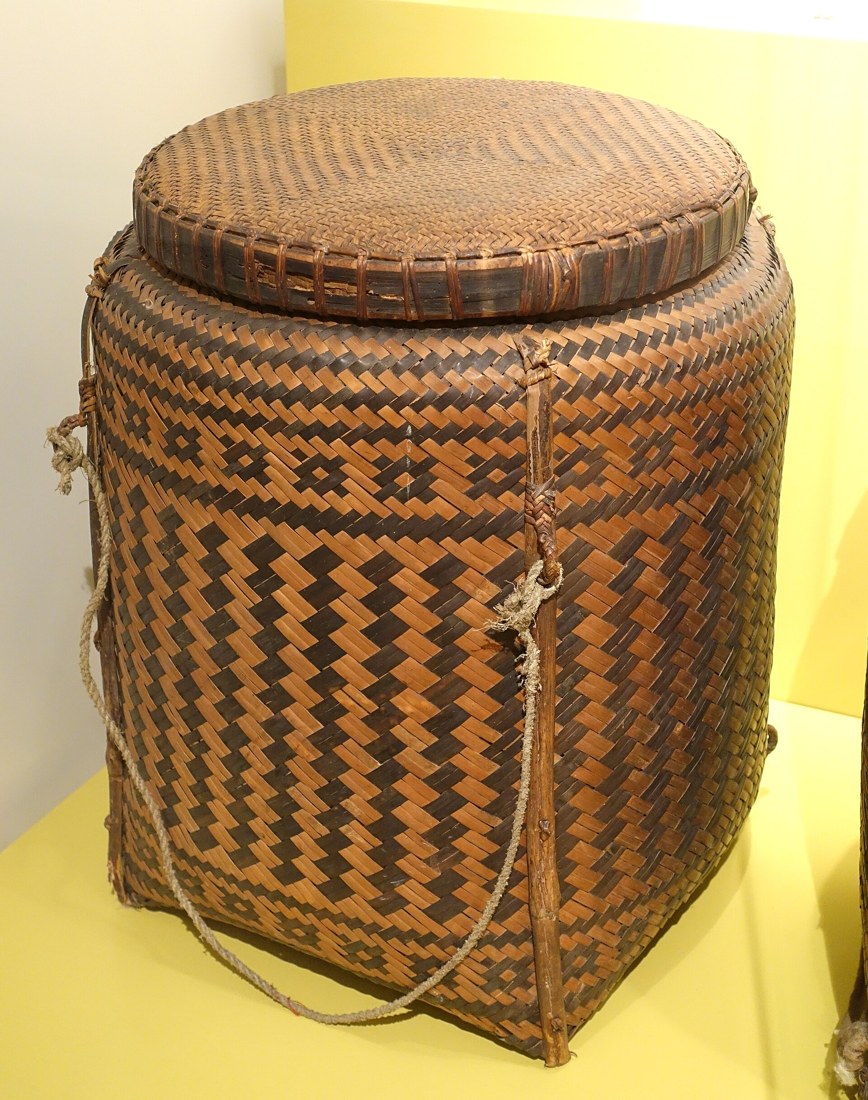
The White Thai grain container features a lid and woven sections creating a rhythmic pattern distinct from the back basket. Keeping both images side by side in your memory makes it easier to notice that their functions and structural methods are not identical. This is another way to experience a museum: compare two familiar items and use the display information to explain their differences.
The three images in this article are archival photos of artifacts at the museum, not an overview of the current exhibition rooms. Display locations may change; they should not be treated as a guaranteed checklist of what you will see on a specific day.
Reading the story without imposing stereotypes
A back basket or a baby carrier does not mean that caregiving and labor belong solely to women. When viewing, pay attention to the voices and circumstances of the people featured, as well as how life changes over time. Do not use a single costume or ritual to draw conclusions about the character of an entire community.
When it comes to historical narratives, distinguish between eyewitness accounts, museum annotations, and your own thoughts. If taking notes after your trip, keep the proper names and contexts provided intact; avoid turning an unclear detail into an unshakeable anecdote.
Tips for visiting with family
Choose a few manageable stops, interspersed with rest and observation time. Ask in advance if you need mobility assistance or want to know which areas are suitable for children; do not assume all interactive activities are available without registration. Keep your voice down, yield the viewing space to others, and follow photography and flash rules in each specific zone.
A memorable visit does not need to end with memorizing numerous statistics. If you leave with a concrete story about the people behind the objects, you will have gained a closer perspective on history and daily life.