Lang Pagoda Hanoi: Courtyards, Tiled Roofs, and Greenery
Lang Pagoda, also known as Chieu Thien Tu, is a historic temple located in Lang Ward, Hanoi. Beyond offering prayers, you can spend an afternoon observing the brick courtyards, tiled roof structures, and green spaces within the grounds. This is a suitable approach for anyone wanting to explore a heritage site right in the city without a packed schedule.
A Brief Overview of Chieu Thien Tu
Lang Pagoda is associated with Zen Master Tu Dao Hanh and has undergone multiple restorations throughout its history. Therefore, when looking at a structural component or a row of buildings, you should not assume everything shares the exact same age. If you wish to learn more, read the introductory plaque or ask the site staff about the specific architectural features you are observing.
The religious legends surrounding the pagoda are part of local culture and are not a guarantee that visiting will bring romance or fortune. You can visit to study the historical site without needing to buy elaborate offerings or follow rituals of uncertain origin.
Finding the Actual Pagoda, Not Just the Street Name
Chùa Láng is also the name of a busy street. When navigating, select the exact destination point for “Lang Pagoda” or “Chieu Thien Tu,” checking the gate and entrance locations rather than just typing in the street name. If traveling in a group, agree on a meeting point outside to make it easy to find each other if you separate.
Before setting out, check the visiting hours and accessible areas according to the pagoda’s announcements. This article does not provide fixed hours that have not been directly verified. For elderly visitors or young children, allow extra time for rest and wear comfortable shoes suitable for brick courtyards and steps.
Observing the Green Spaces and Buildings
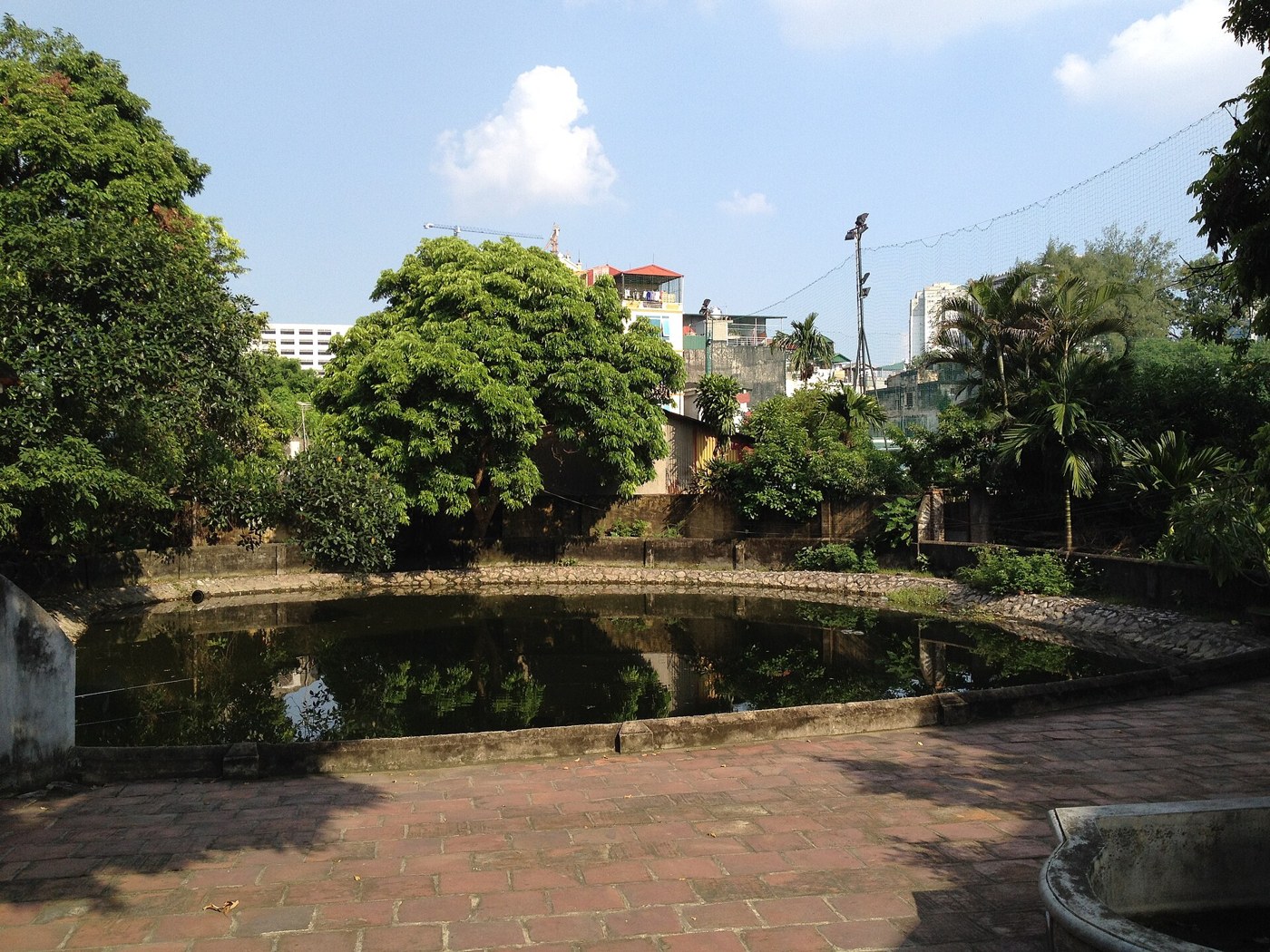
The photo of the pagoda pond shows the interplay between greenery, water, and distant urban housing. When observing, keep a distance from the water’s edge; do not climb on the pond wall to take photos. If the courtyard surface is wet, walk slowly and avoid slippery spots.
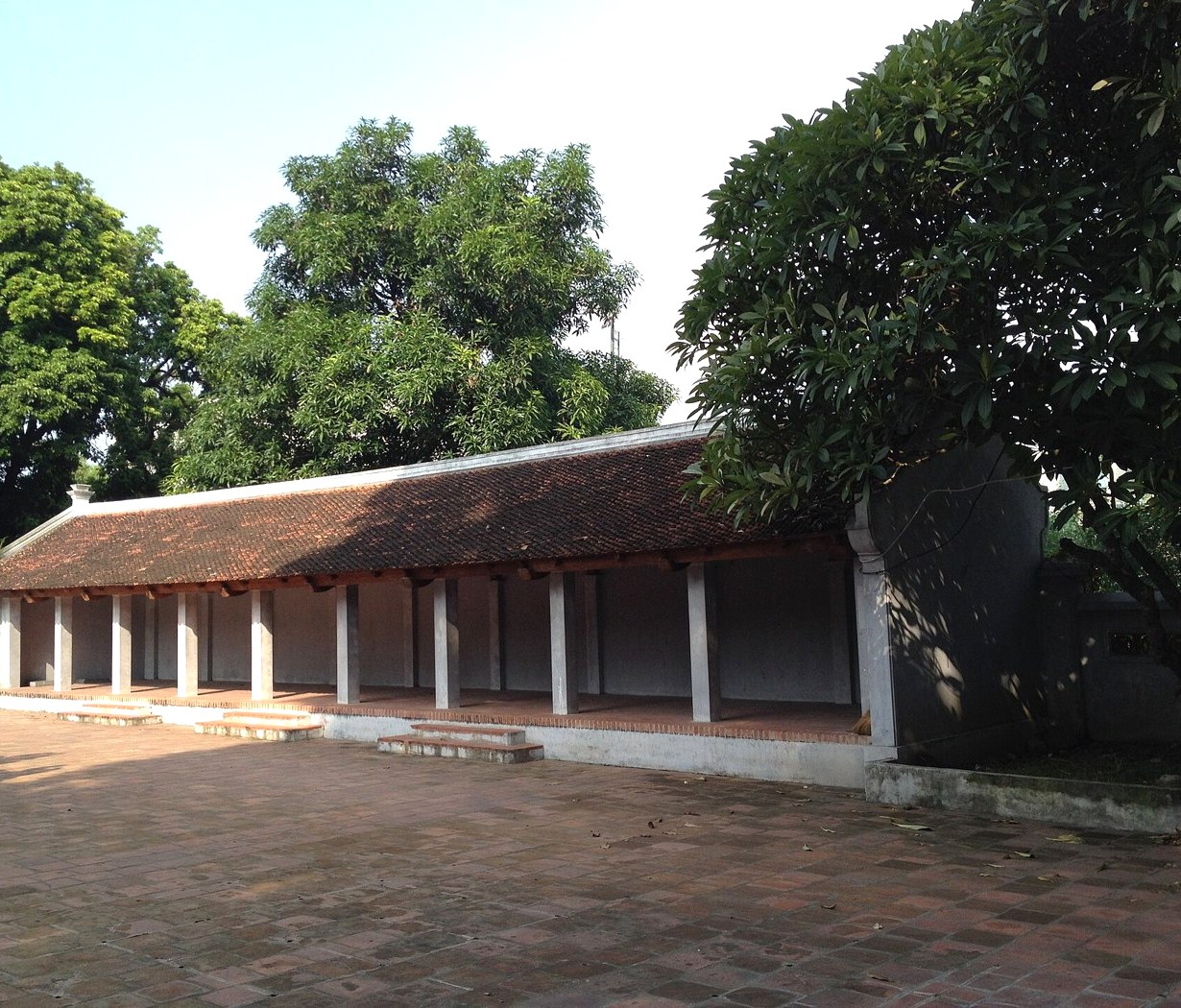
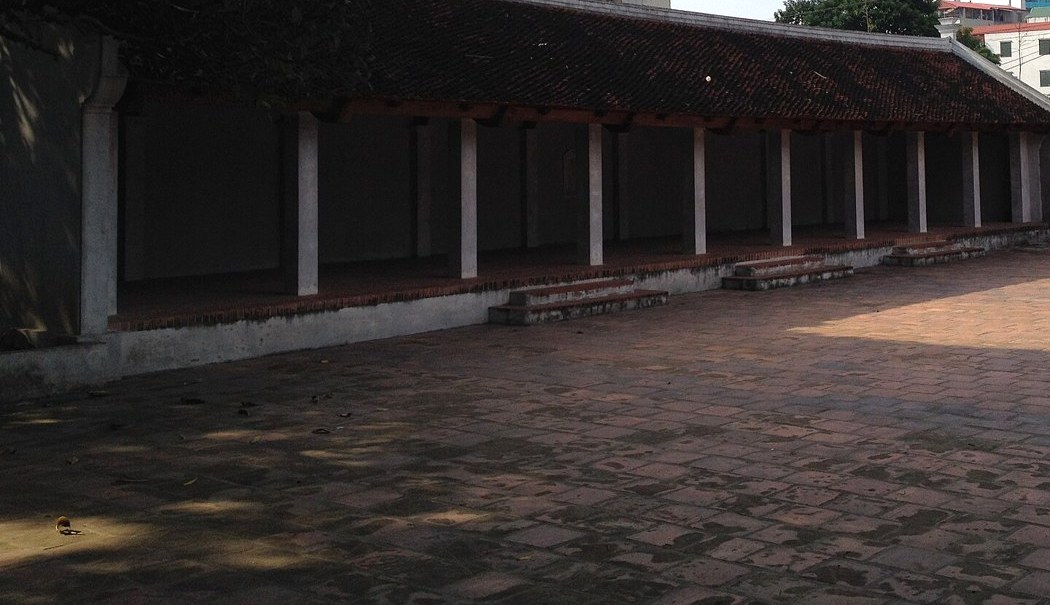
The two rows of buildings in the photo feature long tiled roofs, rhythmic rows of columns, and front porches. Try looking from the end of the row to see how the columns repeat, then look sideways to notice the shadows of the roofs cast on the courtyard. Such simple architectural angles can help you understand how the space is organized.
You do not need to photograph every detail. Choosing one overall shot of the courtyard composition and a closer shot of the roof or columns is enough to record what catches your eye. Only take photos in permitted areas; do not open doors yourself, step into closed rooms, or move objects to create a framing angle.
Strolling Without Disrupting Worship
- Wear modest clothing, keep your voice low, and silence your phone.
- Yield the way to worshippers; do not stand posing for long periods in front of doorways or altars.
- Ask before taking photos indoors and respect photography prohibition signs if present.
- Do not place money, food, or offerings casually on statues and architectural elements; follow on-site instructions.
- Do not pick leaves, break branches, bring pets into unauthorized areas, or leave litter behind.
If you want to offer gifts but are unfamiliar with the process, ask the person in charge rather than following outsiders soliciting services. A visit does not need to be complicated: neatness and respect for the shared space make both you and those practicing their faith feel more comfortable.
A Balanced Stop for a Walking Tour
Lang Pagoda should be viewed as an independent stop with a flexible schedule. After stepping outside, you can rest before continuing your journey; there is no need to cram in multiple pagodas just to check off a list. If the weather is scorching or rainy, prioritize the comfort of your group over trying to capture a photo that matches a reference image.
The three images in this article are archival photos of the pond and two building wings, and do not reflect the entire grounds or current status today. When you arrive, please follow the practical on-site guidelines. The value of a visit lies in noticing details of the heritage site and better understanding proper conduct in a place of worship, not the number of photos you bring back.