Vietnam National Museum of Nature: Exhibits & Visiting Tips
The Vietnam National Museum of Nature in Hanoi offers an introduction to geology, evolution, and biodiversity through specimens, taxidermy, and models. The space is relatively compact, but with focused observation, visitors can connect scattered fragments such as fossils, skeletons, insects, and plants into an accessible narrative of natural history.
Location and Things to Check Before You Go
The museum is located within the campus of the Vietnam Academy of Science and Technology on Hoang Quoc Viet Street, Hanoi. Because it is inside a research facility, visitors should follow designated pathways, respect security guidelines, and avoid wandering into work areas.
Opening hours may differ for individual visitors and tour groups, and schedules can change on holidays or during maintenance. Check official announcements close to your visiting date, especially if going on a weekday or in a group. Do not assume all supplementary activities run during every shift.
Starting with Earth’s History
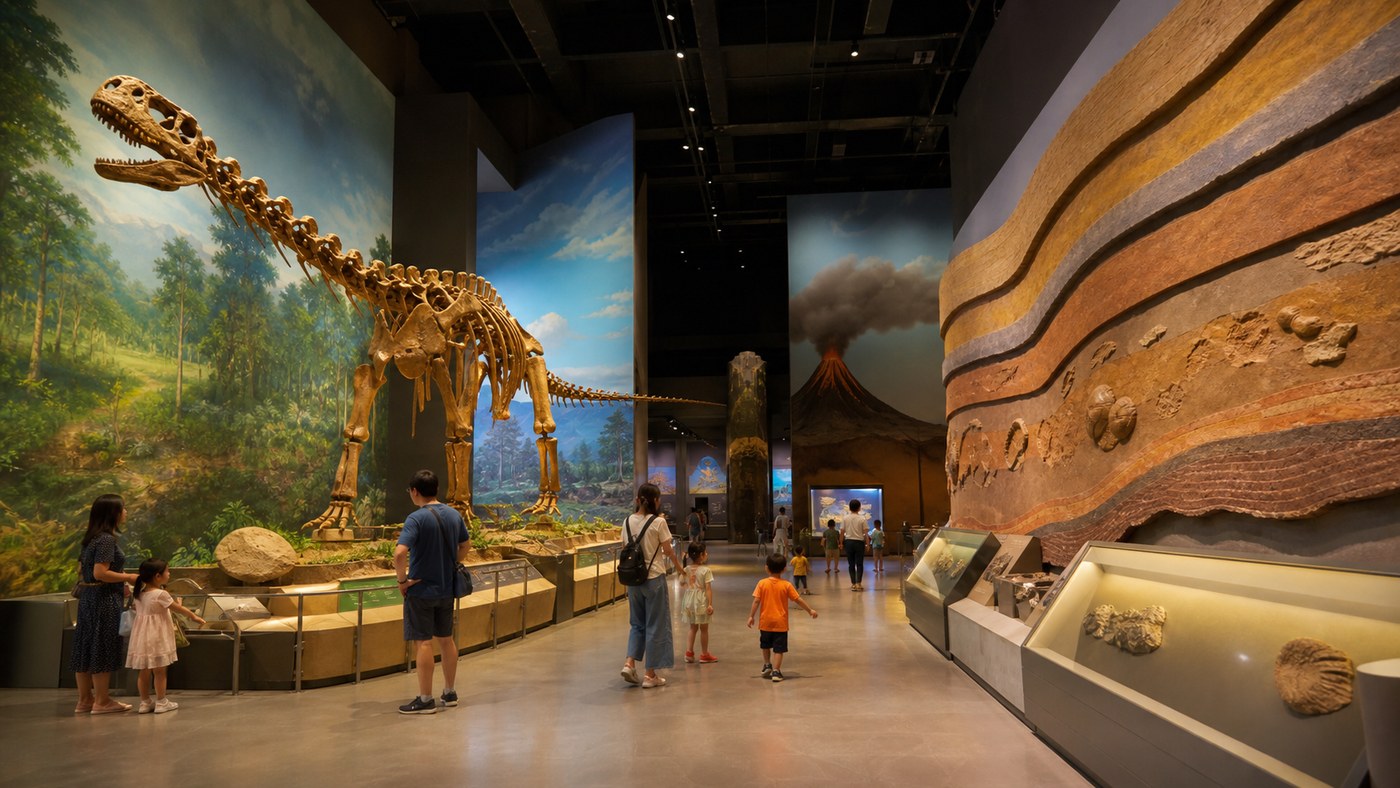
The geology and fossil section is a logical starting point. Observing rock layers, fossil types, and chronological order helps illustrate that life has evolved over millions of years rather than through a short series of events. When reading labels, pay attention to geological periods, habitats, and how specimens formed instead of just memorizing species names.
Viewing Biodiversity Through Relationships
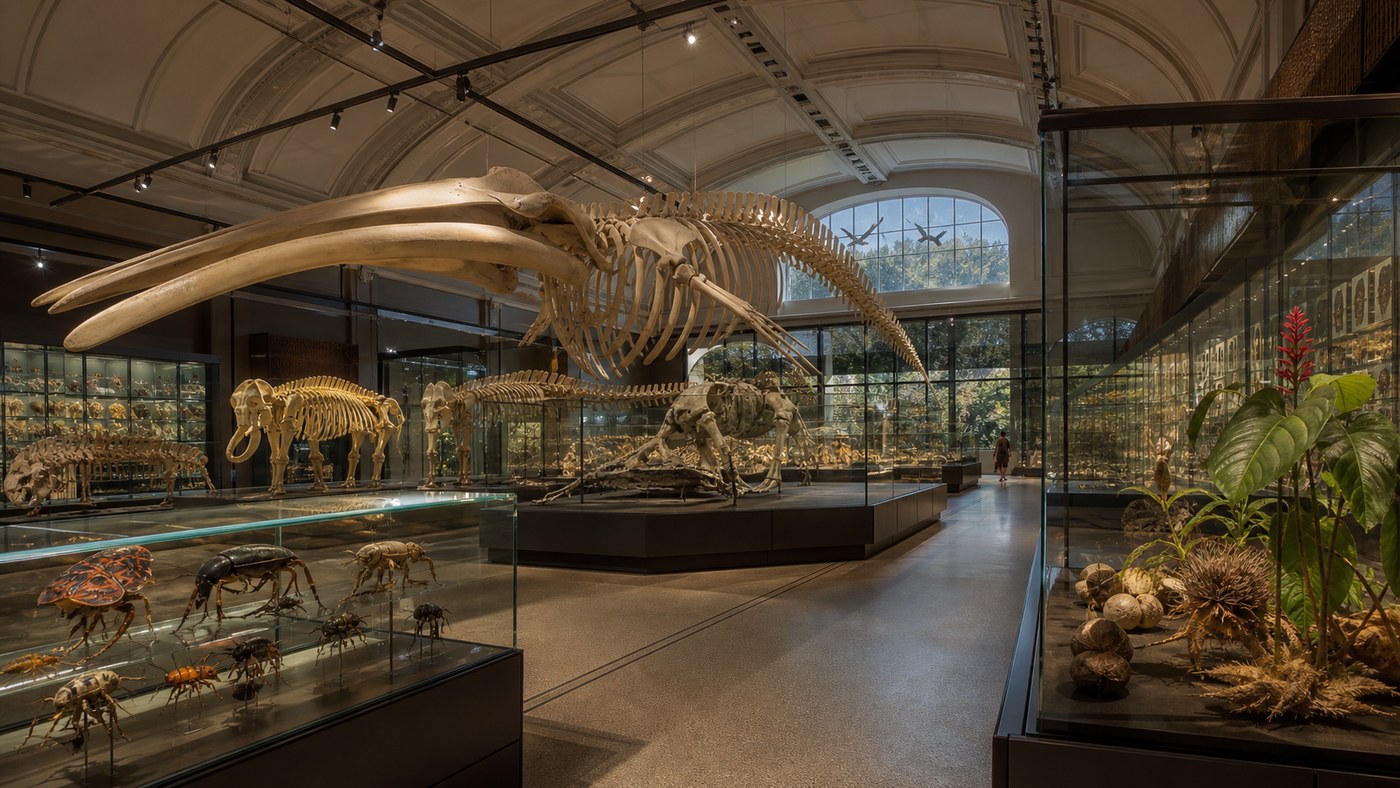
In the sections dedicated to animals, insects, marine life, fungi, and plants, compare body structures with natural habitats. Skeletons show how animals move; beaks, teeth, or feet suggest foraging methods; and the colors and shapes of insects reveal camouflage or warning strategies.
Specimens are scientific documents, not decorations. Children can be encouraged to ask questions: where does the specimen live, what does it eat, and how does it adapt? Adults should explain cautiously based on display labels rather than inventing unverified stories.
Responsible Visitor Rules
- Do not touch glass display cases, specimens, or pedestals.
- Do not use camera flash if the exhibition area restricts lighting.
- Keep your voice down, do not run, and do not block pathways for other groups.
- Do not bring food or drinks into the exhibition halls.
- Only participate in hands-on activities with proper guidance and provided tools.
How to Visit with Children
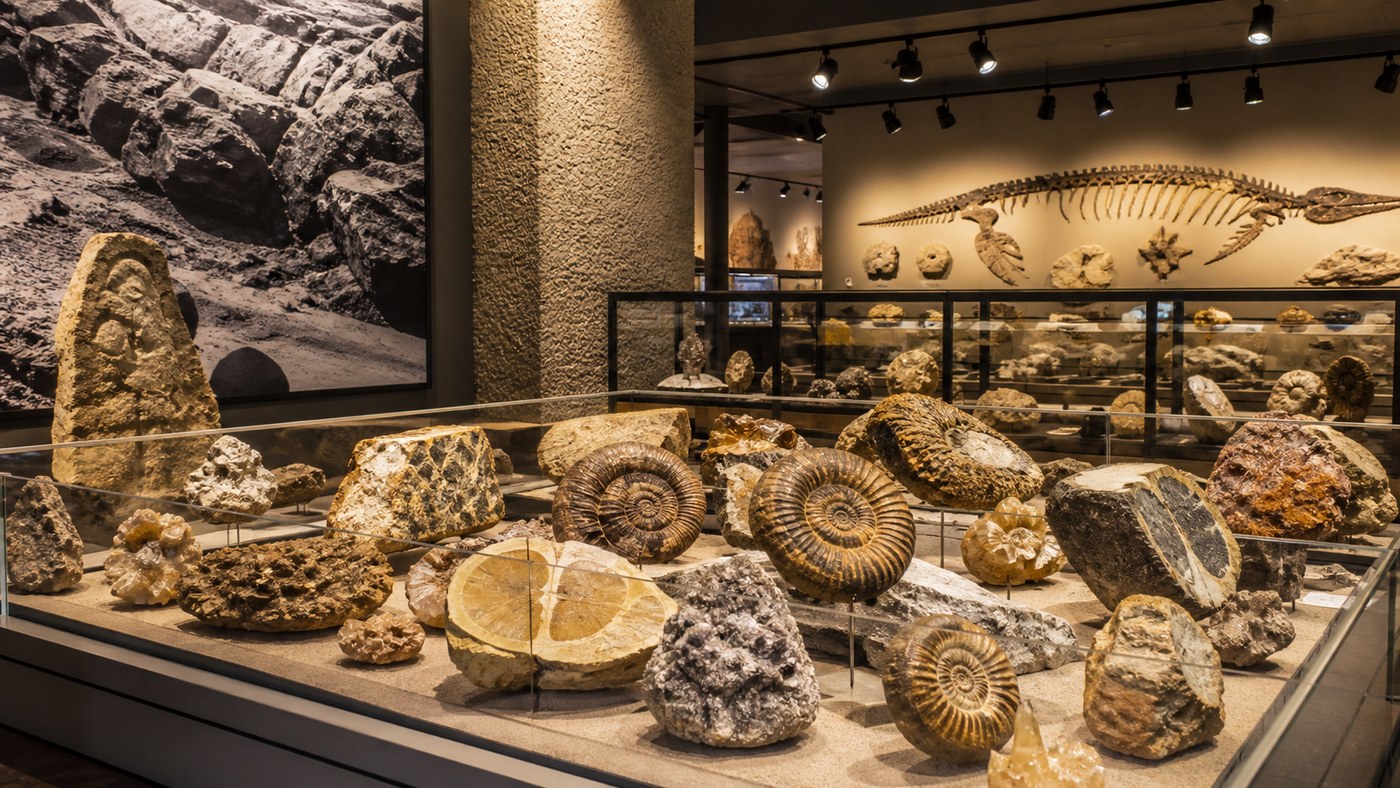
Instead of rushing children through every exhibit, choose three short tasks: find a spiral fossil, compare two skeletons, and pick an insect with unusual coloration. Pair each task with an open-ended question. This approach encourages active observation without causing noise or disturbing artifacts.
Spaces can get crowded on weekends. Families should designate a meeting point, keep children within sight, and yield the path to elderly visitors. If screening rooms or educational programs are available, check schedules at the front desk rather than relying on outdated online information.
Suggested Itinerary
Allocate about one to two hours for the museum, then pair it with a cultural spot or park nearby in the Cau Giay district if time permits. Avoid scheduling too many museums back-to-back for young children. A short trip featuring questions, notes, and post-visit discussions is usually more effective.
Frequently Asked Questions
Can individual visitors come on weekdays?
Visiting schedules for individuals and tour groups may differ. Check official timetables close to your planned date before arriving.
Is photography allowed?
Follow the directional signs in each area; if photography is permitted, avoid flash, bulky tripods that block walkways, and pressing equipment directly against glass display cases.