Ngoc Hoa Hermitage Quy Nhon: Architecture, Directions and Tips
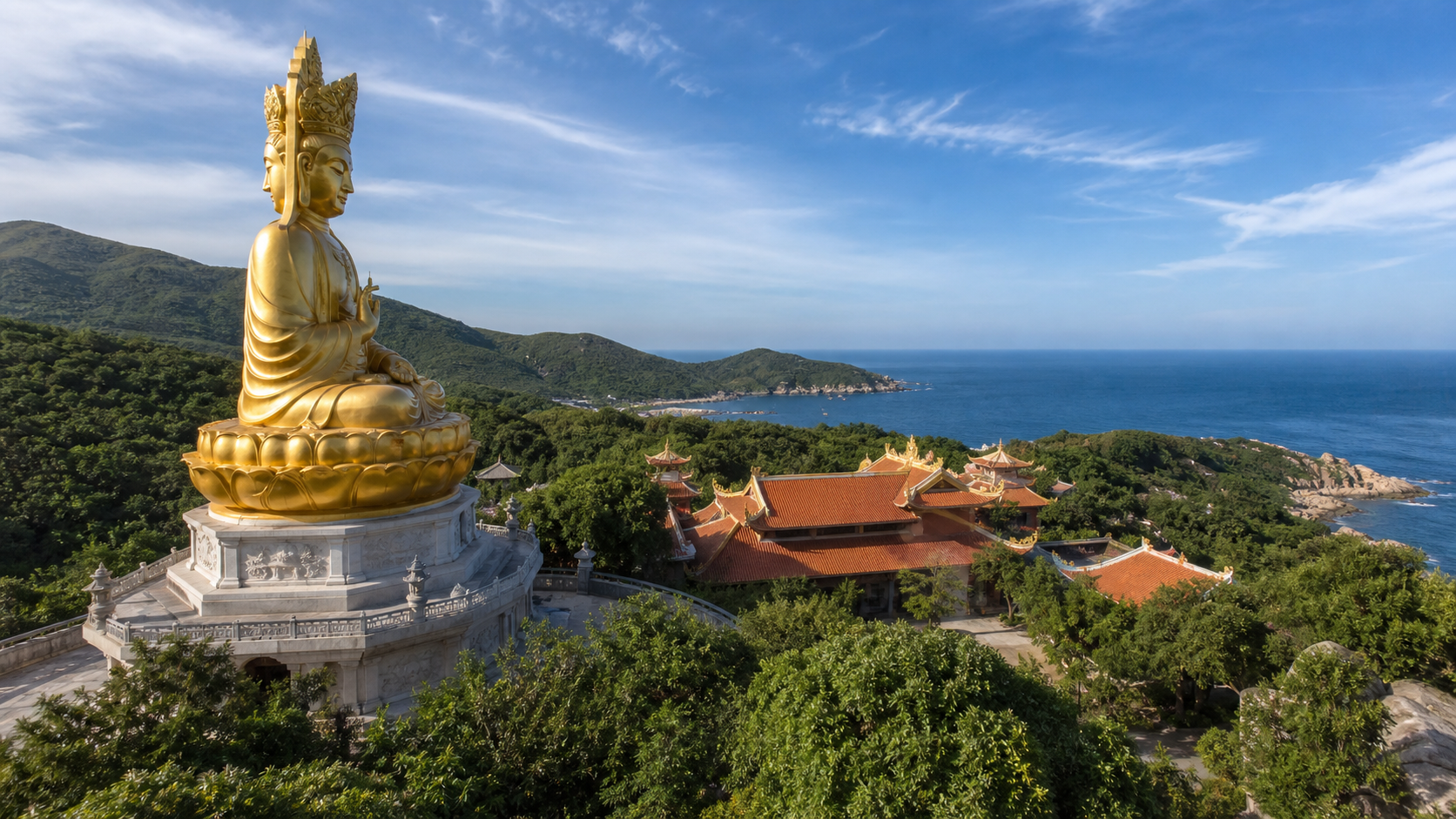
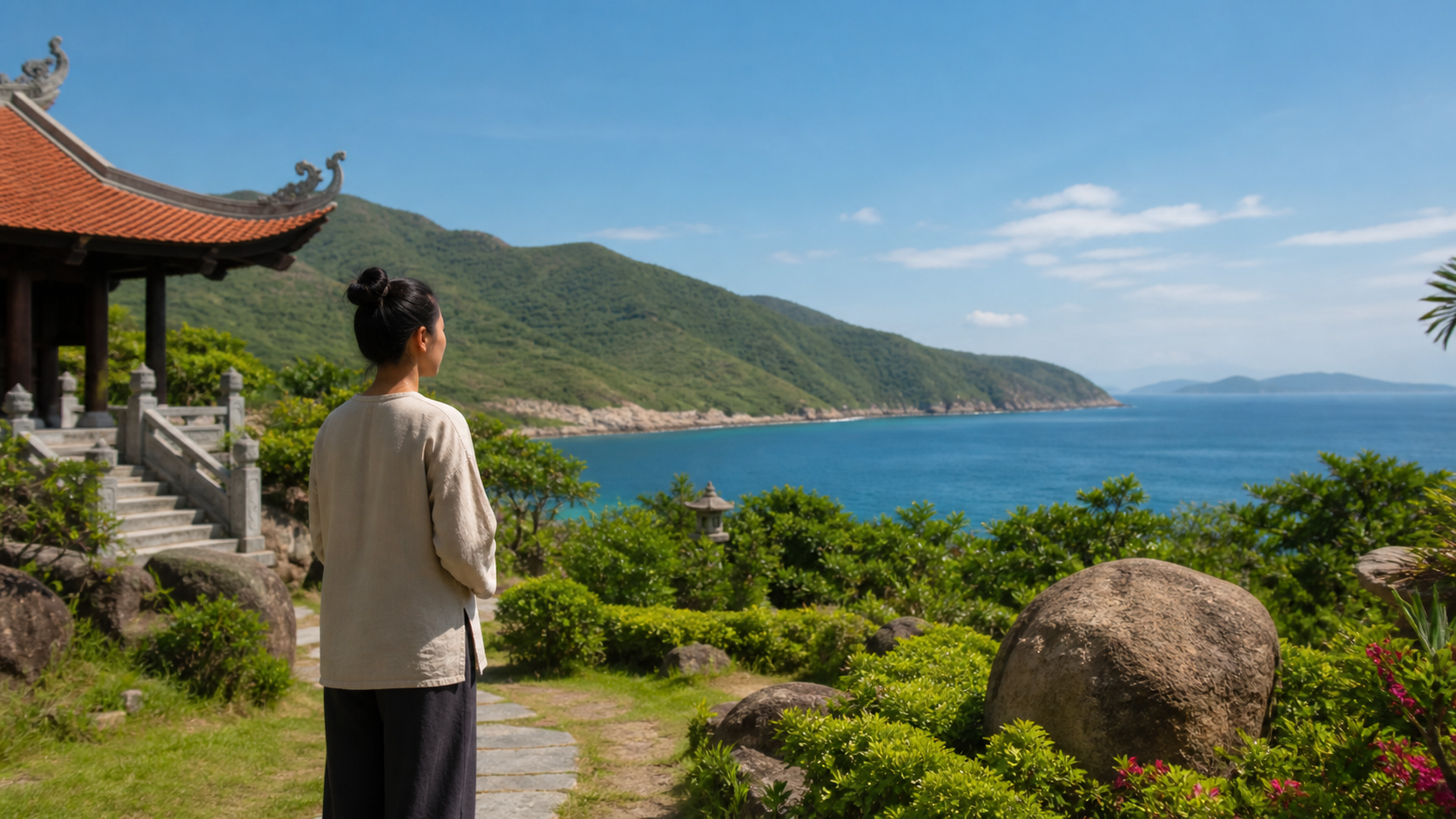
Ngoc Hoa Hermitage is located next to the fishing village of Nhon Ly, on the Phuong Mai peninsula and very close to the Eo Gio scenic area. Its mountain-backed and sea-facing setting creates a distinct atmosphere away from the city bustle. The most prominent landmark is the dual-faced Quan Am (Avalokiteshvara) statue, but the true value of a visit also lies in the Mendicant Buddhist sect architecture, the green grounds, and the mindful decorum maintained by everyone in this place of practice.
Administrative Address and Location
The site is located in the former Nhon Ly area of Quy Nhon; following administrative boundary changes, the address is assigned to Quy Nhon Dong ward, Gia Lai province. When searching for directions, using the keyword “Tinh xa Ngoc Hoa Nhon Ly” is usually more reliable than entering the province name alone. From the former central Quy Nhon area, the route crosses the Phuong Mai peninsula toward Eo Gio, then follows local signs to the hermitage.
The coastal road can be windy and crowded with traffic on weekends and holidays. It is best to visit during daylight hours, observe speed limits, and park only in designated areas. If you combine this with Eo Gio, set aside dedicated, quiet time for the hermitage rather than treating it merely as a quick photo stop.
History and Notable Architecture
Construction of the hermitage began in 1960 and was completed in May 1962. Through multiple renovations, the structure has become more spacious while retaining the spirit of the Mendicant Buddhist sect. The main hall blends traditional lines with an orderly spatial layout; the central area housing the Triple Gem has an octagonal shape, creating a sense of balance and solemnity.
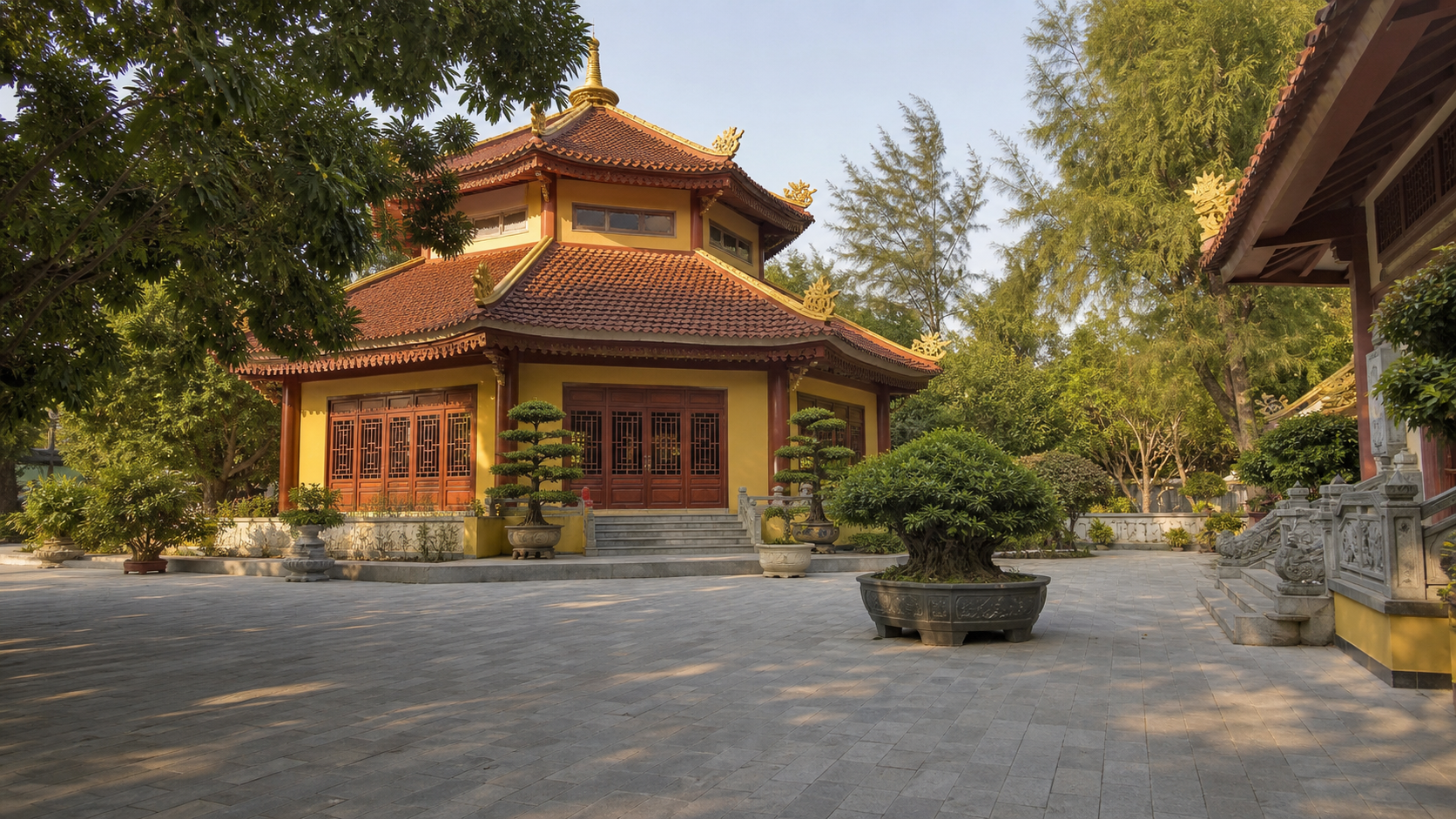
The most striking feature is the approximately 30-meter-tall twin Quan Am statues. One side faces north, bearing the title Nam Hai (Southern Sea) Quan Am, while the southern-facing side is Kiet Tuong (Auspicious) Quan Am. These two orientations evoke prayers for peace across both sea and land. The base is built from honeycomb basalt, a familiar material in traditional architecture throughout the former Binh Dinh region.
Visitors can observe the sculptural details and how the statues blend into the open sky and coastal landscape. However, this is first and foremost a religious site. Understanding its significance, maintaining an appropriate distance, and avoiding inappropriate poses will make your visit much more meaningful.
How to Visit Respectfully
Please wear modest clothing, speak softly, and set mobile phones to silent mode. Do not wander uninvited into areas reserved for monastics, residential quarters, or restricted zones. Always ask for permission before photographing monks, nuns, or ongoing rituals. If you wish to burn incense, follow the on-site instructions and do not leave money casually on statues or altars.
Best Time to Visit and Suggested Itinerary
Early morning or late afternoon are usually pleasant as the sun is less intense and the grounds are quieter. During Buddhist festivals or at the beginning of the year, visitor numbers increase; those seeking tranquility should choose weekdays. Opening hours and accessible areas may vary according to the hermitage’s daily schedule, so please observe announcements posted at the entrance.
A half-day itinerary could begin in the village of Nhon Ly, stop by the hermitage, and then explore the Eo Gio scenic area if weather permits. Bring your own water but avoid eating or drinking inside worship spaces, and keep your trash in personal bags. Ngoc Hoa Hermitage is worth visiting not only for its prominent twin statues, but because it offers a chance to slow down amid a busy coastal journey.