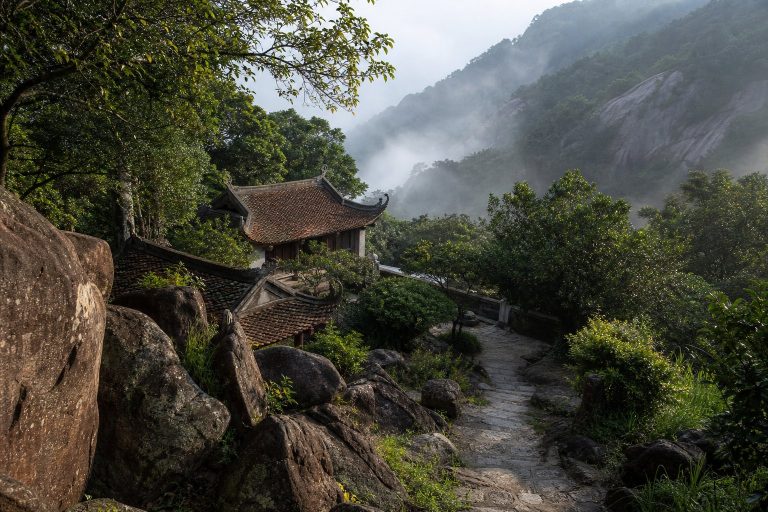
Long Son Pagoda Nha Trang: Architecture and White Buddha
Amidst days of exploring the beaches of Nha Trang, Long Son Pagoda offers a different travel pace: observing layers of tiled roofs, walking slowly up the steps, and pausing before the white Buddha statue on Trai Thuy mountain. This is both an architectural landmark and an active place of worship, so the appropriate way to visit is to take your time observing and maintaining quietness.
Long Son Pagoda and the White Buddha Image
Long Son Pagoda is located at the foot of Trai Thuy mountain in Nha Trang, Khanh Hoa. Founded in 1886 under the name Dang Long, the pagoda was relocated from the upper mountain to its current foothill site following a storm in 1900. The prominent white Shakyamuni Buddha statue on the upper slope is the reason this site is also widely known as the White Buddha Pagoda.
Do not confuse Long Son with Linh Son Pagoda or Tong Lam Lo Son. When navigating, double-check the exact name of the pagoda and Trai Thuy mountain instead of simply entering a generic term like “Buddha pagoda.” Before you go, check the temple’s reception announcements; this article does not claim specific opening hours or that all areas are accessible at all times.
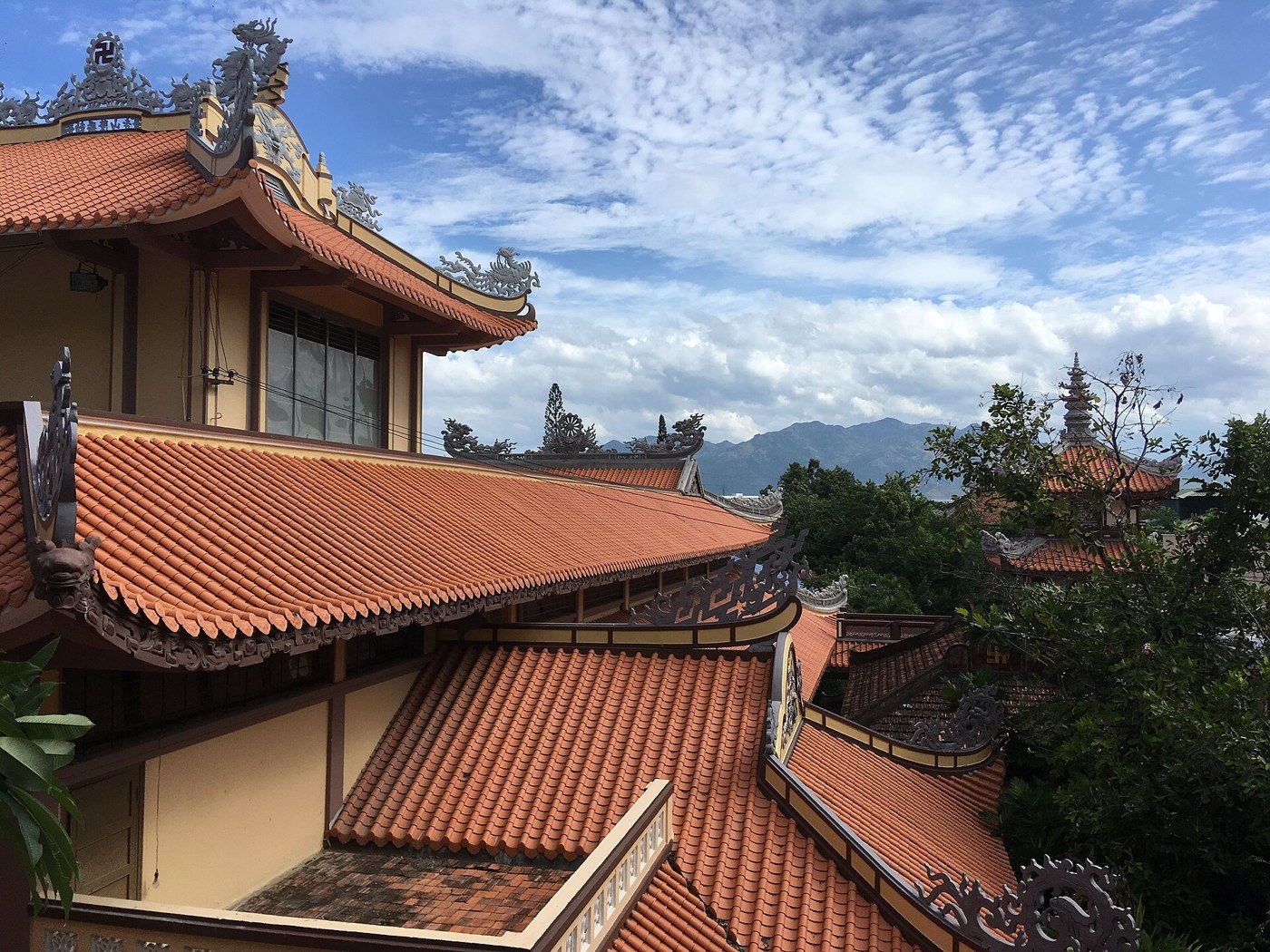
Observing the Architecture Before Heading Up
The overlapping layers of tiled roofs are details well worth taking the time to observe. From a side angle, you can see lower and higher roofs, along with curved roof eaves that add depth to the structure. You do not need to enter restricted areas to take good photos: stand in visitor walkways, looking for frames that include both the roof sections and surrounding greenery.
The temple courtyard and the mountain path should be treated as two separate stages. If you are traveling with someone who has difficulty climbing stairs, you can spend more time in the lower section rather than treating the ascent to the statue as a mandatory goal. Asking staff about suitable walking paths for the day is much more useful than relying on an old photograph.
The Stairway and the Buddha on Trai Thuy Mountain
The path leading up to the Buddha statue features numerous steps; along the way, you will also pass a reclining Buddha statue and the bell tower area. The white seated Buddha on the lotus throne was constructed between 1964 and 1965. When observing, try looking at the overall posture of the statue first before focusing on the lotus base and surrounding space.
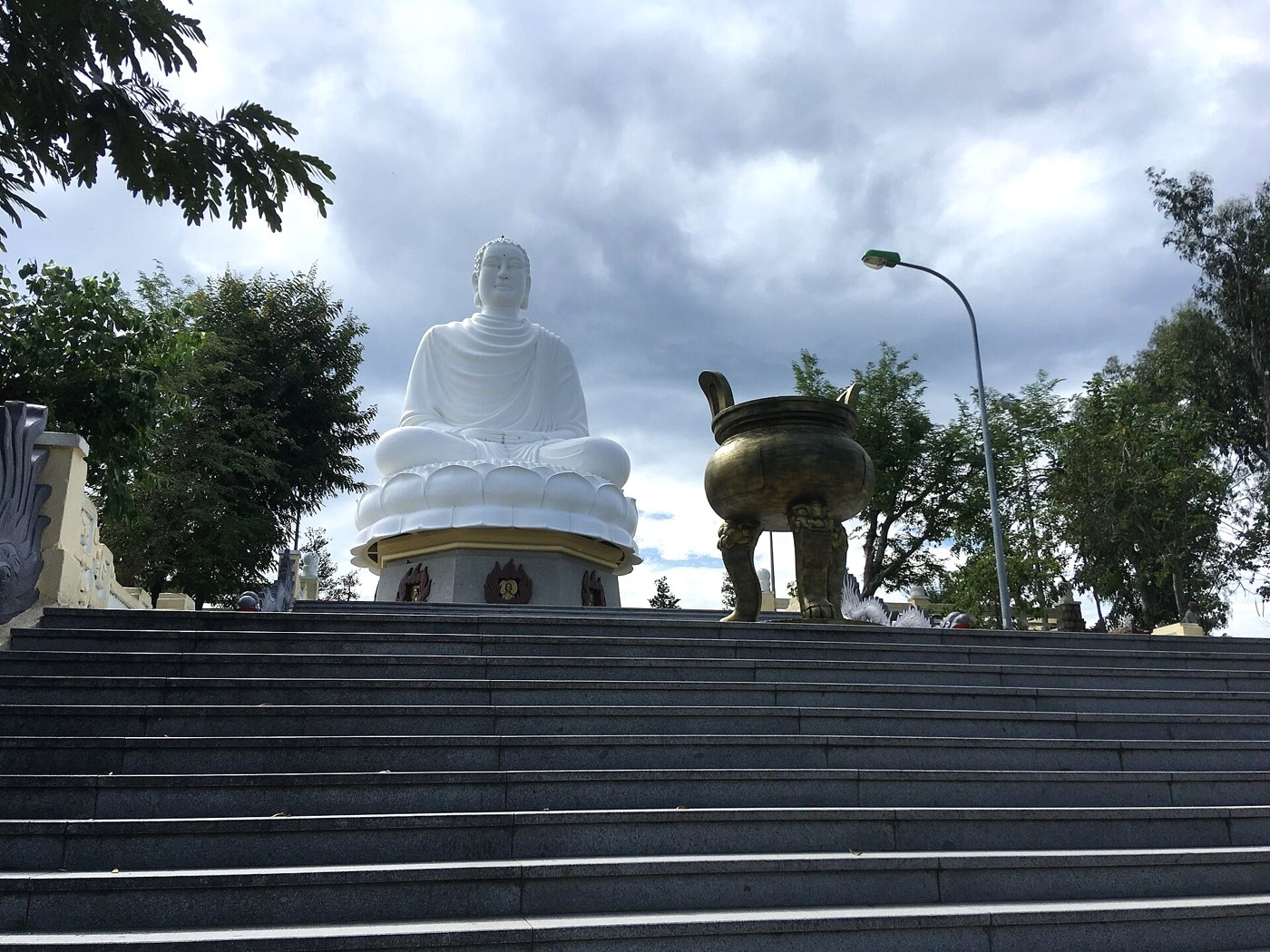
It is advisable to wear shoes with good traction, travel light, and bring adequate drinking water. Break the climb into short segments if needed, yield the path to those descending, and avoid stopping to take photos right in the middle of traffic flows. When steps are wet or during rainy storms, consider stopping at the lower section; there is no need to force the complete ascent just because you reached the pagoda.
Choosing Camera Angles While Respecting the Sanctuary
A distant shot helps place the statue within its landscape context, while an upward angle highlights the lotus throne and the folds of the robe. Both angles tell different stories, yet both can be captured from permitted viewpoints. Do not climb onto the statue base, do not move ritual items yourself, and do not block people who are praying just to secure a photo frame.
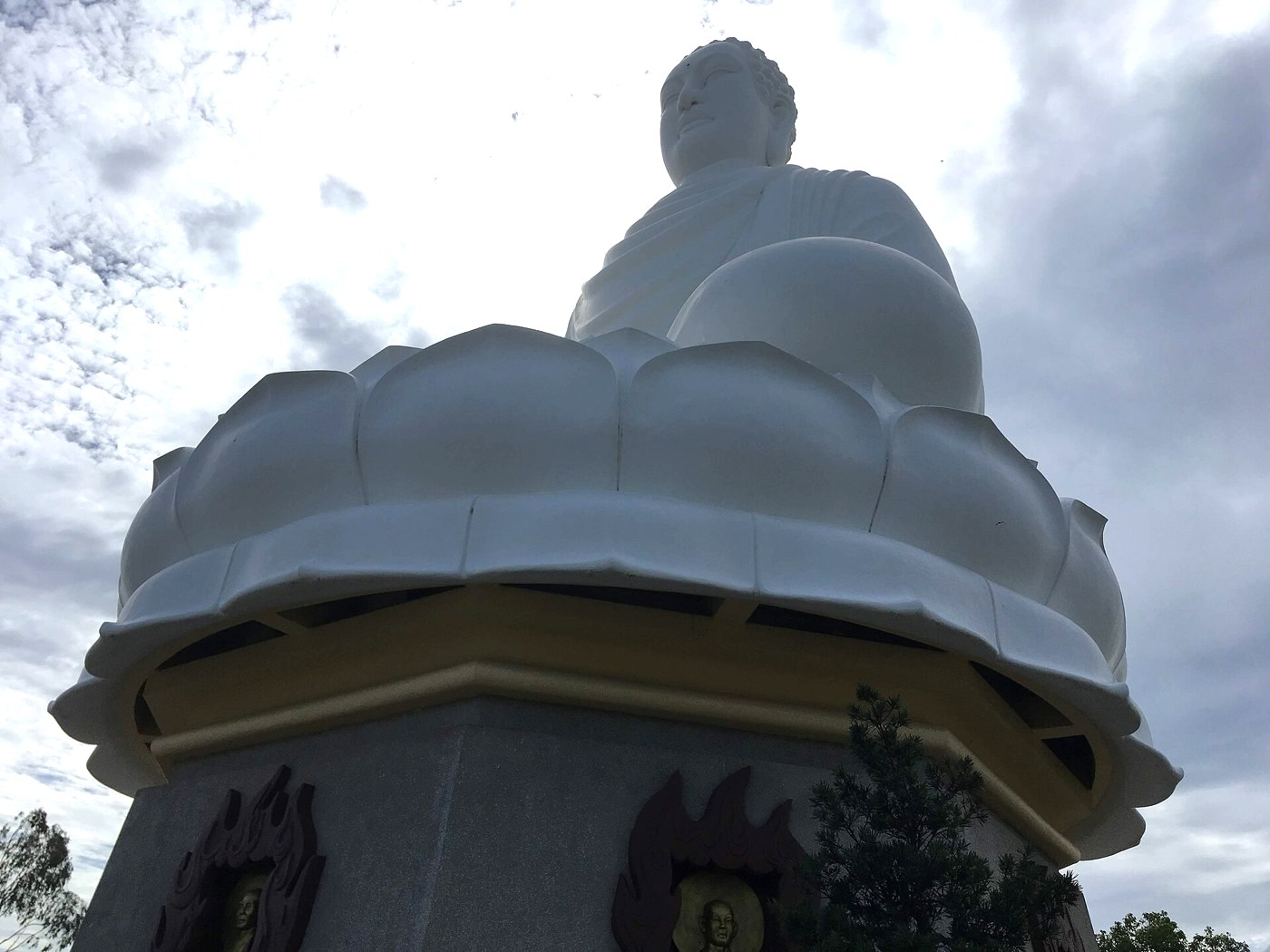
The photos in this article serve as archival references and do not confirm current pathway conditions. Decorations, guide signs, and reception arrangements may change. If a ceremony is taking place, put your camera away or ask before shooting; avoid taking close-up portraits of worshippers without their consent.
Incorporating the Pagoda into a Nha Trang Itinerary
Leave plenty of breathing room for your visit rather than scheduling it too close to train times, flights, or other appointments. Dress modestly, speak quietly, and follow instructions regarding footwear in each designated area. If traveling in a group, agree on a meeting point in an authorized resting area so you do not have to call out loudly to one another.
The lasting impression to take away after your visit is not merely a photograph of the white Buddha statue. It is also how the pagoda roofs emerge from the greenery, the shifting perspectives as you ascend, and the feeling of slowing down within a space that holds its own spiritual life.