Phủ Tây Hồ: Mother Goddess Worship and Visiting Tips
Phủ Tây Hồ is a spiritual destination dedicated to Mother Goddess Liễu Hạnh in Hanoi, located along Đặng Thai Mai street by West Lake. If you want to learn about the capital’s cultural life, you can visit the shrine to observe the worship space, architecture, and how locals preserve their ritual traditions. Do not view this place merely as a photo spot or a venue guaranteed to bring good fortune.
How is Phủ Tây Hồ different from a pagoda?
Although often mentioned alongside other places of worship around the lake, Phủ Tây Hồ is tied to the Mother Goddess religion, not a Buddhist pagoda. Mother Goddess Liễu Hạnh is a revered figure in Vietnamese folk belief. Distinguishing this helps you avoid mechanically applying ritual practices from elsewhere or calling every sacred space by the same name.
The stories passed down about the Mother belong to religious life and legend. You can learn about them to better understand the culture, but do not treat tales of praying for wealth or romance as guarantees of real-life outcomes. For visitors, a respectful attitude matters more than preparing elaborate offerings.
Preparing your route and timing
Search for the full name “Phủ Tây Hồ, Hanoi” on the map and check access routes from the Đặng Thai Mai area. If traveling with a group, agree on an outdoor meeting point beforehand in case you get separated inside. Do not use another lakeside pagoda as a pickup landmark just because the names sound similar.
Before your visit, confirm the current opening hours and guidelines at the shrine. Do not assume you can enter at any time simply because the location is right by the lake. For elderly visitors or families with young children, allow time for rests and keep the schedule concise if entrances are overly crowded.
Wear comfortable walking shoes, dress modestly, and travel light. If parking, ask clearly about fees and ticket pickup, and keep your ticket safe; do not let solicitors dictate your entire itinerary.
Observing the architecture and lakeside corner
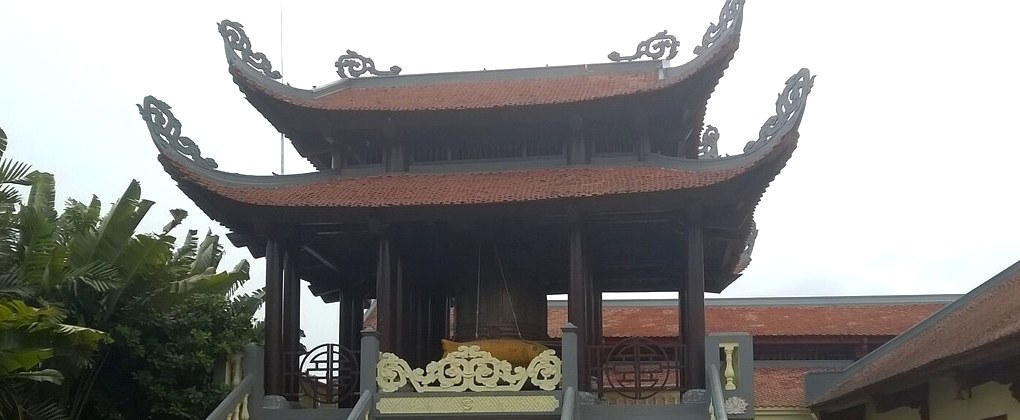
In the archival photos, layered curved tile roofs and wooden structures offer a perspective distinct from the familiar entrance gate. You can start with the overall roof shape, then observe the fine borders or how the railings divide the space. Only stand in permitted areas; do not climb up to upper floors or open doors to find photo angles.
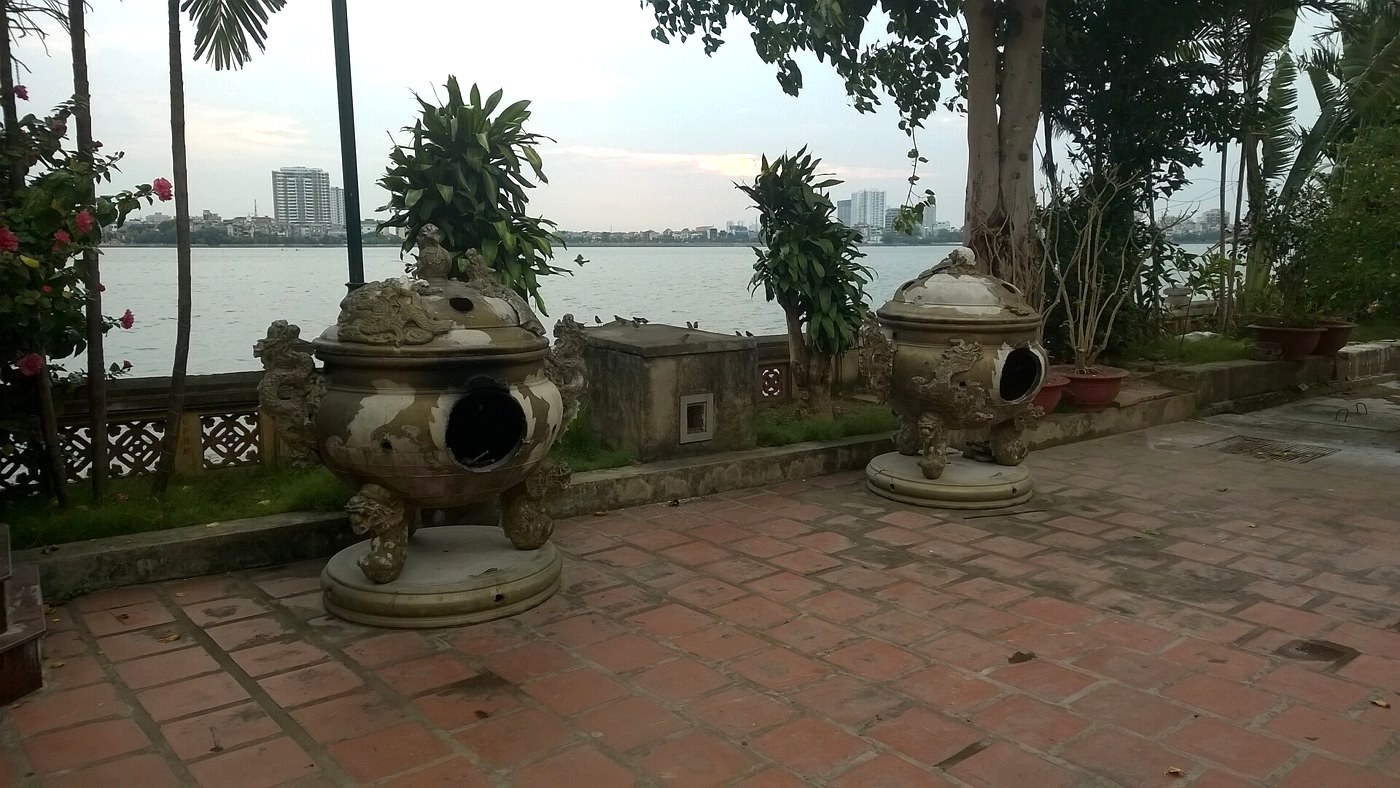
The courtyard corner facing the water provides a clearer sense of the shrine’s location on West Lake. When standing here, maintain a safe distance from the lake edge and do not climb walls or railings. If many people are moving past, yield the path before stopping to enjoy the scenery.
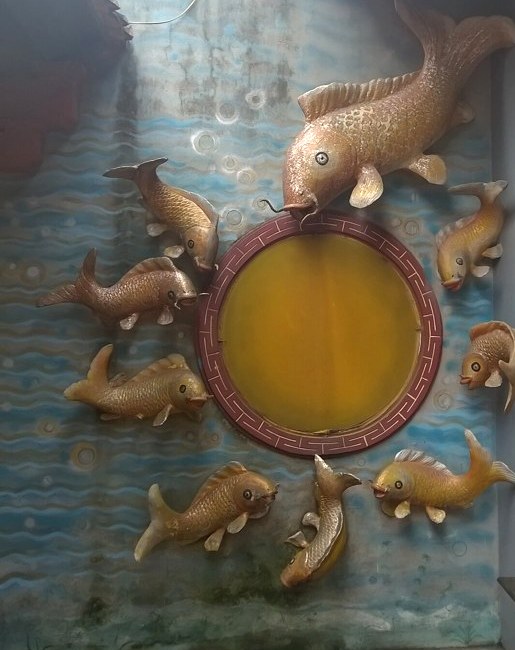
Small decorative elements, such as the fish motif in the photo below, are also worth observing for their lines and colors. There is no need to speculate on the quantity or meaning of each figure without reliable documentation. Asking the person in charge is more useful than assigning a story to every detail.
Conducting rituals neatly without following solicitors
- Ask staff about the correct placement for offerings and circulation paths if you are unfamiliar with the space.
- Do not place small denomination money on statues, altars, or architectural elements; use designated collection points.
- Burn incense and handle offerings only in specified areas; do not burn paper or leave flammable items near fire sources.
- Keep phones, wallets, and bags close to your body during crowds; avoid carrying unnecessary valuables.
- Do not film people closely during rituals, livestream, or photograph worship spaces without permission.
You are not required to buy large offerings or use services offered by solicitors. If you need assistance, seek out the actual managers at the site. Taking time to learn and behave with moderation will make your visit more comfortable than trying to check off an unverified list of rituals.
Notes on images and scheduling
The three photos in this article were taken in 2015, showing architectural angles, the lakeside courtyard, and a decorative motif; they do not represent current conditions or today’s crowd sizes. When visiting in person, follow the directional signs and open areas, even if they differ from archival images.
After your visit, a short period of lakeside relaxation suited to your group’s weather and energy is sufficient. It is not necessary to pack multiple temples and pagodas into one session: truly understanding one place and having time to observe is often more memorable than constant moving.