Phu Quoc Night Squid Fishing: Experiences and Safety Tips
Night squid fishing in Phu Quoc is an experience of watching the sea transition from dusk to night, getting acquainted with simple fishing gear, and trying the rhythms of seafaring life. The memorable part is not just whether you catch any squid, but the time spent out on the water. However, this is an offshore night activity, so weather, vessels, and safety discipline must come first.
How Does the Experience Work?
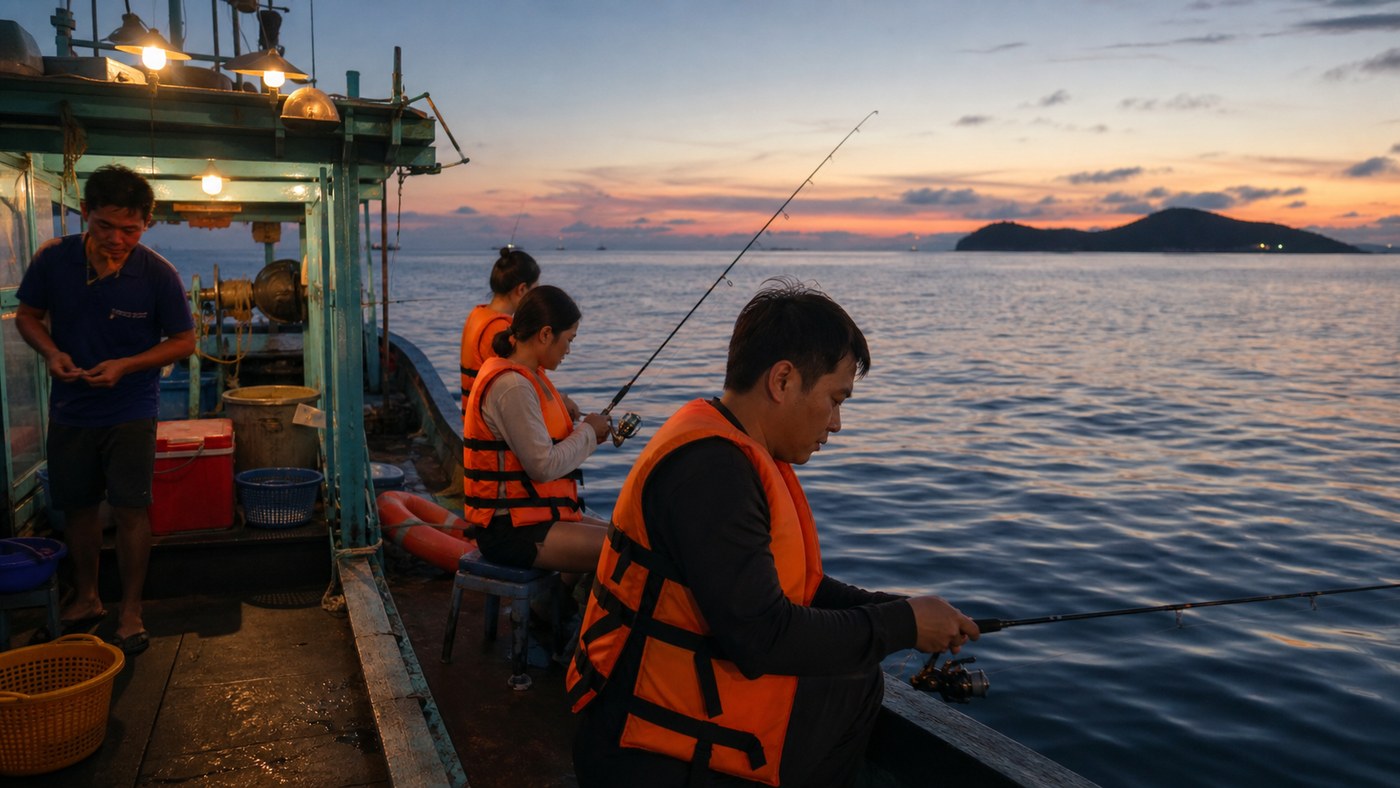
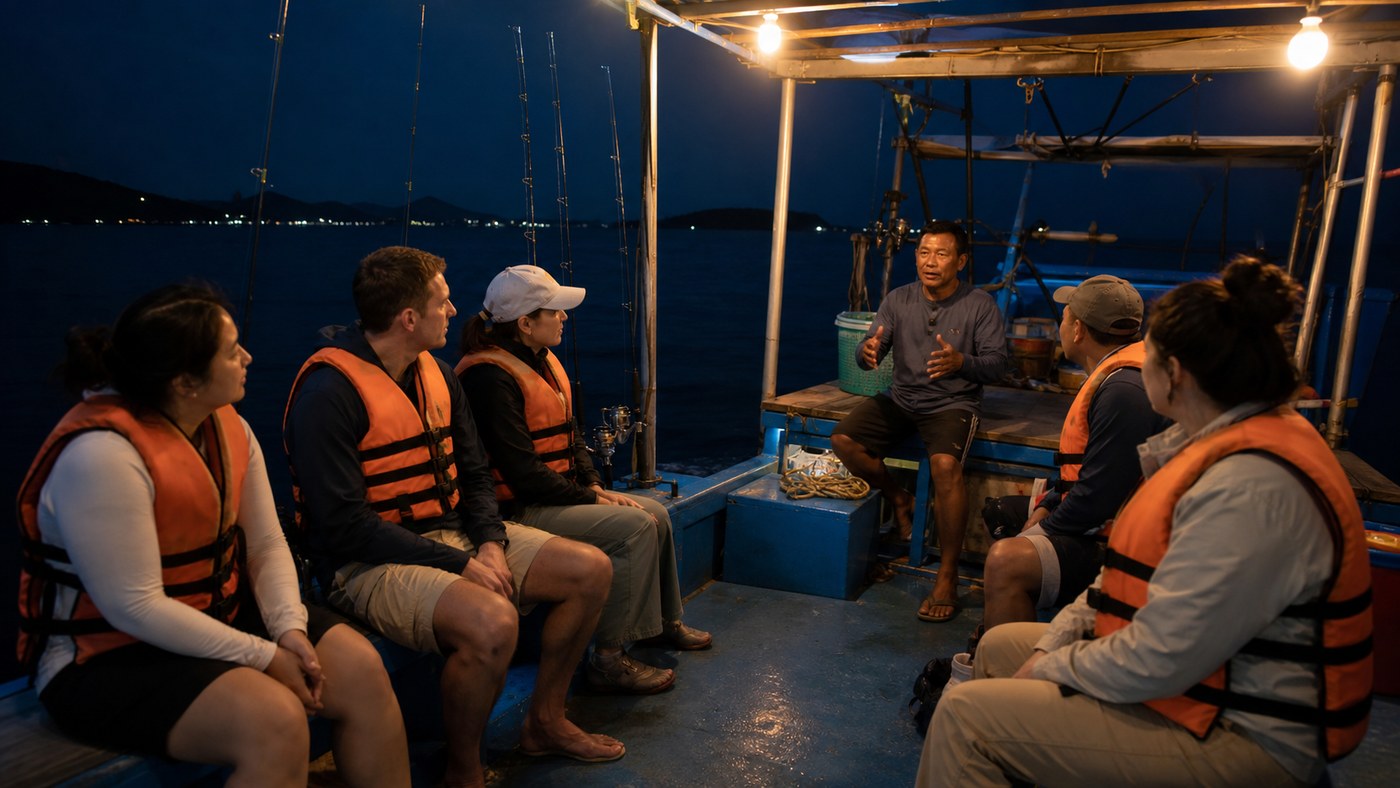
Boats typically leave the shore in the late afternoon, find a suitable body of water, and turn on the lights when it gets dark. The guide introduces the life jackets, seating areas, walkways, tools, and how to handle tangled fishing lines. Afterward, each person drops the bait into the water, controls the rod or line according to the rhythm, and waits for a signal.
The likelihood of encountering squid depends on the season, currents, weather, and experience in choosing the spot. Do not view the number caught as a guarantee. A calm sea night, watching the island shore light up, and understanding the fishermen’s work remains a valuable experience even if the catch is small.
Choosing a Safe Vessel
Before boarding the boat, observe the condition of the deck, railings, entryways, and the number of life jackets. The vessel must have a qualified operator, clear passenger limits, and appropriate communication, lighting, and life-saving equipment. If the boat is too crowded, life jackets are damaged, or the person in charge avoids safety questions, you should decline the trip.
Do not go out when there are warnings of bad weather, strong winds, or rough seas. The captain’s decision to postpone must be respected. Young children, the elderly, pregnant women, or those with heart conditions or vestibular disorders should consider carefully and consult a doctor if there are health risks.
Preparation Before Heading Out
- Eat lightly: avoid overeating, heavy grease, or alcoholic beverages before boarding.
- Seasickness prevention: those prone to sickness should consult appropriate medication, use it correctly, and inform their companion.
- Wear light layers: a light windproof jacket, neat pants, and grip-soled shoes are safer than slippery sandals.
- Protect electronics: use waterproof bags, sturdy straps, and do not place phones near the edge of the deck.
- Bring minimal luggage: a small bag keeps walkways clear and reduces the risk of tripping.
How to Fish and Avoid Accidents
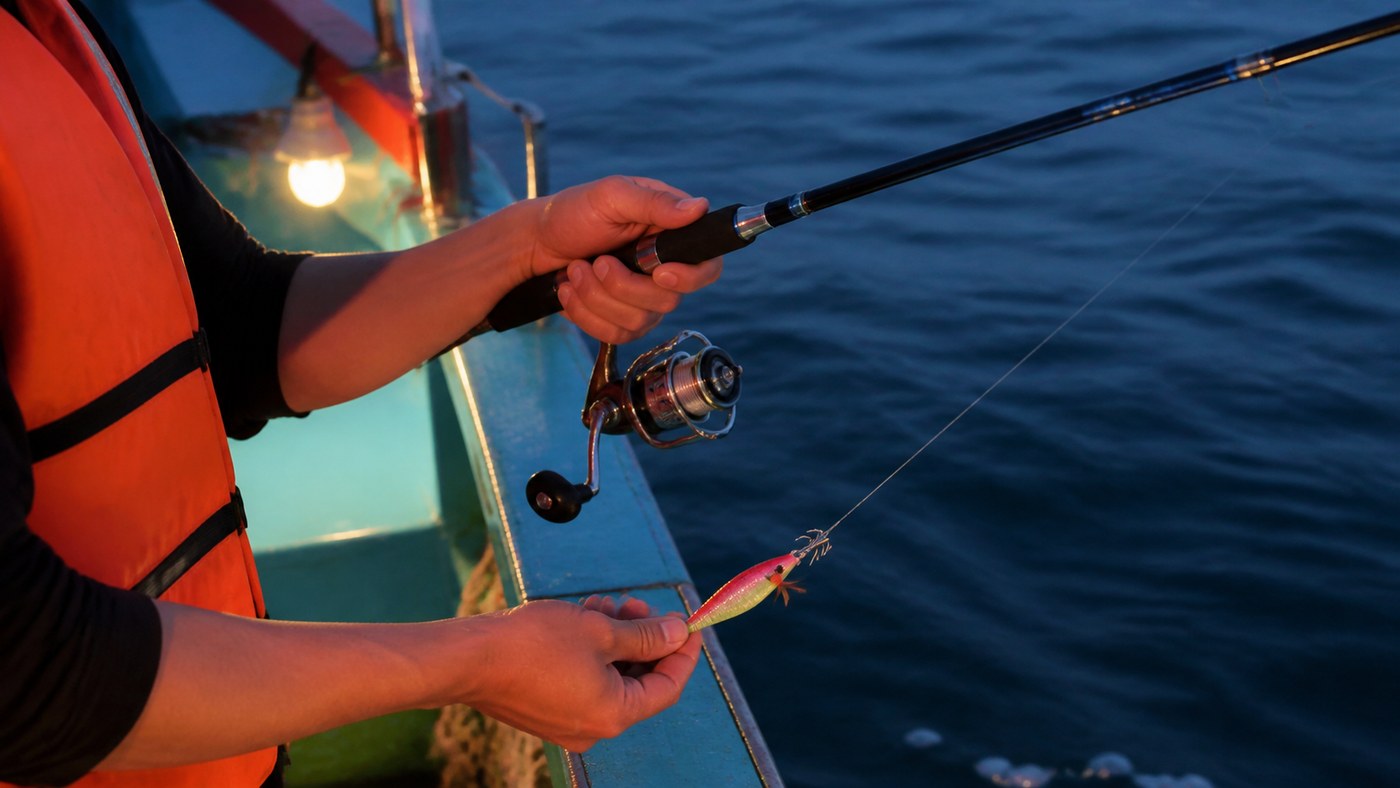
Keep a distance from the person next to you before casting the bait. Do not swing the rod over your head, do not jerk sharply, and do not wrap the line around your fingers. When lines get stuck or bait is tangled, call the guide instead of pulling with force. Hooks and accessories can cause injuries despite their small size.
Always wear life jackets properly, even when the sea appears calm. Do not stand on the edge of the boat, change seats suddenly, or lean too far over the railings. If you feel nauseous, dizzy, shivering, or short of breath, report it immediately and sit in a well-ventilated area following the crew’s instructions.
Responsible Behavior Toward the Sea
Do not throw nylon bags, fishing lines, plastic bottles, or food into the water. Broken lines and hooks must be collected as they can harm marine life. Only keep catches within allowed limits and release undersized specimens or inappropriate species according to professional guidance.
Avoid making loud noises, shining lights arbitrarily at other boats, or forcing operators into dangerous areas just to find squid. The night sea is a real working environment, not a stage; respecting sailors and legal fishing activities makes the trip safer.
Timing and Departure Points
Activities may depart from the Duong Dong area or other valid docks depending on the season and sea conditions. Gathering locations, departure times, and durations vary by day. Confirm directly before the trip and ask clearly about return plans if the weather turns bad.
The dry season usually brings more stable sea conditions, but this does not guarantee every single night is suitable. Phone forecasts are for reference only; maritime warnings and the decisions of the person in charge of the boat must be prioritized.
Frequently Asked Questions
Can I join if I don’t know how to fish?
Yes, if the trip has clear instructions and you follow each step properly. Do not hesitate to ask the person in charge to recheck the bait, line, and holding posture before casting.
Should children go night squid fishing?
They should only go when the sea is calm, the boat is suitable, properly sized life jackets are available, and an adult supervises continuously. Children must not run freely on deck or stand near the boat edge.
What should I do if I get seasick?
Inform the crew immediately, sit in a ventilated area, look toward the horizon, and avoid focusing on screens. Do not move independently to dangerous deck areas to look for wind.