What to Pack for Travel? A Light & Complete Checklist
Pack only what matches the itinerary and weather so the trip stays light and comfortable.
Packing well makes your trip much smoother, but bringing too much will only tire you out as you drag a heavy suitcase. The simplest method is to divide your items into categories, prioritize absolute essentials, and then add items based on the weather and type of trip.
1. Important Documents and Information
Valid ID card or government-issued identification.
E-tickets, accommodation confirmations, and your itinerary.
Driver’s license if you plan on renting a vehicle.
Passport, visa, and travel insurance if going abroad.
Digital copies of documents saved on your phone and one secure backup copy.
Aviation and immigration regulations can change, so check directly with your carrier and relevant authorities before your departure date.
2. Cash, Cards, and Payment Methods
It is best to divide your cash into two different places rather than keeping it all in one wallet. Bring a moderate amount for minor expenses while preparing cards or payment apps. When visiting mountain regions, small islands, or areas with weak mobile reception, cash remains extremely useful.
3. Clothing Using a Lightweight Formula
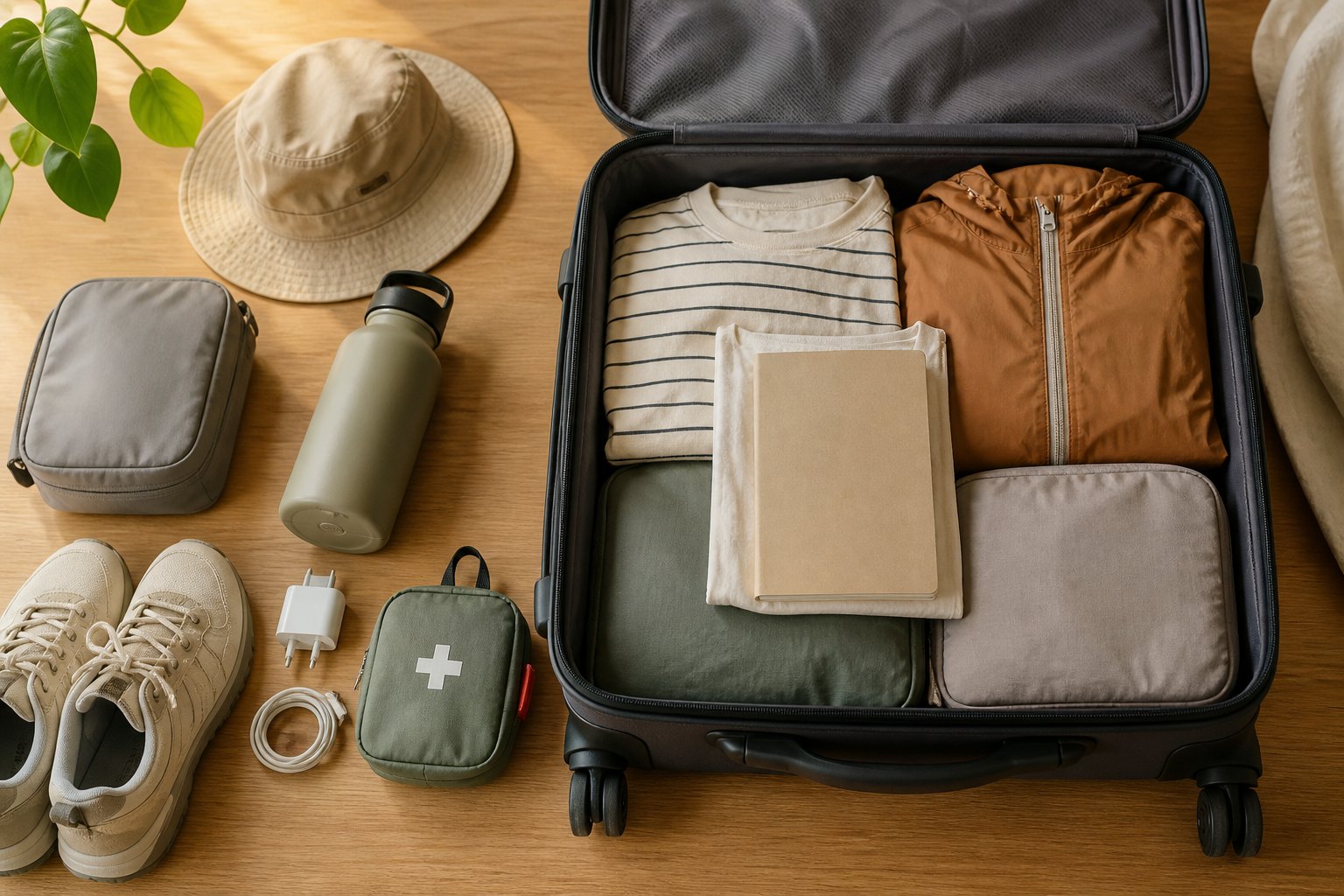
Check the weather forecast and choose mix-and-match outfits. For a three-day trip, you usually only need two to three tops, two bottoms or skirts, one set of sleepwear, enough underwear, and a lightweight jacket. Rolling your clothes or using packing cubes will save space.
Beach trips: swimwear, quick-dry towels, non-slip sandals, and a sun shirt.
Mountain trips: high-traction shoes, raincoat, spare socks, and warm layers.
Temples or spiritual sites: modest, respectful attire.
City trips: comfortable shoes for long walks.
4. Toiletries
Decant shampoo, body wash, and cosmetics into small, leak-proof bottles. A toothbrush, toothpaste, comb, face towel, personal hygiene products, and a wet bag are your basic items. If you have sensitive skin, do not rely entirely on the accommodation’s complimentary supplies.
5. Electronic Devices
Phone, charging cable, and power adapter.
Power bank that complies with transport regulations.
Earphones, camera, or work devices if truly necessary.
Waterproof pouch A compact day bag keeps documents, water, medicine, and electronics organized during transfers.for your phone during beach trips or the rainy season.
Travel adapter plug if traveling internationally.
Before leaving your room, check the wall outlets and bedside area as these are the easiest places to leave charging cables behind.
6. Health and First-Aid Kit
Bring your prescribed medications along with prescriptions or necessary instructions. A compact first-aid kit can include adhesive bandages, clean gauze, antiseptic solution, and insect repellent. Avoid taking unfamiliar medications simply because someone recommended them; if you have underlying health conditions, consult a medical professional before a long trip.
7. Sun Protection and Skin Care
Sunscreen, a hat, sunglasses, and long sleeves will keep you comfortable during outdoor activities. Keep your skincare routine minimalist, focusing only on cleansing, moisturizing, and sun protection. Place bottles in a sealed bag to prevent leaks.
8. Items for Young Children
Families with babies should pack spare clothes, wet wipes, familiar snacks, a water bottle, prescribed medications, and a small toy. Keep the items you need immediately in your carry-on backpack rather than putting everything in checked luggage.
9. Essentials for the Rainy Season
A lightweight raincoat, folding umbrella, waterproof bag, quick-dry sandals, and a spare change of clothes will be very helpful. For mountain itineraries, monitor landslide warnings and never attempt to cross streams when water levels are rising.
10. Checklist Before Locking the Door
Checked documents, money, and phone.
Saved accommodation addresses and essential contact numbers.
Confirmed departure times, luggage, and pickup transportation.
Turned off electrical appliances, locked doors, and disposed of perishable food.
Downloaded offline maps if visiting areas with weak signal.
Tips for a Lighter Suitcase
Do not pack with the mindset of “just in case I need it.” Prioritize mandatory items, choose versatile multi-use gear, and leave behind things that can easily be bought at your destination. Once packed, try removing about 10% of your items; most trips will remain just as comfortable while your suitcase is significantly lighter.
For a beach trip, pack sun protection, light clothing, water, and a waterproof pouch.