Po Nagar Cham Towers: Cham Architecture and Visit Tips
The Po Nagar Cham Towers are a suitable stop if you want to dedicate part of your Nha Trang trip to architecture and culture. The brick tower blocks with varied roof shapes, decorative panels high above doorways, and remaining colonnades in the complex offer plenty to observe. You do not need a background in Cham art history to appreciate the place, but a little preparation will give your visit more depth.
Identify the Right Location
The complex sits on Cu Lao hill in northern Nha Trang, Khanh Hoa province, near the Cai River. The site name can be written as Pô Nagar, Po Nagar, or Ponagar. When searching for directions, enter the full name “Thap Ba Po Nagar” to avoid confusion with commercial service establishments using the Thap Ba name.
This is a living spiritual space dedicated to the Goddess Po Nagar, the Mother of the Kingdom for the Cham people, with continued worship of Thien Y A Na by the Vietnamese. Therefore, a visit is not merely about viewing an ancient structure: visitors must respect those performing rituals and observe access boundaries within the grounds.
Read the Layout Before Looking at Individual Towers
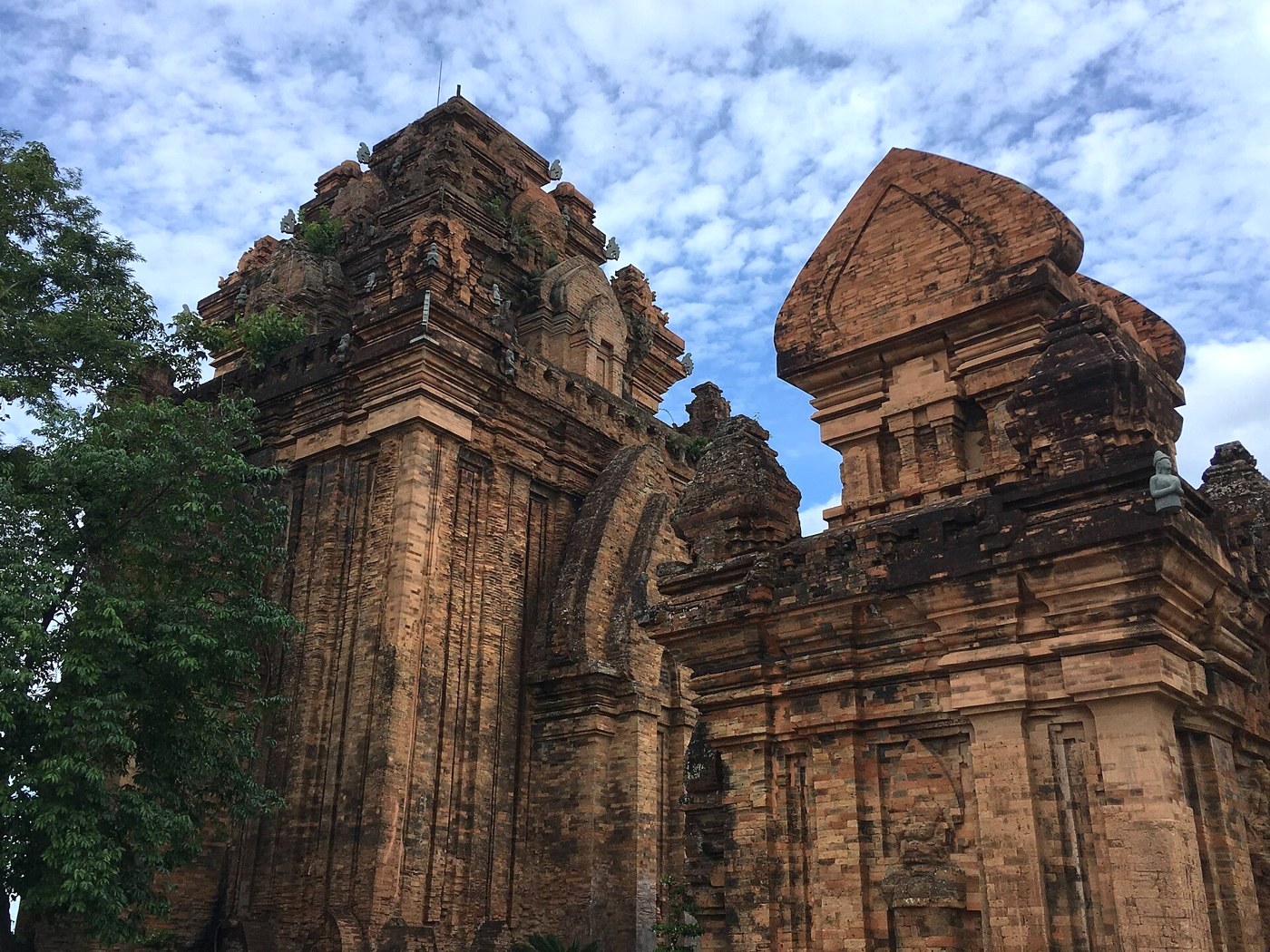
The complex features a Mandapa area with rows of brick columns and a higher temple tower zone. Four towers remain standing today, with the main tower being the largest in scale. Check the map or introductory sign at the destination to understand how the areas connect before deciding which way to walk.
Standing from an open vantage point, try to spot the three sections of a tower: base, body, and roof. The progressively smaller roof tiers create an upward sensation, while door frames and repeating details establish a rhythm for the facade. This way of looking is more useful than trying to memorize the names of all the subsidiary towers right away.
Compare Roof Shapes and Brick Surfaces
The towers within the same complex are not identical in shape. The photo series shows the difference between a multi-tiered roof block with many details and a roof block with cleaner lines. You can choose an angle that keeps both structures in the same frame to easily compare proportions, rather than photographing each tower too closely.
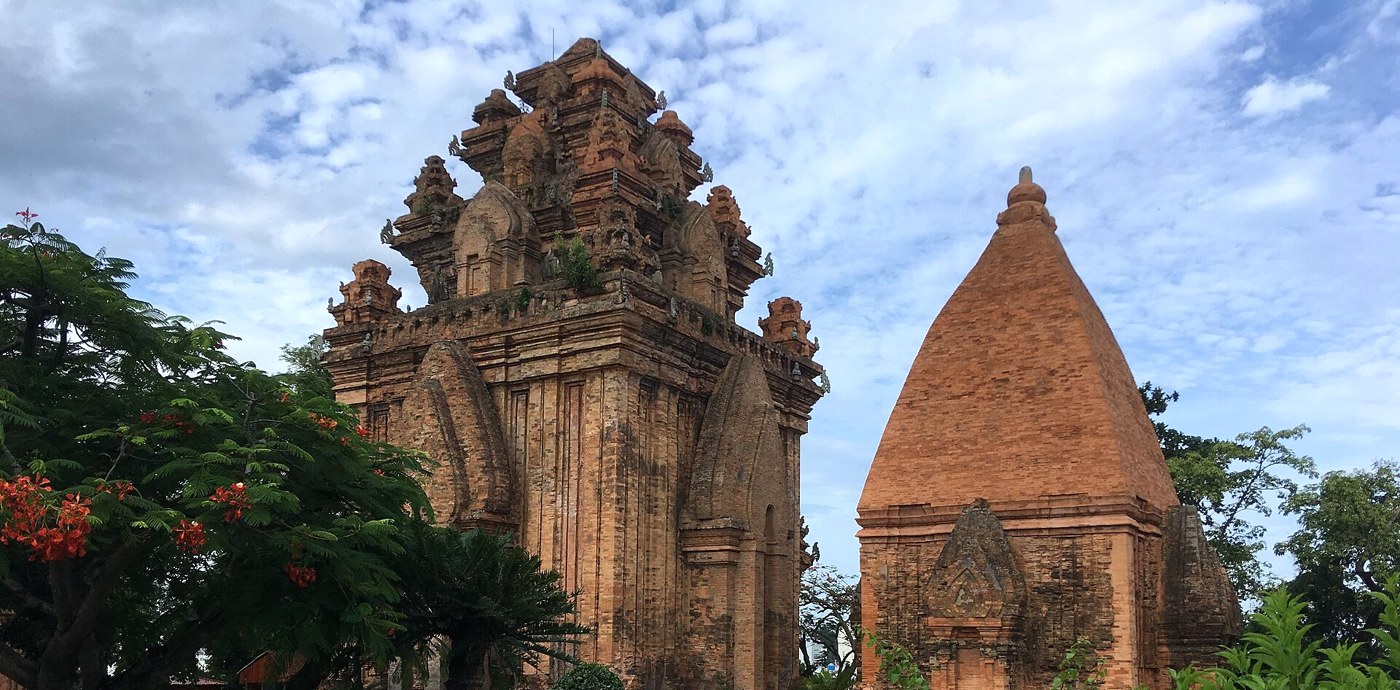
The brick surfaces are also worth a close look: colors, ridges, areas of light and shadow, and decorative niches create multiple visual layers. However, do not assume every brick is from the same era or conclude construction techniques based solely on photos. If you want to understand the restoration process, ask the guide instead of trying to scratch, tap, or touch the structure’s surface.
Dedicate Time to the Reliefs
Details positioned high up are often easily overlooked when it is crowded. The relief in the photo is one example: besides the central figure, there are smaller figures on either side and a surrounding border. Observe the composition, postures, and how the figures connect before reading the iconographic explanation.
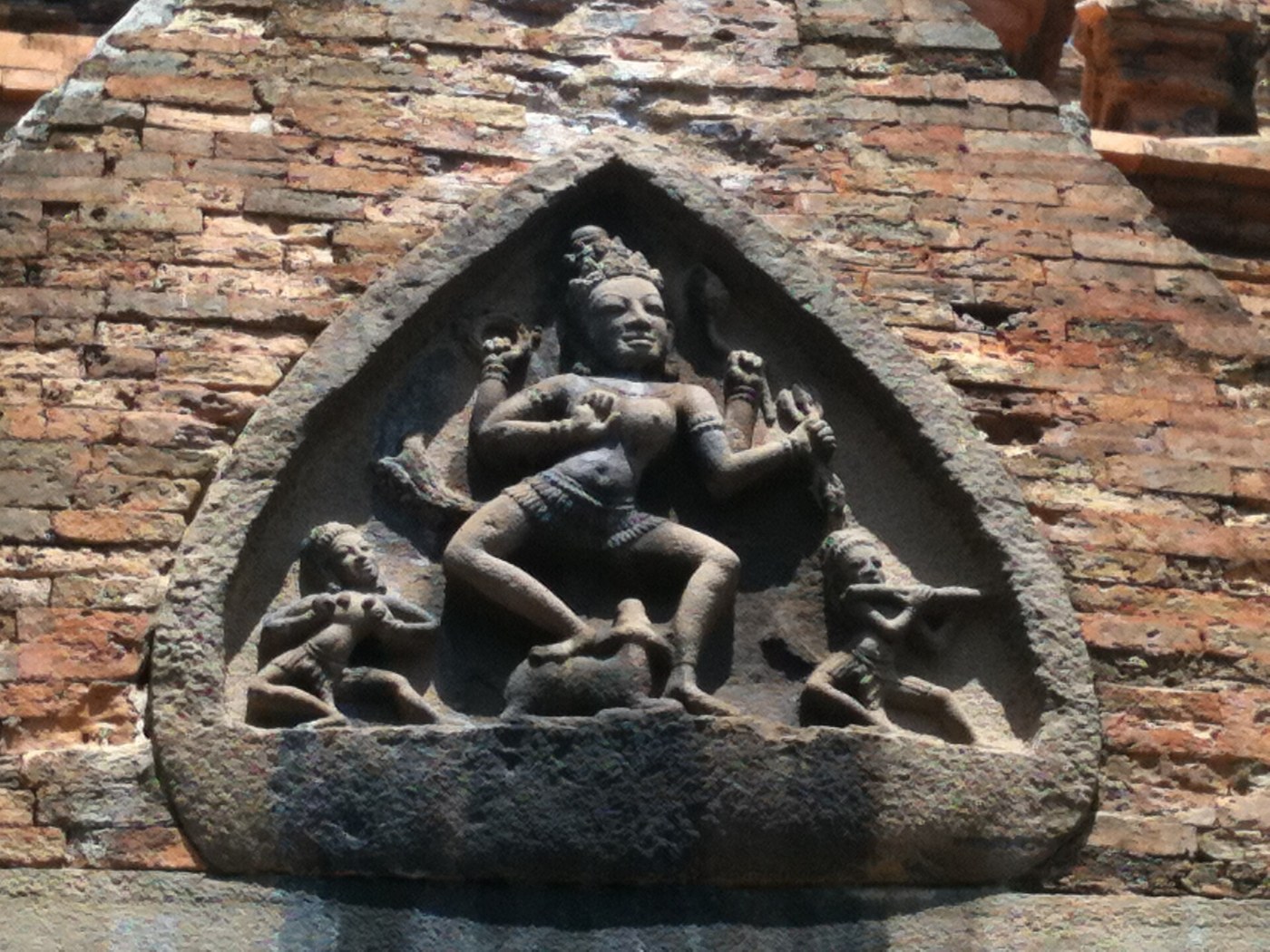
If using a phone, try shooting at a moderate zoom level and keep the device steady to avoid losing focus. Do not climb onto bases or barrier fences just to get a close-up angle. The photos in this article are archival; brick colors and contrast depend on the lighting and are not a guarantee of how the scenery will look at the hour you visit.
Organize Your Visit
You can allocate about one to two hours as a suggested timeframe, then adjust according to your walking stamina, level of interest, and visitor crowds. Start with the general layout, choose a few towers to observe from the outside, and then head to the permitted worship areas. Leave time to rest rather than packing destinations tightly before and after your trip.
The historical site features changes in elevation. For elderly visitors, young children, or anyone with difficulty walking stairs, ask for the appropriate accessible pathway right from the start. Do not use an ancient staircase yourself just because you saw it in a photo; follow the current guidance at the site.
- Check visiting hours, current ticket prices, and dress codes before you go.
- Choose shoes with good grip, bring water and light sun protection; consider changing your visit time if weather conditions are unfavorable.
- Dress modestly, keep your voice low in worship areas, and follow footwear requirements at each location.
- Ask permission before taking photos inside towers or taking close-ups of people performing rituals; do not move offerings yourself.
- Do not touch reliefs, write on bricks, or take pieces of material as souvenirs.
Visit Po Nagar to Better Understand Nha Trang
A tour does not need an overwhelming number of activities to be meaningful. Just by recognizing the differences between two tower shapes, remembering a relief detail, and understanding this remains a place where the community places its faith, you gain an extra perspective on the coastal city beyond its sandy beaches and waters.